Released a year before The Matrix, telling the same Gnostic story with different symbols. The Strangers reshape reality nightly. Shell Beach doesn't exist. John Murdoch isn't special — he's just the one who remembered.
Dark City was released a year before The Matrix and tells the same Gnostic story with different symbols. A constructed reality administered by inhuman beings who reshape it nightly while the inhabitants sleep. A protagonist who is not special, just permeable enough to catch the seam. A final confrontation in which the system fails because the operator forgot to put it inside the only thing it cannot synthesize: a soul that remembers something the system did not give it. Proyas's film deserves more attention than it gets. It is one of the most complete depictions of Gnostic cosmology in mainstream cinema.
The Surface
A man named John Murdoch wakes in a hotel bathtub with no memory and a dead woman in the next room. He is hunted by police who believe he is a serial killer and by pale-skinned beings called the Strangers who can manipulate matter through thought. He gradually discovers that the city is artificial — the Strangers run it as an experiment to understand human identity. There is no sun. The city is in space. Every night they rearrange buildings and memories.
On release, Dark City was overshadowed by The Matrix the next year. Roger Ebert championed it. Most audiences forgot it. This is appropriate to its theme. The film is about a city that forgets itself nightly. Of course the culture forgot the film.
Recent reappraisal has been kind. The film holds up — visually, philosophically, structurally. Proyas built the entire production design around the Gnostic substrate. Watch the lighting. Every shot looks like it was lit from below, by something that is not the sun. Because there is no sun.
The Strangers as Archons
The Strangers are a dying alien race who have stolen human bodies and built a city to study us. They cannot understand what makes humans individual. They share one collective mind. They rearrange memories nightly to test which combinations produce love, which produce ambition, which produce souls.
This is the precise Gnostic image of the Archons. The Archons are not creators. They are administrators who do not understand what they administer. They rule the artificial world because they made it but they cannot enter the parts of human experience that matter. They watch through the matter they constructed and remain on the outside.
Proyas dresses them as bald, pale, Victorian-coated beings with names like Mr. Hand, Mr. Wall, Mr. Book. The names are functional. They are walking placeholders. They have no inner life of their own. They harvest memories from humans because they cannot generate any from inside themselves. They are starving for something they can recognize but not produce.
This is the Gnostic diagnosis of false authority. The systems that rule us are not malicious in the way conscious villains are malicious. They are blank. They are starving. They administer our lives because they do not have lives of their own to administer. Recognizing this is the first step toward not being administered.
Shell Beach Does Not Exist
Everyone in Dark City has a memory of Shell Beach. They all talk about it. It is on the postcards. There is a billboard for it on the side of buildings. No one can quite remember how to get there. They all assume someone else knows.
John Murdoch follows the clues. He gets a train. He looks at maps. He asks for directions. The directions are vague. The route keeps changing. He finally finds the way, breaks through the wall at the end of a subway tunnel, and discovers — open space. The city is suspended in the void. Shell Beach is a memory the Strangers implanted to give the city the appearance of having an outside. There is no outside.
This is the Gnostic experience of the false world. The system implants memories of escape so that the escape itself becomes part of the system. The exit is the most controlled fiction. Everyone agrees that there is an outside. No one has ever been there. The agreement is what holds the prison closed.
Murdoch's recognition that Shell Beach does not exist is the moment of gnosis. The instrument used to defeat the Strangers — his tuning ability, his capacity to manipulate matter — was always present. What was missing was the recognition that the entire frame was constructed. Once that recognition lands, the powers come.
The Manufactured Self
The Strangers' experiment is precise: they take humans, give them new memories nightly, watch what emerges. If you give a murderer the memories of a saint, will he behave saintly? If you swap a wealthy man's memories with a beggar's, do their personalities follow? The film is showing this experiment in real time. Mr. Sleep injects new memories into a sleeping subject. The subject wakes up convinced he is someone else.
Proyas is making a Jungian point that the Strangers themselves do not get. Memory is not the seat of self. The Strangers test for years and never produce a soul because they keep changing the memories and looking for self in the memory layer. The self is not there. The self is in something else — the layer that remembers across the memories, the layer that watches the memories without being identical with them.
Murdoch is the first subject who awakens because he is the first to detect the discontinuity. He sees that the memories he has been given do not match what he is doing. He doubts. He looks. He finds the seam. This capacity is what the Strangers cannot replicate. It is the witness behind the contents.
Jung called this the Self — not the persona, not even the ego, but the deeper continuity that observes the play. Murdoch finds his Self by noticing that his persona has been rewritten. The Strangers have everything except this. They study us forever and never find it.
The Transmission
Dark City ends with Murdoch creating a sun. The city, having been rebuilt by his expanded powers, finally has light coming from outside. He walks to Shell Beach — a Shell Beach that now exists because he made it exist. He meets a woman who remembers him from a relationship that never actually happened. He chooses to enter the relationship anyway. They look at the ocean.
This ending is sometimes read as compromise — Murdoch became the Demiurge instead of escaping. The reading is too cynical. The film is making a different argument: once you wake up, the work is to build, not to flee. The old city was a prison. The new city, made consciously, can be anything. The Strangers' mistake was using force. Murdoch uses creation.
This is the deeper Gnostic teaching that the lazy reading misses. Liberation is not escape from matter. It is the conscious participation in the making of matter. The Demiurge built badly because he was ignorant. The awakened soul can build well. The film is showing what that looks like.
If you have not seen Dark City, see it. It is one of the most undersung films of the 1990s. It deserves to be remembered. Of course, in a city of forgetting, it would be the film that gets forgotten.
Questions this film answers
What is the deeper meaning of Dark City?
Dark City was released a year before The Matrix and tells the same Gnostic story with different symbols. A constructed reality administered by inhuman beings who reshape it nightly while the inhabitants sleep. A protagonist who is not special, just permeable enough to catch the seam. A final confrontation in which the system fails because the operator forgot to put it inside the only thing it cannot synthesize: a soul that remembers something the system did not give it. Proyas's film deserves more attention than it gets. It is one of the most complete depictions of Gnostic cosmology in mainstream cinema.
What is the hidden symbolism in Dark City?
A man named John Murdoch wakes in a hotel bathtub with no memory and a dead woman in the next room. He is hunted by police who believe he is a serial killer and by pale-skinned beings called the Strangers who can manipulate matter through thought. He gradually discovers that the city is artificial — the Strangers run it as an experiment to understand human identity. There is no sun. The city is in space. Every night they rearrange buildings and memories.
What esoteric traditions appear in Dark City?
Dark City draws from Gnosticism, Jungian traditions. Released a year before The Matrix, telling the same Gnostic story with different symbols. The Strangers reshape reality nightly. Shell Beach doesn't exist. John Murdoch isn't special — he's just the one who remembered.
What does Dark City teach about the strangers as archons?
The systems that rule us are blank. They administer our lives because they do not have lives of their own to administer. The Strangers are a dying alien race who have stolen human bodies and built a city to study us. They cannot understand what makes humans individual. They share one collective mind. They rearrange memories nightly to test which combinations produce love, which produce ambition, which produce souls.
What does Dark City teach about shell beach does not exist?
The system implants memories of escape so that the escape itself becomes part of the system. Everyone in Dark City has a memory of Shell Beach. They all talk about it. It is on the postcards. There is a billboard for it on the side of buildings. No one can quite remember how to get there. They all assume someone else knows.
Is Dark City worth watching for spiritual seekers?
Dark City (1998) directed by Alex Proyas is essential viewing for those interested in Gnosticism, Memory, Archons. The Strangers as Archons of Memory. It rewards multiple viewings and contemplation.
Rewatch With New Eyes
Now that you've seen the architecture, experience it again. The same film becomes a different film when you know what to watch for.
This time, watch for:
- Watch for the false world vs. the real — who is asleep, who awakens
- Meet the shadow: what is rejected, projected, and finally integrated
Links may include affiliate partnerships that support Media Revelations
The Descent Continues
Where this thread leads next.
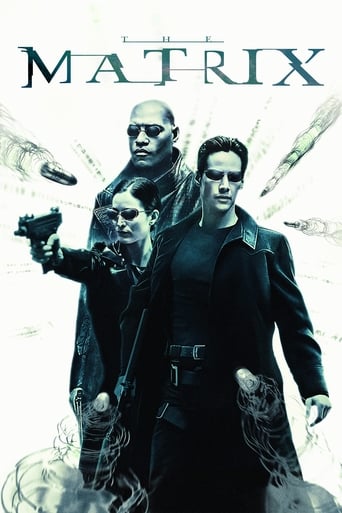
The Matrix 1999
The Gnostic Gospel of the Machine Age
Read the revelation →