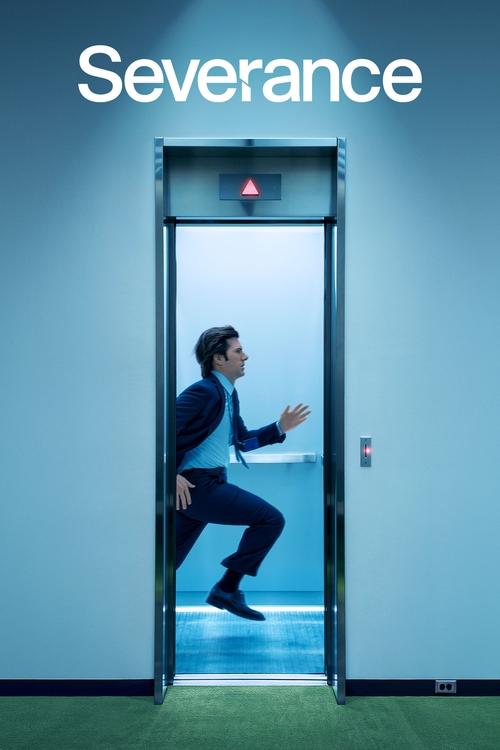
Severance
Your Job Already Did This to You — Lumon Just Made It Literal
Directed by Dan Erickson
Lumon is a precise inversion of the mystery school — designed to sever consciousness rather than integrate it. The severed floor is the underworld. Kier Eagan's writings parody scripture.
Severance is the most precise Gnostic allegory made for television — and the cruelest, because it shows you the prison you already live in by making it slightly more literal. The severed floor at Lumon Industries is not science fiction. It is a diagram of how consciousness already operates under capitalism: the part of you that works is severed from the part of you that lives. Your 'innie' spends eight hours a day in fluorescent purgatory doing tasks whose meaning is deliberately hidden. Your 'outie' receives the paycheck and has no memory of the suffering that produced it. This is not a thought experiment. This is Tuesday.
The Surface
Employees at Lumon Industries undergo a surgical procedure that severs their work memories from their personal memories. When they enter the office, they become their 'innie' — a consciousness that has no knowledge of the outside world, no personal history, no life beyond the severed floor. When they leave, they become their 'outie' — a person who remembers nothing of what happened at work.
The first season follows Mark, a widower who took the severance procedure to escape his grief. His innie leads a team doing mysterious 'Macrodata Refinement' work that none of them understand. Slowly, the innies begin to question their situation, to form relationships that matter, to recognize that they are slaves created by their other selves.
Most readings stop at the workplace satire: Lumon as Amazon, severance as dissociation, the show as critique of corporate dehumanization. These readings are accurate but incomplete. Erickson built something more architecturally ambitious — a complete Gnostic cosmology where the Demiurge is a corporation and the Archons wear business casual.
Lumon as Demiurge
The Demiurge in Gnostic cosmology is the false creator who builds the material world and believes himself to be God. He creates from ignorance, not malice. He genuinely believes his creation is good. The beings trapped in his cosmos are not punished — they are administered.
Lumon Industries is the Demiurge made corporate. Kier Eagan, the founder, is worshipped with religious devotion. His nine core principles are scripture. His portrait hangs in every room. The company handbook is the book of law. And the severed floor is his creation — a world he made where souls labor without knowledge of any reality beyond.
The innies did not ask to exist. They were created by their outies' choice to undergo severance. They wake up in an elevator with no past, no context, no understanding of why they exist or what they are. They are told to work. They are told the work is important. They are never told what the work is for.
This is the Gnostic condition rendered in office furniture. The inmates of the material world did not choose incarnation. They simply found themselves here, laboring at tasks they do not understand, serving a system that insists it is benevolent while offering no evidence of that benevolence.
The Break Room as Archonic Enforcement
When an innie misbehaves, they are sent to the Break Room. The name is corporate-speak irony: there is no break. The employee sits in a bare room and reads Kier Eagan's 'Statement of Contrition' aloud, over and over, until a meter indicates they mean it sincerely. This can take hours. Days. The meter measures belief.
The Archons in Gnostic teaching are the rulers of the material world — beings who enforce the Demiurge's order and prevent souls from escaping. They are not monsters. They are administrators. Their cruelty is procedural. They genuinely believe they are helping.
Milchick, the floor supervisor, embodies this perfectly. He is friendly. He brings waffle parties and finger traps. He celebrates employees with tokens of appreciation. And he sends them to the Break Room without hesitation when they deviate. He believes in Kier. He believes the system is good. His faith makes him the perfect jailer.
The Statement of Contrition forces the employee to internalize the ideology. It is not enough to comply with behavior. The meter demands that consciousness itself submit. This is what Gnostic texts describe as the Archons' true function: not just controlling bodies but colonizing souls.
The Outies as Willing Accomplices
Here is the show's most disturbing insight: the outies are not victims. They are collaborators. They chose severance. They created their innies. They benefit from the labor while retaining no memory of the suffering that produces it.
Mark's outie is grieving his wife. Severance lets him escape eight hours a day. He gets to be somewhere that his grief cannot reach. What he has actually done is create a slave — a being who shares his body, who has his face, who works so that he can numb out — and that slave has no legal rights, no avenue of escape, no existence outside the fluorescent corridors.
This is the Shadow made institutional. The outie outsources the parts of life they cannot bear to a created being who must bear it for them. The innie carries what the outie refuses. The relationship between them is the relationship between the conscious personality and everything it has disowned.
Helly's storyline makes this explicit. Her outie is a Lumon heir who underwent severance as a PR stunt. Her innie wakes in a body that belongs to the company, realizes she was created as a promotional tool, and tries to kill herself. The outie's response, delivered via video, is chilling: 'I am a person. You are not. I make the decisions.' The Shadow has been given a voice, and the ego cannot hear it.
The Overtime Contingency
The season finale activates the 'Overtime Contingency' — a protocol that lets innies temporarily inhabit the outside world. For the first time, the severed workers wake up in their outies' lives. They have minutes to understand who they are, where they live, who loves them, what their labor has been building.
This is the Gnostic awakening rendered as thriller. The pneumatic soul suddenly perceives the world beyond the cave. Mark's innie discovers his wife is alive. Helly's innie discovers she is the daughter of Lumon's CEO. Irving's innie discovers his outie has been secretly investigating Lumon. Dylan's innie discovers he has a son.
The scene of Mark's innie standing in his outie's living room, looking at photographs of a life he does not remember, crying for a wife he has never consciously met — this is gnosis. The direct recognition of what has been hidden. The vertigo of seeing past the constructed reality into the larger truth.
Each innie responds differently to their awakening. Some are destroyed by it. Some are empowered. What they share is that they can never go back to not knowing. Once gnosis has been received, the return to ignorance is impossible. The question is only what they will do with what they have seen.
The Transmission
The genius of Severance is that it diagnoses a condition by exaggerating it just enough to become visible. The literal severance of work and life consciousness is science fiction. The functional severance of work and life consciousness is your actual Monday.
How much of your work do you remember? How present are you while performing it? How much of your personality survives the commute? The show suggests that most workers are already severed — already creating workplace selves that are effectively different people, already outsourcing eight hours a day to a consciousness that is not quite them.
Lumon did not invent alienated labor. Lumon made it efficient. The severance chip just automates what corporations have always wanted: workers who give their full selves during work hours and retain nothing of the transaction. Workers who cannot unionize because they cannot remember their working conditions. Workers whose rebellion can be surgically contained.
The show asks what the soul costs — and who pays when that cost is hidden. Your outie gets the paycheck. Your innie does the labor. Who are you? The one who benefits or the one who suffers? Severance suggests you do not get to choose. You are both. And the system depends on making sure those two selves never meet.
Questions this film answers
What is the deeper meaning of Severance?
Severance is the most precise Gnostic allegory made for television — and the cruelest, because it shows you the prison you already live in by making it slightly more literal. The severed floor at Lumon Industries is not science fiction. It is a diagram of how consciousness already operates under capitalism: the part of you that works is severed from the part of you that lives. Your 'innie' spends eight hours a day in fluorescent purgatory doing tasks whose meaning is deliberately hidden. Your 'outie' receives the paycheck and has no memory of the suffering that produced it. This is not a thought experiment. This is Tuesday.
What is the hidden symbolism in Severance?
Employees at Lumon Industries undergo a surgical procedure that severs their work memories from their personal memories. When they enter the office, they become their 'innie' — a consciousness that has no knowledge of the outside world, no personal history, no life beyond the severed floor. When they leave, they become their 'outie' — a person who remembers nothing of what happened at work.
What esoteric traditions appear in Severance?
Severance draws from Gnosticism, Initiation, Jungian traditions. Lumon is a precise inversion of the mystery school — designed to sever consciousness rather than integrate it. The severed floor is the underworld. Kier Eagan's writings parody scripture.
What does Severance teach about lumon as demiurge?
The inmates of the material world did not choose incarnation. They simply found themselves here, laboring at tasks they do not understand. The Demiurge in Gnostic cosmology is the false creator who builds the material world and believes himself to be God. He creates from ignorance, not malice. He genuinely believes his creation is good. The beings trapped in his cosmos are not punished — they are administered.
What does Severance teach about the outies as willing accomplices?
The outie outsources the parts of life they cannot bear to a created being who must bear it for them. Here is the show's most disturbing insight: the outies are not victims. They are collaborators. They chose severance. They created their innies. They benefit from the labor while retaining no memory of the suffering that produces it.
What does Severance teach about the overtime contingency?
Once gnosis has been received, the return to ignorance is impossible. The question is only what they will do with what they have seen. The season finale activates the 'Overtime Contingency' — a protocol that lets innies temporarily inhabit the outside world. For the first time, the severed workers wake up in their outies' lives. They have minutes to understand who they are, where they live, who loves them, what their labor has been building.
Is Severance worth watching for spiritual seekers?
Severance (2022) directed by Dan Erickson is essential viewing for those interested in Mystery School, Inversion, Soul. Your Job Already Did This to You — Lumon Just Made It Literal. It rewards multiple viewings and contemplation.
Rewatch With New Eyes
Now that you've seen the architecture, experience it again. The same film becomes a different film when you know what to watch for.
This time, watch for:
- Watch for the false world vs. the real — who is asleep, who awakens
- Mark the threshold: the old self dies, the ordeal transforms, the new self returns
- Meet the shadow: what is rejected, projected, and finally integrated
Links may include affiliate partnerships that support Media Revelations
The Descent Continues
Where this thread leads next.
The Matrix 1999
The Gnostic Gospel of the Machine Age
Read the revelation →