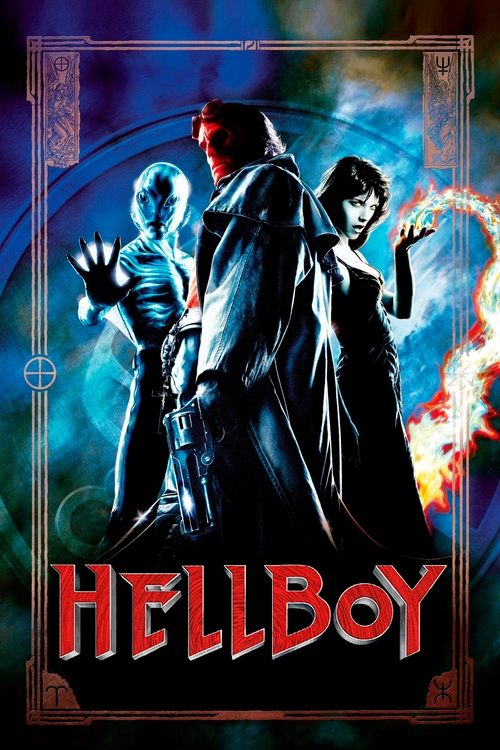
Hellboy
Hellboy Is About a Demon Who Files Down His Own Horns to Refuse the Destiny Written Into His Body
Directed by Guillermo del Toro
A creature summoned to end the world decides, daily, to be a man who saves it instead. Free will versus origin, staged as a comic-book brawl.
Hellboy was called up from the abyss by Nazi occultists to bring about the apocalypse. That is his design specification, his cosmic job description, carved into his anatomy: a right hand of stone that is the literal key to unlock the prison of the world-eating Ogdru Jahad. Del Toro takes this loud pulp premise and quietly makes it about the one question that outranks any monster fight. Does what you were made for get to decide what you become? Hellboy answers with a metal file. He grinds his horns down to stumps every day so he will not look like what he is. He is raised by a kind father, eats too many pancakes, pines over a woman, complains like anyone. The film's whole engine is the gap between the being's origin and the being's choices, and it insists, against the grain of every prophecy in the plot, that choice wins.
Gnostic Reading: The Spark That Refuses the Design of Its Makers
Gnosticism holds that the human spark was fashioned by a lower, blind creator, the Demiurge, and that liberation means waking up to a destiny higher than the one your maker intended for you. Hellboy is a Gnostic parable with the polarity flipped and made literal. His makers, Rasputin and the Nazi occult order, are the demiurgic powers who forged him for a fixed purpose: open the gate, end creation. The entire drama is the spark within the creature rejecting the intention stamped into its flesh.
Rasputin speaks the Demiurge's exact line when he tells Hellboy to embrace his true nature, his real name Anung un Rama, and take up his destiny of destruction. This is the false creator insisting the creation has no self beyond its function. Hellboy's refusal is gnosis in action: the knowing, deeper than instinct, that he is not the sum of how he was manufactured. The climactic image is precise Gnostic theater. His stone hand, the key of the Demiurge, is already turning the lock, and Liz calls him back to himself with love. He snaps off his own crown of horns and hurls it at Rasputin. The spark chooses against its maker. That is the whole doctrine.
Jungian Reading: The Father Who Contains the Shadow Instead of Slaying It
Jung taught that the shadow is not defeated by suppression but integrated by being consciously held, and that this holding is often the work of a wise elder. Professor Broom is that elder made flesh. He did not lock the demon-child away or destroy him. He named him, fed him, taught him, loved him into a shape the abyss did not intend. Hellboy is the shadow raised inside acceptance rather than exile, which is why he can wield his monstrousness for the light instead of being consumed by it.
The film knows that this integration is fragile and has a cost. Broom is murdered, and the loss of the containing father is what nearly lets Rasputin pull Hellboy back toward his origin. Liz inherits the holding role, and her love finishes what Broom began. Del Toro's argument is Jung's: a monster who is met and held becomes a protector, while a monster who is only feared becomes the apocalypse everyone was afraid of, and Hellboy is the demon who happened to be loved into the first kind.
Questions this film answers
What is the deeper meaning of Hellboy?
Hellboy was called up from the abyss by Nazi occultists to bring about the apocalypse. That is his design specification, his cosmic job description, carved into his anatomy: a right hand of stone that is the literal key to unlock the prison of the world-eating Ogdru Jahad. Del Toro takes this loud pulp premise and quietly makes it about the one question that outranks any monster fight. Does what you were made for get to decide what you become? Hellboy answers with a metal file. He grinds his horns down to stumps every day so he will not look like what he is. He is raised by a kind father, eats too many pancakes, pines over a woman, complains like anyone. The film's whole engine is the gap between the being's origin and the being's choices, and it insists, against the grain of every prophecy in the plot, that choice wins.
What is the hidden symbolism in Hellboy?
Gnosticism holds that the human spark was fashioned by a lower, blind creator, the Demiurge, and that liberation means waking up to a destiny higher than the one your maker intended for you. Hellboy is a Gnostic parable with the polarity flipped and made literal. His makers, Rasputin and the Nazi occult order, are the demiurgic powers who forged him for a fixed purpose: open the gate, end creation. The entire drama is the spark within the creature rejecting the intention stamped into its flesh.
What esoteric traditions appear in Hellboy?
Hellboy draws from Gnosticism, Jungian traditions. A creature summoned to end the world decides, daily, to be a man who saves it instead. Free will versus origin, staged as a comic-book brawl.
Is Hellboy worth watching for spiritual seekers?
Hellboy (2004) directed by Guillermo del Toro is essential viewing for those interested in Gnosticism, Jungian. Hellboy Is About a Demon Who Files Down His Own Horns to Refuse the Destiny Written Into His Body. It rewards multiple viewings and contemplation.
Rewatch With New Eyes
Now that you've seen the architecture, experience it again. The same film becomes a different film when you know what to watch for.
This time, watch for:
- Watch for the false world vs. the real — who is asleep, who awakens
- Meet the shadow: what is rejected, projected, and finally integrated
Links may include affiliate partnerships that support Media Revelations
The Descent Continues
Where this thread leads next.
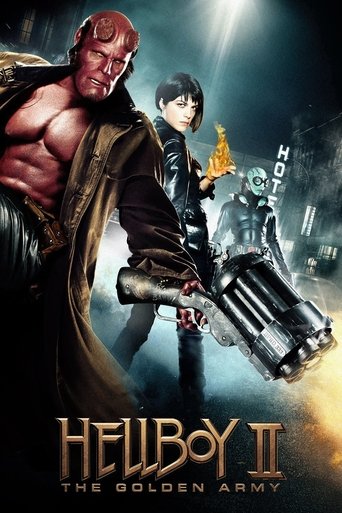
Hellboy II: The Golden Army 2008
Hellboy II Is About a Demon Choosing Humanity While the Magical World Dies for It
Read the revelation →