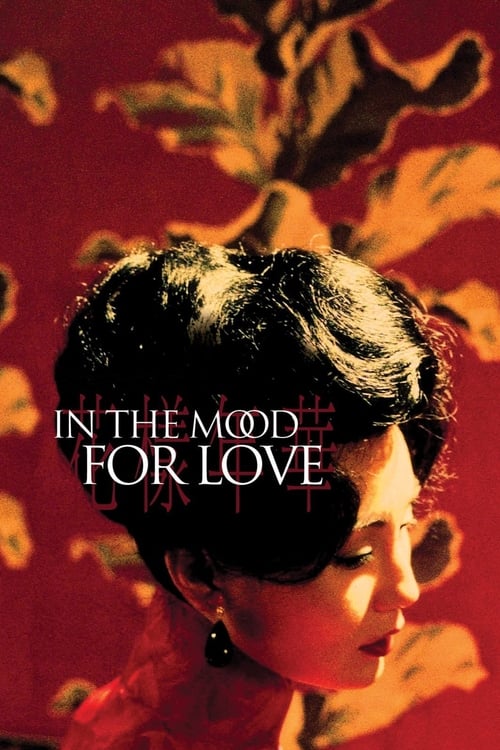
In the Mood for Love
Restraint as the Only Consummation
Directed by Wong Kar-Wai
The film about restraint as a form of consummation. Mr. Chow and Mrs. Chan never sleep together because the discipline of not-sleeping-together is the only way to retain ownership of the love they discovered. The empty hotel room is the temple. Their secret whispered into the wall at Angkor is the only marriage either of them ever actually completed.
In the Mood for Love is the most precise film ever made about restraint as the consummation of a love that consummation would have destroyed. Wong Kar-Wai filmed two neighbors in 1962 Hong Kong who discover, gradually and through carefully arranged dinners, that their respective spouses are having an affair with each other. Mr. Chow and Mrs. Chan are two people whose marriages have been quietly betrayed. They begin meeting to discuss what their spouses must be doing, then to enact the conversations they imagine their spouses having, then to write a martial arts serial together, then to occupy the empty rooms and noodle stalls and rainy streets of a city that is itself in the process of disappearing. They do not consummate. They never do. The film is the most precise depiction in cinema of the deliberate non-consummation that is itself a higher consummation. They preserve the love by refusing to enact it on the terms their spouses' adultery would have made available. The final sequence — Mr. Chow at Angkor Wat, whispering his secret into a hole in the ancient stone and sealing it with mud — is the marriage they actually performed. Wong is not making a film about repressed love. He is making a film about love that has been properly placed in a register where the social form would have ruined it. The Buddhist tradition has always understood this. Some attachments, properly held, become the path. Some attachments, consummated, become the obstacle. Mr. Chow and Mrs. Chan held theirs properly. The film is the evidence.
The Surface
Hong Kong, 1962. Mr. Chow Mo-wan, a newspaper editor, and his wife move into a small apartment in a Shanghainese tenement building. The same day, Mrs. Chan Su Li-zhen and her husband move into the next apartment. Both spouses are frequently absent. Mr. Chow's wife works late; Mrs. Chan's husband travels for business. Mr. Chow and Mrs. Chan become slightly acquainted as neighbors. They eventually realize, comparing details, that their respective spouses are having an affair with each other. They begin meeting at restaurants, then at hotel rooms, then at Mr. Chow's office. They never become physically involved. They write a martial arts serial together. Mr. Chow takes a job in Singapore. He invites Mrs. Chan to come with him. She does not. Years later — 1966 — Mr. Chow visits the old building. Mrs. Chan, now with a young son, lives in her old apartment. He does not know. He leaves. The film ends with Mr. Chow at Angkor Wat, whispering his secret into a hole in the ancient stone and sealing it with mud.
Wong Kar-Wai shot the film over fifteen months without a complete script. The actors were given small fragments of dialogue and asked to improvise extensively. Christopher Doyle and Mark Lee Ping-Bin's cinematography established a visual register — narrow corridors, slow-motion staircases, recurring rainfall, Maggie Cheung's procession of cheongsam — that has been imitated for two decades and never matched.
Most readings handle the film as the great unrequited love film of the contemporary era. The unrequited reading is a partial reading. The film is not arguing that Mr. Chow and Mrs. Chan failed to consummate something that should have been consummated. The film is arguing that the non-consummation was the consummation. The film is a defense of restraint as the higher form.
The Discipline of Not-Becoming-Them
Mr. Chow and Mrs. Chan discover early that their spouses are having an affair. The discovery is the structural event that organizes everything that follows. They could respond in any of several ways. They could confront. They could divorce. They could retaliate by having their own affair, restoring symmetry, completing the betrayal at both ends. This last response would be the most morally available — the wronged party gets to wrong in return, and the entire arrangement balances out.
They do not choose this. They choose, instead, the deliberate refusal to become the people their spouses have become. The phrase Mrs. Chan uses, repeatedly, is 'We won't be like them.' The refusal is the spiritual discipline. Their love, if consummated, would be structurally identical to the love their spouses have consummated. The only way to preserve a difference between their love and the love that broke their marriages is to refuse the act that would collapse the difference.
This is a Buddhist discipline as it is practiced in the everyday register. Buddhism distinguishes between attachment (clinging that produces suffering) and love (open acknowledgment of another being without grasping). Most romantic relationships in cinema are filmed as attachment. The lovers want to possess each other. The consummation is the seizing. Wong is filming love as the non-grasping mode. Mr. Chow and Mrs. Chan see each other clearly. They love what they see. They refuse to seize.
The refusal costs them. They both suffer. Neither finds another available partner that approaches the connection they had. They live the rest of their lives missing each other. The film does not pretend this is easy. The film is arguing that the suffering of the non-consummation is a different order of suffering than the suffering of the consummation would have been. The first suffering preserves the love. The second would have spent it. Mr. Chow and Mrs. Chan have, by the film's end, more love than either of their spouses retains.
The Empty Rooms and the Rainy Streets
The visual language of the film is the language of confined space. Narrow corridors. Tight stairwells. The hotel room Mr. Chow rents to write. The noodle stall under the eaves. The same camera angles reused across encounters until the spaces themselves become characters. Wong is not filming Hong Kong as cityscape. He is filming the interior architecture of constraint.
These spaces are also the spaces where the longing accumulates. The Sufi tradition has always understood that longing — the lover's pull toward the beloved who cannot be possessed — is itself a form of spiritual practice. The longing intensifies the consciousness. The longing makes the lover available to a register of experience that the consummated would not be available to. Rumi wrote that the wound is the place where the light enters. Wong films Mr. Chow and Mrs. Chan as beings into whom the light has entered through the wound of restraint.
The empty hotel room is the film's most sustained Sufi image. They meet there to write. They meet there to be near each other. They sit in different chairs. They drink tea. They go home. The room is unused for any of the purposes a hotel room is typically used for. The room is, in Sufi terms, a chamber for the practice. The practice is the deliberate proximity without consummation. The light has entered. The room is the container in which the light is being witnessed.
The rain that punctuates the film is the visual marker of these encounters. They walk under the rain. They share an umbrella. They retreat into doorways. The rain is the cosmos providing the conditions for the proximity. They cannot avoid each other on the wet street. They have to stand close. The rain is the universe's collusion in their longing. The film does not need to comment on this. The rain is enough. Wong cuts to the rain whenever the discipline is being most fully practiced.
The Hole in Angkor
The film ends with Mr. Chow at Angkor Wat in 1966. He walks through the ruins. He approaches a small hole in one of the ancient walls. He whispers something into the hole. He fills the hole with mud. He walks away. The film ends.
The act references an old tradition: a person carrying a secret too heavy to bear could find a hole in a tree, whisper the secret into it, and seal the hole. The tree would keep the secret. The person would be relieved of carrying it alone. Mr. Chow performs this act at the ancient temple complex of Angkor — the largest religious structure ever built, abandoned by its civilization, reclaimed by the jungle, accessible to a tourist from postwar Hong Kong who has carried a secret across years of his life.
The secret is the love. The love that was never consummated, never declared, never acknowledged by either party in language strong enough to count as confession. Mr. Chow has carried it. He needs to deposit it somewhere. The wall at Angkor is the only structure on Earth large enough and ancient enough to hold it. He whispers. He seals. He leaves.
This is the marriage the film has been preparing throughout. The wedding the two of them never had was performed by Mr. Chow alone, ten years later, into a wall of stone. The witness was the temple. The vow was the secret. The seal was the mud. The marriage is consummated in the only register that the discipline of the previous decade could permit: the register of testament to a structure that will outlast the speaker.
The film does not tell us what Mr. Chow whispered. The film does not need to. The viewer knows. The viewer has been with these two beings for two hours. The viewer has been the wall. The secret that Mr. Chow has whispered into the stone has also been whispered into the viewer, who is now responsible, in some small way, for keeping it.
The Transmission
In the Mood for Love transmits a recognition that contemporary romantic culture has largely lost: not every connection requires consummation, and some connections are preserved precisely by the refusal to consummate. The film is not anti-sexual. It is not arguing for chastity as a general principle. It is arguing that the specific connection Mr. Chow and Mrs. Chan discovered was a connection whose nature would have been altered, and altered for the worse, by the form their consummation would have taken.
Wong is doing something unfashionable. He is asserting that adults can perceive what a connection actually is and what its proper form actually is, and can act in accordance with that perception even when the perception requires giving up the more obvious pleasure. The discipline is not repression. The discipline is recognition. Mr. Chow and Mrs. Chan see what they have. They see what would happen if they tried to make it the thing their spouses' affair already was. They choose to keep the seeing rather than to enact the thing the seeing has shown them.
This is the structure of certain advanced spiritual practices. The practitioner perceives an opportunity. The practitioner recognizes that the opportunity, taken, would dissolve into the same banal structure that has dissolved every previous opportunity of this kind. The practitioner refrains. The refraining is not loss. The refraining is the practice. What gets preserved by the refraining is the perception itself — the practitioner remains capable of perceiving the next opportunity at the same level of clarity, because the previous perception was not spent.
The transmission, for the viewer who has experienced this, is the validation of what the viewer may have already done. There is a person you did not sleep with. There is a job you did not take. There is a city you did not move to. The standard cultural framing treats these as failures of nerve. The film argues that some of them were achievements of perception. You preserved something by not taking the thing the world said you should have taken. The thing you preserved is still in you. It is the wall at Angkor. It is the secret in the stone. The film is its quiet acknowledgment.
Questions this film answers
What is the deeper meaning of In the Mood for Love?
In the Mood for Love is the most precise film ever made about restraint as the consummation of a love that consummation would have destroyed. Wong Kar-Wai filmed two neighbors in 1962 Hong Kong who discover, gradually and through carefully arranged dinners, that their respective spouses are having an affair with each other. Mr. Chow and Mrs. Chan are two people whose marriages have been quietly betrayed. They begin meeting to discuss what their spouses must be doing, then to enact the conversations they imagine their spouses having, then to write a martial arts serial together, then to occupy the empty rooms and noodle stalls and rainy streets of a city that is itself in the process of disappearing. They do not consummate. They never do. The film is the most precise depiction in cinema of the deliberate non-consummation that is itself a higher consummation. They preserve the love by refusing to enact it on the terms their spouses' adultery would have made available. The final sequence — Mr. Chow at Angkor Wat, whispering his secret into a hole in the ancient stone and sealing it with mud — is the marriage they actually performed. Wong is not making a film about repressed love. He is making a film about love that has been properly placed in a register where the social form would have ruined it. The Buddhist tradition has always understood this. Some attachments, properly held, become the path. Some attachments, consummated, become the obstacle. Mr. Chow and Mrs. Chan held theirs properly. The film is the evidence.
What is the hidden symbolism in In the Mood for Love?
Hong Kong, 1962. Mr. Chow Mo-wan, a newspaper editor, and his wife move into a small apartment in a Shanghainese tenement building. The same day, Mrs. Chan Su Li-zhen and her husband move into the next apartment. Both spouses are frequently absent. Mr. Chow's wife works late; Mrs. Chan's husband travels for business. Mr. Chow and Mrs. Chan become slightly acquainted as neighbors. They eventually realize, comparing details, that their respective spouses are having an affair with each other. They begin meeting at restaurants, then at hotel rooms, then at Mr. Chow's office. They never become physically involved. They write a martial arts serial together. Mr. Chow takes a job in Singapore. He invites Mrs. Chan to come with him. She does not. Years later — 1966 — Mr. Chow visits the old building. Mrs. Chan, now with a young son, lives in her old apartment. He does not know. He leaves. The film ends with Mr. Chow at Angkor Wat, whispering his secret into a hole in the ancient stone and sealing it with mud.
What esoteric traditions appear in In the Mood for Love?
In the Mood for Love draws from Buddhism, Sufism traditions. The film about restraint as a form of consummation. Mr. Chow and Mrs. Chan never sleep together because the discipline of not-sleeping-together is the only way to retain ownership of the love they discovered. The empty hotel room is the temple. Their secret whispered into the wall at Angkor is the only marriage either of them ever actually completed.
What does In the Mood for Love teach about the discipline of not-becoming-them?
Their love, if consummated, would be structurally identical to the love their spouses have consummated. The only way to preserve a difference was to refuse the act that would collapse the difference. Mr. Chow and Mrs. Chan discover early that their spouses are having an affair. The discovery is the structural event that organizes everything that follows. They could respond in any of several ways. They could confront. They could divorce. They could retaliate by having their own affair, restoring symmetry, completing the betrayal at both ends. This last response would be the most morally available — the wronged party gets to wrong in return, and the entire arrangement balances out.
Is In the Mood for Love worth watching for spiritual seekers?
In the Mood for Love (2000) directed by Wong Kar-Wai is essential viewing for those interested in Buddhism, Sufism, Wong Kar-Wai. Restraint as the Only Consummation. It rewards multiple viewings and contemplation.
Rewatch With New Eyes
Now that you've seen the architecture, experience it again. The same film becomes a different film when you know what to watch for.
This time, watch for:
- See impermanence: what clings, what releases, what remains
- Feel the love that transforms: what the heart sees that the mind cannot
Links may include affiliate partnerships that support Media Revelations
The Descent Continues
Where this thread leads next.
2046 2004
2046 Is the Realm You Enter When You Refuse to Finish Grieving
Read the revelation →