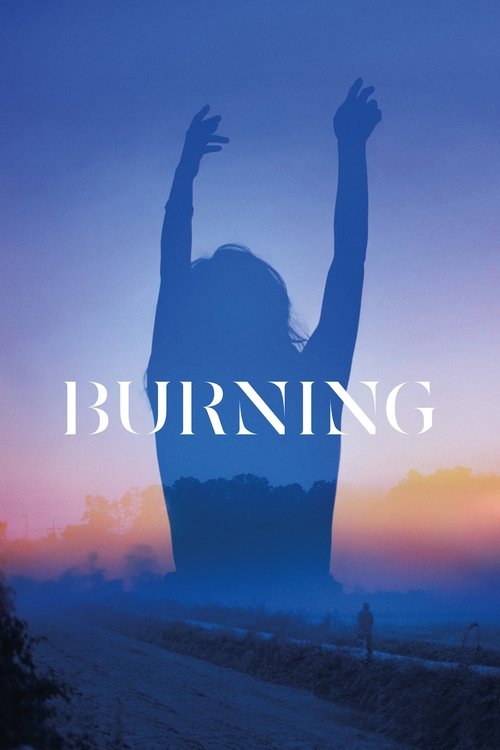
Lee made a film about the metaphysics of class envy. Ben is the rich man for whom everything — including women — is fuel for greenhouses he burns to relieve boredom. Jong-su is the working-class writer who cannot tell whether Hae-mi was murdered or whether his own jealousy has hallucinated her murder. The film refuses the answer because the answer is irrelevant. The structure of who-can-afford-what makes Hae-mi a greenhouse either way.
Burning is the most precise film ever made about the metaphysics of class envy in late capitalism. Lee Chang-dong adapted Murakami's short story 'Barn Burning' and relocated the moral weight to the structural collision between three Koreans: Jong-su, a working-class would-be writer from a depopulated border village; Ben, the wealthy Gangnam aesthete who treats everything as material for his curated leisure; and Hae-mi, the woman both men know and neither man can adequately see. Ben tells Jong-su, while smoking weed in Jong-su's father's farmhouse, that his hobby is burning unused greenhouses. He does this every couple of months. Nobody notices. Nobody complains. The greenhouses are abandoned, useless, ugly. He burns them because they should be burned. Hae-mi disappears shortly after. Jong-su looks at every greenhouse in the area. None of them have burned. He becomes convinced that Ben's 'greenhouses' is a code — that Ben has killed Hae-mi and other women, and that 'burning' is the metaphor Ben used to confess without confessing. The film refuses to confirm or deny this. The film does not need to. The class structure that places Ben above Hae-mi and Hae-mi above Jong-su is the actual perpetrator. Whether Ben literally killed her is irrelevant. The world Lee has filmed is one in which young women without family or financial backing are structurally available as greenhouses for men who can afford to set them on fire — literally or otherwise — without any institution noticing or caring. Jong-su's final act of stabbing Ben and burning his Porsche is not justice. It is the working-class man finally recognizing what the structure is, and performing his small impotent counter-arson within it.
The Surface
Lee Jong-su, a young man who has quit university and works odd delivery jobs, runs into Hae-mi, a woman from his hometown. They have sex. She asks him to feed her cat while she travels to Africa. When she returns, she is accompanied by Ben — a wealthy, well-dressed man she met during a delay in Nairobi. The three spend time together. Ben invites Jong-su to his apartment in Gangnam. Ben drives Hae-mi and Jong-su to Jong-su's father's farmhouse near the North Korean border. There, while Hae-mi sleeps, Ben tells Jong-su that he periodically burns greenhouses for the pleasure of it and that he has chosen one to burn very soon, very close. Jong-su scouts every greenhouse in the area. None has burned. Hae-mi disappears, her phone disconnected. Jong-su becomes obsessed. He follows Ben. He finds in Ben's bathroom a drawer full of women's jewelry — including pieces that belonged to Hae-mi and other women, suggesting a pattern. He invites Ben to meet him at a remote location. He stabs Ben, sets Ben and his Porsche on fire, and drives away naked into the snow.
The film was Lee's first in eight years and is generally considered his masterpiece. It expanded a brief Murakami short story into a 148-minute meditation on contemporary Korean class structure, masculine jealousy, and the precarity of young women without protective infrastructure.
Most readings treat the film as ambiguous psychological thriller. The ambiguity is real and is the film's point. Lee deliberately structured every clue to be readable in two ways: as evidence of Ben's serial murder, or as evidence of Jong-su's class-resentment-driven paranoid projection. The film argues that the question of which reading is correct is a less important question than the question of how the structure could produce either reading.
Ben as the Idle Archon
Ben is the film's central enigma and its most theologically loaded figure. He is wealthy in a way that the film never explains. He has a Gangnam apartment, a Porsche, a circle of similarly polished friends. He cooks elaborate dinners as casual leisure. He yawns at others' conversations. He does no visible work. Hae-mi asks him what he does for a living. He says vaguely that he plays. He smiles.
He is the contemporary Korean version of the Gnostic Archon — the entity who administers the material world for purposes external to the inhabitants of the material world. Ben does not need to be a literal serial killer to fill this function. He is, structurally, the embodiment of a class for whom other beings are material for curated experiences. Hae-mi is fascinating to him for an evening or two. Jong-su is interesting to him as a study in working-class life. Both are, on the level of his class position, raw material for his leisure. He can afford them. He may eventually discard them. There is no level on which he is accountable for the discarding.
The greenhouses are the metaphor he chooses to describe his actual operation. They are abandoned, useless, ugly structures that the world has built and forgotten. They serve no one. Burning them is, in his framing, an aesthetic gesture — a small purification, a clearing of detritus, a contribution to the visual order of the landscape. The framing is precisely the framing his class uses to justify the disposability of beings whose lives have been rendered useless by the same economic structure that produced his wealth.
Hae-mi, in this framing, is a greenhouse. She has no family. She has no money. She has a job that is failing. She has accumulated debts. She is, by the metrics of Ben's class, a structure the world would not notice the burning of. Whether Ben literally burns her or whether the world burns her through any of the standard mechanisms — homelessness, drug overdose, suicide, attack by a stranger — is, on Lee's analysis, secondary. The world is structured to allow her burning. Ben is structured to perform it or to allow it. The result is the same. The film simply refuses to specify which mechanism occurred.
Jong-su and the Ambiguity of His Own Knowing
Jong-su is the film's perspective and is also the film's least reliable narrator. He is poor. He has not finished his novel. His father is in prison for assaulting a government official. His mother left when he was a child. He is sexually inexperienced. He is jealous of Ben in ways he cannot articulate and that the film treats as both psychologically diagnostic and structurally accurate.
His pursuit of evidence against Ben is genuinely investigative and is also genuinely projective. He has class-based reasons to hate Ben. He has gendered reasons to hate Ben (Ben has Hae-mi's attention). He has narrative reasons to construct Ben as the villain (Jong-su is a would-be writer; turning Ben into a serial killer is the kind of story Jong-su, a Murakami fan, would write). His evidence accumulates: the cat in Ben's apartment that responds to Hae-mi's cat's name, the jewelry in the bathroom drawer, the slight smile when Jong-su mentions Hae-mi's disappearance. None of the evidence is conclusive. All of it could be coincidence amplified by Jong-su's paranoia. None of it can be ruled out as the trace of an actual pattern.
Lee's framing maintains the ambiguity with remarkable discipline. The viewer is never given access to anything Jong-su does not have access to. The viewer cannot resolve the question because Jong-su cannot resolve the question. The viewer's reading of the evidence depends on the viewer's pre-existing willingness to read class-elite figures as predators or to read working-class men as paranoid. Both readings are available. Both readings are dignified by the film. The film refuses to legislate.
This is the Jungian recognition rendered as structural commentary. The Shadow that Jong-su projects onto Ben may be accurate (Ben really is a predator) or it may be the standard Jungian mechanism (Jong-su's own envy and rage have located themselves on a target the social structure makes available for hostility). Probably both are partially true. The film argues that the inability to separate the two is itself the actual condition of life under late capitalism. The structure produces real predators. The structure also produces the projective mechanisms by which the powerless misidentify which specific elite is the predator. Both can be operating simultaneously and the operating-simultaneously is what makes the situation unresolvable.
The Final Act as Initiation Failure
Jong-su's final act is the killing of Ben and the burning of Ben's body and car. He has lured Ben to a remote location. He stabs Ben repeatedly. He undresses, places his clothes in the Porsche, sets the car alight, and drives away naked. The sequence is filmed with the restraint that has characterized the entire film. There is no triumph. There is no clarity. The act is performed in silence.
This is the film's most precise depiction of failed initiation. Jong-su has been preparing, throughout the film, to cross some threshold — to write his novel, to claim Hae-mi, to confront Ben, to become an adult. None of the conventional thresholds have been available. He cannot finish the novel because he has no story he believes in. He cannot claim Hae-mi because Hae-mi is gone (whether dead or simply moved-on, the film leaves open). He cannot confront Ben within any institutional framework because the institutional framework does not recognize his perspective as legitimate.
The only remaining threshold is violence. He chooses it. The choice is not heroic. The choice is the recognition that no other initiatory structure is available to him. The class system does not have a graduation for him. The literary world has not received him. The romantic structure has discarded him. The remaining act is the murder of the man who, whether perpetrator or symbol, embodies the structure that has shut him out.
He drives away naked because the act has stripped him. He has performed his initiation into adulthood by killing. The killing is not the achievement traditional initiation would have aimed for. The killing is what the absence of legitimate initiatory structures has produced. The traditional rites would have given the young man a function, a community, a name. The contemporary social order has given Jong-su a stab wound on a Porsche owner and a long drive home. He has crossed a threshold. The threshold leads nowhere recognizable. The film cuts to black on his face, awake to what he has just done and uncertain what comes next.
The Transmission
Burning transmits a recognition that contemporary cinema has mostly avoided: the structural violence of late capitalism produces conditions under which young women without protective infrastructure are systematically expendable, and the impotent rage of young working-class men is systematically channeled into private violence against individual elites rather than against the structure that produces both vulnerabilities.
Lee is not exonerating Jong-su. The film is rigorous about Jong-su's projective mechanisms, his sexual entitlement, his inability to read Hae-mi as an autonomous being. He is one of the structures that has failed her. The film is also not condemning Jong-su. He is genuinely an instance of a wider failure and his violence is genuinely a response to that failure. The film refuses both moral simplifications because both would be smaller than the diagnosis the film is delivering.
What Lee transmits is the analytical position from which Ben's burning of greenhouses, Jong-su's burning of Ben, and the wider system's burning of Hae-mi are all the same operation performed at different scales. The greenhouses are the small abandoned structures that the wealthy can dispose of without notice. Ben is the slightly larger structure that the police, eventually noticing his absence, may briefly investigate. Hae-mi is the structure that nobody notices is missing at all. Each burning has the same logic: structures that the world has been built to consider expendable are expended when convenient. The class system is the architecture of who-is-burnable.
The transmission, for the viewer, is the demand that they consider where they sit in the architecture. Are you the one who can afford to burn? Are you the one who burns? Are you the one nobody notices was burned? The film does not let the viewer remain comfortable with the answer. The naked Jong-su in the snow is the final image. He has done something. He has not solved anything. The greenhouses are still there. The class system is still there. The next Hae-mi is somewhere being met by the next Ben. The film cuts to black on the recognition that the recognition is itself not the cure.
Questions this film answers
What is the deeper meaning of Burning?
Burning is the most precise film ever made about the metaphysics of class envy in late capitalism. Lee Chang-dong adapted Murakami's short story 'Barn Burning' and relocated the moral weight to the structural collision between three Koreans: Jong-su, a working-class would-be writer from a depopulated border village; Ben, the wealthy Gangnam aesthete who treats everything as material for his curated leisure; and Hae-mi, the woman both men know and neither man can adequately see. Ben tells Jong-su, while smoking weed in Jong-su's father's farmhouse, that his hobby is burning unused greenhouses. He does this every couple of months. Nobody notices. Nobody complains. The greenhouses are abandoned, useless, ugly. He burns them because they should be burned. Hae-mi disappears shortly after. Jong-su looks at every greenhouse in the area. None of them have burned. He becomes convinced that Ben's 'greenhouses' is a code — that Ben has killed Hae-mi and other women, and that 'burning' is the metaphor Ben used to confess without confessing. The film refuses to confirm or deny this. The film does not need to. The class structure that places Ben above Hae-mi and Hae-mi above Jong-su is the actual perpetrator. Whether Ben literally killed her is irrelevant. The world Lee has filmed is one in which young women without family or financial backing are structurally available as greenhouses for men who can afford to set them on fire — literally or otherwise — without any institution noticing or caring. Jong-su's final act of stabbing Ben and burning his Porsche is not justice. It is the working-class man finally recognizing what the structure is, and performing his small impotent counter-arson within it.
What is the hidden symbolism in Burning?
Lee Jong-su, a young man who has quit university and works odd delivery jobs, runs into Hae-mi, a woman from his hometown. They have sex. She asks him to feed her cat while she travels to Africa. When she returns, she is accompanied by Ben — a wealthy, well-dressed man she met during a delay in Nairobi. The three spend time together. Ben invites Jong-su to his apartment in Gangnam. Ben drives Hae-mi and Jong-su to Jong-su's father's farmhouse near the North Korean border. There, while Hae-mi sleeps, Ben tells Jong-su that he periodically burns greenhouses for the pleasure of it and that he has chosen one to burn very soon, very close. Jong-su scouts every greenhouse in the area. None has burned. Hae-mi disappears, her phone disconnected. Jong-su becomes obsessed. He follows Ben. He finds in Ben's bathroom a drawer full of women's jewelry — including pieces that belonged to Hae-mi and other women, suggesting a pattern. He invites Ben to meet him at a remote location. He stabs Ben, sets Ben and his Porsche on fire, and drives away naked into the snow.
What esoteric traditions appear in Burning?
Burning draws from Gnosticism, Jungian, Initiation traditions. Lee made a film about the metaphysics of class envy. Ben is the rich man for whom everything — including women — is fuel for greenhouses he burns to relieve boredom. Jong-su is the working-class writer who cannot tell whether Hae-mi was murdered or whether his own jealousy has hallucinated her murder. The film refuses the answer because the answer is irrelevant. The structure of who-can-afford-what makes Hae-mi a greenhouse either way.
What does Burning teach about ben as the idle archon?
Hae-mi is, by the metrics of Ben's class, a structure the world would not notice the burning of. The world is structured to allow her burning. Ben is the film's central enigma and its most theologically loaded figure. He is wealthy in a way that the film never explains. He has a Gangnam apartment, a Porsche, a circle of similarly polished friends. He cooks elaborate dinners as casual leisure. He yawns at others' conversations. He does no visible work. Hae-mi asks him what he does for a living. He says vaguely that he plays. He smiles.
Is Burning worth watching for spiritual seekers?
Burning (2018) directed by Lee Chang-dong is essential viewing for those interested in Gnosticism, Initiation, Lee Chang-dong. The Greenhouses the Rich Burn for Boredom. It rewards multiple viewings and contemplation.
Rewatch With New Eyes
Now that you've seen the architecture, experience it again. The same film becomes a different film when you know what to watch for.
This time, watch for:
- Watch for the false world vs. the real — who is asleep, who awakens
- Meet the shadow: what is rejected, projected, and finally integrated
- Mark the threshold: the old self dies, the ordeal transforms, the new self returns
Links may include affiliate partnerships that support Media Revelations
The Descent Continues
Where this thread leads next.

The Handmaiden 2016
Burning the Library That Defined You
Read the revelation →