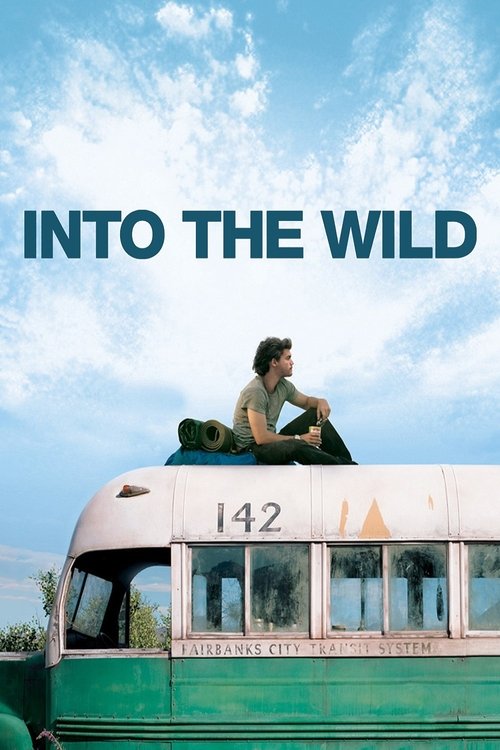
Into the Wild
Into the Wild Is an Initiation That Reached Its Threshold and Was Refused Passage
Directed by Sean Penn
Christopher McCandless completed every stage of the hero's journey except the return. The wilderness did not kill a fool. It graduated a man who had nowhere left to walk back to.
McCandless burns his money, abandons his name, gives away his savings, and walks north until the road ends at an abandoned bus on the Stampede Trail. The popular reading treats him as a romantic who underestimated Alaska, or a wounded son fleeing a violent house. Both are true and neither is the film. Sean Penn structures the story in chapters with the language of myth: "My Own Birth," "Adolescence," "Manhood," "Getting of Wisdom." This is a map of an initiation, followed precisely, all the way to the one stage McCandless could not cross. The wilderness gave him everything he went there for. Then it asked him to bring it back, and he had built a life with no door back in.
Initiatory Reading: Every Threshold Crossed Except the Last
The classical initiation is descent, ordeal, transformation, return. McCandless nails the first three with terrifying discipline. He severs from the profane world by burning his identification and cash, the ritual death of the old self. He crosses into the underworld literally, fording a river swollen with snowmelt that later rises and traps him, the guardian at the threshold that lets you in but not out. On the bus he undergoes the ordeal: hunger, solitude, the shooting of a moose whose meat rots because he does not know how to preserve it, his first real confrontation with his own insufficiency.
Then transformation arrives. In his last legible entry he writes "HAPPINESS ONLY REAL WHEN SHARED," and underlines it. This is the gnosis every initiation is designed to deliver. But an initiation completes only at return, when the transformed one carries the fire back to the village and lays it in the common hearth. McCandless reaches the swollen river and cannot cross. The passage out is closed. He dies inside his own realization, holding the truth that was meant to send him home. He learned everything the wilderness had to teach and then discovered he had built his descent so total that the ladder back up was already burned.
Buddhist Reading: Renunciation Mistaken for the Destination
The Buddha left a palace, a wife, and a son, and walked into the forest. This is the image McCandless is living inside, and the film knows it. He renounces wealth, family, name, the entire apparatus of the conditioned self. In Buddhist terms he is enacting the great going-forth, the abandonment of the householder life for the truth beyond it.
But the Buddha's renunciation was a method, not a resting place. He starved himself nearly to death in the forest and recognized asceticism as another trap, another way the self performs its own purity. He came back to the world and taught for forty-five years. The middle way is precisely the refusal to mistake the leaving for the arriving. McCandless renounces beautifully and then keeps renouncing, treating the wilderness itself as the answer rather than the crucible. His scrawled realization that happiness is only real when shared is the middle way arriving too late, the recognition that liberation was never in the solitude. He sees it in the bus, with no one to tell, with the river risen. He found the teaching. He could not find the sangha.
Questions this film answers
What is the deeper meaning of Into the Wild?
McCandless burns his money, abandons his name, gives away his savings, and walks north until the road ends at an abandoned bus on the Stampede Trail. The popular reading treats him as a romantic who underestimated Alaska, or a wounded son fleeing a violent house. Both are true and neither is the film. Sean Penn structures the story in chapters with the language of myth: "My Own Birth," "Adolescence," "Manhood," "Getting of Wisdom." This is a map of an initiation, followed precisely, all the way to the one stage McCandless could not cross. The wilderness gave him everything he went there for. Then it asked him to bring it back, and he had built a life with no door back in.
What is the hidden symbolism in Into the Wild?
The classical initiation is descent, ordeal, transformation, return. McCandless nails the first three with terrifying discipline. He severs from the profane world by burning his identification and cash, the ritual death of the old self. He crosses into the underworld literally, fording a river swollen with snowmelt that later rises and traps him, the guardian at the threshold that lets you in but not out. On the bus he undergoes the ordeal: hunger, solitude, the shooting of a moose whose meat rots because he does not know how to preserve it, his first real confrontation with his own insufficiency.
What esoteric traditions appear in Into the Wild?
Into the Wild draws from Initiation, Buddhism traditions. Christopher McCandless completed every stage of the hero's journey except the return. The wilderness did not kill a fool. It graduated a man who had nowhere left to walk back to.
Is Into the Wild worth watching for spiritual seekers?
Into the Wild (2007) directed by Sean Penn is essential viewing for those interested in Initiation, Buddhism. Into the Wild Is an Initiation That Reached Its Threshold and Was Refused Passage. It rewards multiple viewings and contemplation.
Rewatch With New Eyes
Now that you've seen the architecture, experience it again. The same film becomes a different film when you know what to watch for.
This time, watch for:
- Mark the threshold: the old self dies, the ordeal transforms, the new self returns
- See impermanence: what clings, what releases, what remains
Links may include affiliate partnerships that support Media Revelations
The Descent Continues
Where this thread leads next.
Grizzly Man 2005
Grizzly Man Is the Story of a Man Who Tried to Cross Into the Animal World and Was Devoured at the Border
Read the revelation →