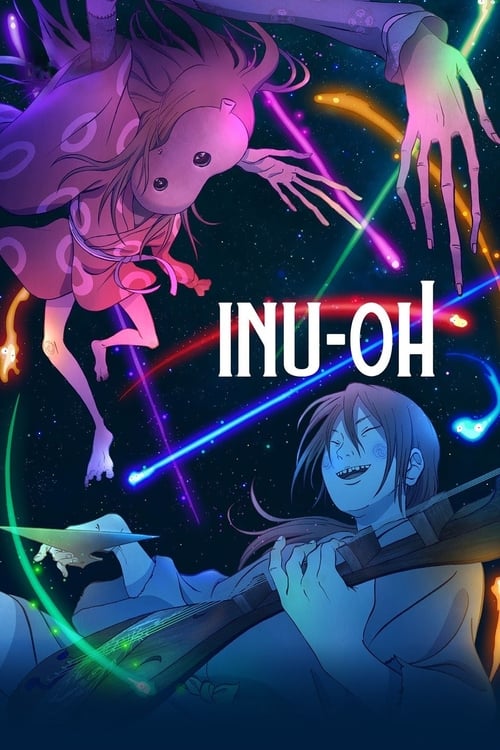
Inu-Oh
Inu-Oh Is a Rock Opera About the Dead Demanding Their Story Be Sung Correctly
Directed by Masaaki Yuasa
A masked demon dances, a blind boy plays a biwa strung with a dead man's rage, and every performance sets a mangled soul free. Yuasa built a ghost story that looks like a concert.
Tomona is a boy blinded when his father pried open a cursed sword pulled from the drowned Heike clan's sunken treasure. Inu-Oh is born deformed, a gourd-shaped body and a monstrous arm, hidden behind a mask his own family forces on him. They meet, and when they perform together the crowds go wild, and something stranger happens: with each song about the forgotten Heike dead, a piece of Inu-Oh's cursed body corrects itself. The surface is a defiant anachronism, fourteenth-century Noh performed as arena rock with stage-diving and light shows. Underneath it is the oldest function of performance stated without apology. Inu-Oh's deformities are not random. They are the unfinished business of ghosts, and each song is an exorcism paid for in the only currency the dead accept, which is being remembered truthfully.
Shamanic Reading: The Performer as Vessel for the Restless Dead
Across Japan, blind biwa players called biwa hoshi were not entertainers first. They were mediums, the ones who chanted the Tale of the Heike to placate the vengeful spirits of a clan slaughtered at sea, spirits believed to curse the living until their story was sung. Tomona is literally one of them, his biwa strung with the anger of the father the Heike sword killed. This is the shamanic office exactly: the wounded one who crosses to the dead because his wound already opened the door.
Watch what actually heals Inu-Oh. His body is a map of grievances, each limb the residue of a Heike soul whose true death was never mourned. When he dances the story of one of them and the crowd receives it, that soul is finally seen, and the mask over that part of him falls away. This is soul-retrieval performed in public. The performer becomes the vessel, the dead speak through his body, and the audience is the witness whose attention completes the rite. Inu-Oh grows beautiful not through medicine but through mediumship. He is being emptied of the ghosts one song at a time.
Buddhist Reading: The Karma of a Story Told Wrong
The Ashikaga shogunate wants one authorized version of the Heike tale, and it executes the performers who sing the unsanctioned dead. This is the film's sharpest teaching. In Buddhism a soul cannot pass while clinging remains, and the Heike dead cling because the official history erased how they truly died. A story told wrong is a karmic knot that binds both the dead who cannot rest and the living who profit from the lie.
Tomona and Inu-Oh untie those knots by singing what the shogun forbids, and they are punished for it, and here the film refuses sentimentality. Inu-Oh accepts the authorized version to save Tomona and loses his voice, his name, his liberation. He submits to the lie and remains bound. Six hundred years later Tomona, reborn again and again across the film's frame, still walks the modern city searching for his friend, still refusing to let the true story die. The teaching lands hard: to tell the story correctly can cost you everything, and to let it be told falsely is a debt that outlives centuries. The friendship is the one thing that keeps crossing over.
Questions this film answers
What is the deeper meaning of Inu-Oh?
Tomona is a boy blinded when his father pried open a cursed sword pulled from the drowned Heike clan's sunken treasure. Inu-Oh is born deformed, a gourd-shaped body and a monstrous arm, hidden behind a mask his own family forces on him. They meet, and when they perform together the crowds go wild, and something stranger happens: with each song about the forgotten Heike dead, a piece of Inu-Oh's cursed body corrects itself. The surface is a defiant anachronism, fourteenth-century Noh performed as arena rock with stage-diving and light shows. Underneath it is the oldest function of performance stated without apology. Inu-Oh's deformities are not random. They are the unfinished business of ghosts, and each song is an exorcism paid for in the only currency the dead accept, which is being remembered truthfully.
What is the hidden symbolism in Inu-Oh?
Across Japan, blind biwa players called biwa hoshi were not entertainers first. They were mediums, the ones who chanted the Tale of the Heike to placate the vengeful spirits of a clan slaughtered at sea, spirits believed to curse the living until their story was sung. Tomona is literally one of them, his biwa strung with the anger of the father the Heike sword killed. This is the shamanic office exactly: the wounded one who crosses to the dead because his wound already opened the door.
What esoteric traditions appear in Inu-Oh?
Inu-Oh draws from Shamanism, Buddhism traditions. A masked demon dances, a blind boy plays a biwa strung with a dead man's rage, and every performance sets a mangled soul free. Yuasa built a ghost story that looks like a concert.
Is Inu-Oh worth watching for spiritual seekers?
Inu-Oh (2022) directed by Masaaki Yuasa is essential viewing for those interested in Shamanism, Buddhism. Inu-Oh Is a Rock Opera About the Dead Demanding Their Story Be Sung Correctly. It rewards multiple viewings and contemplation.
Rewatch With New Eyes
Now that you've seen the architecture, experience it again. The same film becomes a different film when you know what to watch for.
This time, watch for:
- Follow the descent: what dies, what guides, what returns transformed
- See impermanence: what clings, what releases, what remains
Links may include affiliate partnerships that support Media Revelations
The Descent Continues
Where this thread leads next.
Millennium Actress 2001
Millennium Actress Reveals the Beloved Was Only the Pretext for the Chase
Read the revelation →