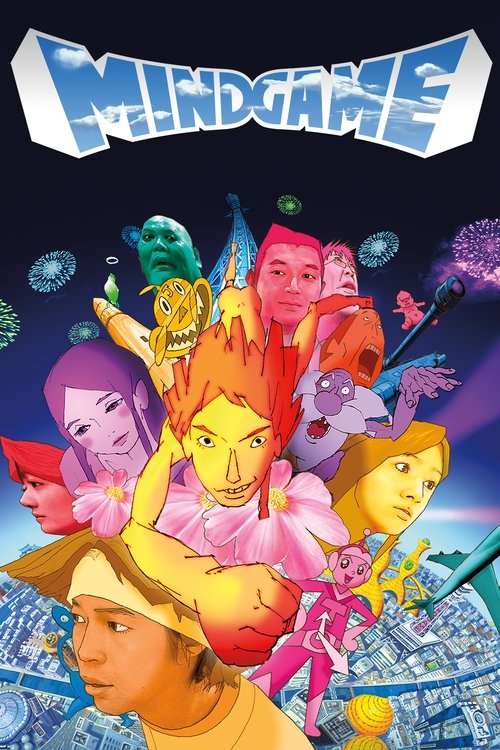
Mind Game
The God in Mind Game Gives Nishi His Life Back Because Nishi Was Already Dead Before the Bullet
Directed by Masaaki Yuasa
Masaaki Yuasa hides a complete shamanic initiation inside forty minutes of gonzo visual chaos, the death, the divine encounter, the descent, and the return that changes everything.
Nishi is a coward before the yakuza shoots him. He has the girl, the moment, and the will to act, and he chooses nothing. The bullet only formalizes what was already spiritually true. His death is not the film's crisis. His death is the film's diagnosis. What Yuasa understands, and what the film transmits at speed, is that most people are dead in exactly this way long before any external event makes it visible. The divine encounter that follows does not resurrect a man cut down in his prime. It resurrects a man who had already surrendered his life.
The Shamanic Reading: Death Is the Door, Not the Destination
In shamanic traditions across Siberia, the Amazon, and the Japanese archipelago itself, the shaman cannot access the spirit world until they have died and been reconstituted. The death is literal, sickness, accident, dismemberment in the lower world, and the reconstitution comes through the encounter with a spirit that sends the shaman back with new eyes. Mind Game follows this architecture precisely. Nishi is shot through the anus in the opening sequence, a grotesque, undignified death that strips all pretension. He rises into a place where God appears as a rapidly cycling sequence of faces, genders, ages, and species, never settling into any single form. The God here does not judge or comfort. God grabs Nishi, throws him back toward the living, and says: go. The violence of the return is the point. No gentle reintegration. No grace period. The shaman is thrown back into the world already changed, still bleeding, and now obligated to live differently. Everything Nishi does after the bullet, stealing a car, outrunning the yakuza, eventually being swallowed by a whale alongside two strangers, carries the urgency of someone who has seen what the alternative looks like from the inside.
The Jungian Reading: The Whale Is the Unconscious That Has to Be Inhabited
When Nishi, Yan, and Forori end up inside the whale's belly, the film moves from initiation into integration. Jung's concept of the nekyia is the night sea journey, the voluntary descent into the unconscious to retrieve what was abandoned there. The belly of the whale is among the oldest symbols in this tradition: Jonah, Pinocchio, the Fisher King's wound. Nishi does not fight his way out immediately. He builds a life inside the beast. He and the others cook, sleep, construct, tell stories, and wait across what may be years or only days. The whale's interior is not a prison, it is the unconscious made habitable. An old man has been living there for decades already, having given up on exit entirely. His presence shows Nishi the other terminus: you can adapt to confinement so completely that you forget it is confinement. The film's climax is Nishi refusing this. The eruption through the whale's blowhole is not escape from the underworld. It is the full surfacing of what the initiation prepared: a self that has inhabited its own depths and chosen, at last, to move.
Questions this film answers
What is the deeper meaning of Mind Game?
Nishi is a coward before the yakuza shoots him. He has the girl, the moment, and the will to act, and he chooses nothing. The bullet only formalizes what was already spiritually true. His death is not the film's crisis. His death is the film's diagnosis. What Yuasa understands, and what the film transmits at speed, is that most people are dead in exactly this way long before any external event makes it visible. The divine encounter that follows does not resurrect a man cut down in his prime. It resurrects a man who had already surrendered his life.
What is the hidden symbolism in Mind Game?
In shamanic traditions across Siberia, the Amazon, and the Japanese archipelago itself, the shaman cannot access the spirit world until they have died and been reconstituted. The death is literal, sickness, accident, dismemberment in the lower world, and the reconstitution comes through the encounter with a spirit that sends the shaman back with new eyes. Mind Game follows this architecture precisely. Nishi is shot through the anus in the opening sequence, a grotesque, undignified death that strips all pretension. He rises into a place where God appears as a rapidly cycling sequence of faces, genders, ages, and species, never settling into any single form. The God here does not judge or comfort. God grabs Nishi, throws him back toward the living, and says: go. The violence of the return is the point. No gentle reintegration. No grace period. The shaman is thrown back into the world already changed, still bleeding, and now obligated to live differently. Everything Nishi does after the bullet, stealing a car, outrunning the yakuza, eventually being swallowed by a whale alongside two strangers, carries the urgency of someone who has seen what the alternative looks like from the inside.
What esoteric traditions appear in Mind Game?
Mind Game draws from Shamanism, Jungian traditions. Masaaki Yuasa hides a complete shamanic initiation inside forty minutes of gonzo visual chaos, the death, the divine encounter, the descent, and the return that changes everything.
Is Mind Game worth watching for spiritual seekers?
Mind Game (2004) directed by Masaaki Yuasa is essential viewing for those interested in Shamanism, Jungian. The God in Mind Game Gives Nishi His Life Back Because Nishi Was Already Dead Before the Bullet. It rewards multiple viewings and contemplation.
Rewatch With New Eyes
Now that you've seen the architecture, experience it again. The same film becomes a different film when you know what to watch for.
This time, watch for:
- Follow the descent: what dies, what guides, what returns transformed
- Meet the shadow: what is rejected, projected, and finally integrated
Links may include affiliate partnerships that support Media Revelations
The Descent Continues
Where this thread leads next.
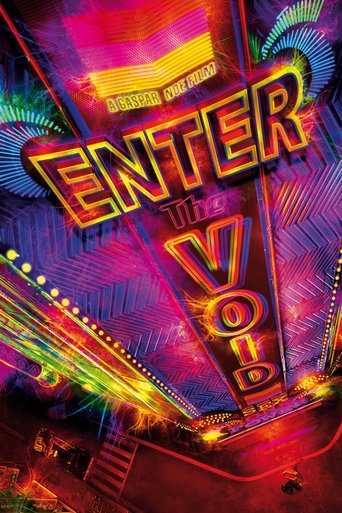
Enter the Void 2009
What Happens After You Die (According to the Tibetan Book of the Dead)
Read the revelation →