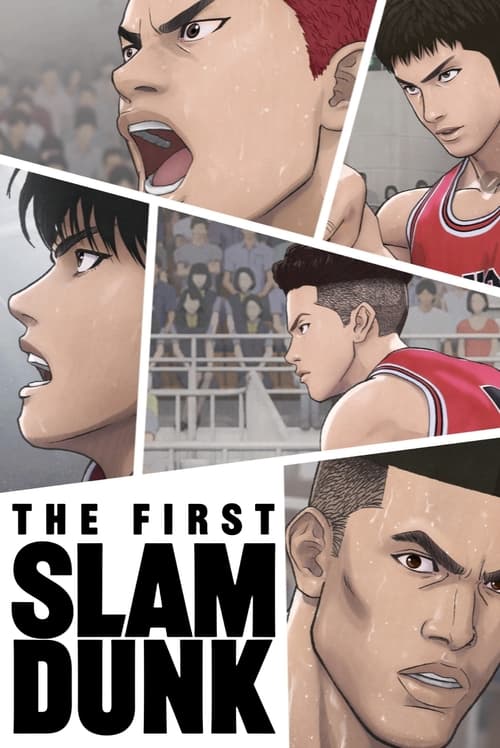
The First Slam Dunk
The First Slam Dunk Is a Grief Film Wearing a Basketball Game as Armor
Directed by Takehiko Inoue
Inoue films one game in real time and cuts it against a dead brother. The sport is not the subject. The court is the only place Ryota can be with what he lost.
The First Slam Dunk looks like a sports movie: Shohoku High plays the reigning champions, Sannoh, and the film follows the match nearly minute by minute. But Inoue makes a structural choice that reveals the real film. He centers not the manga's famous hothead but Ryota Miyagi, the small point guard, and he threads the game with flashbacks to Ryota's older brother Sota, who loved basketball, who taught Ryota the game, and who drowned. The match is the surface. The undertow is a boy playing the sport his dead brother gave him, in a body that is too small for it, against opponents who tower over him, as a way of continuing a conversation death cut off. The film's power is that it never lets the game escape the grief, and never lets the grief stop the game.
Buddhist Reading: The Present Moment as the Only Place the Dead Can Be Reached
Buddhism teaches that suffering lives in the mind's refusal to stay present, in its compulsion to grip the past and rehearse the future. Ryota's whole life has been gripping the past, one drowned morning that keeps replaying. The film's formal genius is that basketball forces presence. On the court there is only now, only the ball, only the next possession, and the game will not wait for you to mourn. Inoue makes this literal when Ryota, mid-match, has to shut out the noise and the memory to sink the shot.
The Zen instruction is that you meet the whole of your life inside a single breath fully entered. Ryota reaches his brother not by clinging to the memory but by entering the game so completely that Sota is present in it, because Sota is the game. Presence is not the opposite of grief. It is the only room large enough to hold it. The final silent possession, sound draining away until only the play remains, is a meditation staged as a fast break: total attention, no past, no future, and inside that emptiness the dead are somehow closest.
Jungian Reading: Playing His Brother's Position to Integrate the Lost Half
In Jungian terms Sota is more than a lost sibling. He is Ryota's shadow-ideal, the larger self Ryota believes died with him, the person he was supposed to become. Ryota keeps his brother's things, wears the wristband, plays the game his brother mastered, in an unconscious attempt to carry a self that was severed too early. This is unresolved introjection: the mourner tries to keep the dead alive by living them, which is a way of being possessed rather than whole.
Individuation requires that Ryota stop being his brother and become the point guard only he can be, the small quick player who wins through speed rather than size. The match is the arena of integration. When Ryota finally plays as himself and not as Sota's replacement, the lost half is not abandoned. It is integrated, folded into a self that can finally hold both the brother and the grief without drowning in either.
Questions this film answers
What is the deeper meaning of The First Slam Dunk?
The First Slam Dunk looks like a sports movie: Shohoku High plays the reigning champions, Sannoh, and the film follows the match nearly minute by minute. But Inoue makes a structural choice that reveals the real film. He centers not the manga's famous hothead but Ryota Miyagi, the small point guard, and he threads the game with flashbacks to Ryota's older brother Sota, who loved basketball, who taught Ryota the game, and who drowned. The match is the surface. The undertow is a boy playing the sport his dead brother gave him, in a body that is too small for it, against opponents who tower over him, as a way of continuing a conversation death cut off. The film's power is that it never lets the game escape the grief, and never lets the grief stop the game.
What is the hidden symbolism in The First Slam Dunk?
Buddhism teaches that suffering lives in the mind's refusal to stay present, in its compulsion to grip the past and rehearse the future. Ryota's whole life has been gripping the past, one drowned morning that keeps replaying. The film's formal genius is that basketball forces presence. On the court there is only now, only the ball, only the next possession, and the game will not wait for you to mourn. Inoue makes this literal when Ryota, mid-match, has to shut out the noise and the memory to sink the shot.
What esoteric traditions appear in The First Slam Dunk?
The First Slam Dunk draws from Buddhism, Jungian traditions. Inoue films one game in real time and cuts it against a dead brother. The sport is not the subject. The court is the only place Ryota can be with what he lost.
Is The First Slam Dunk worth watching for spiritual seekers?
The First Slam Dunk (2022) directed by Takehiko Inoue is essential viewing for those interested in Buddhism, Jungian. The First Slam Dunk Is a Grief Film Wearing a Basketball Game as Armor. It rewards multiple viewings and contemplation.
Rewatch With New Eyes
Now that you've seen the architecture, experience it again. The same film becomes a different film when you know what to watch for.
This time, watch for:
- See impermanence: what clings, what releases, what remains
- Meet the shadow: what is rejected, projected, and finally integrated
Links may include affiliate partnerships that support Media Revelations
The Descent Continues
Where this thread leads next.
A Silent Voice: The Movie 2016
A Silent Voice Is the Story of a Boy Who Bullied a Deaf Girl and Then Had to Learn to Hear at All
Read the revelation →