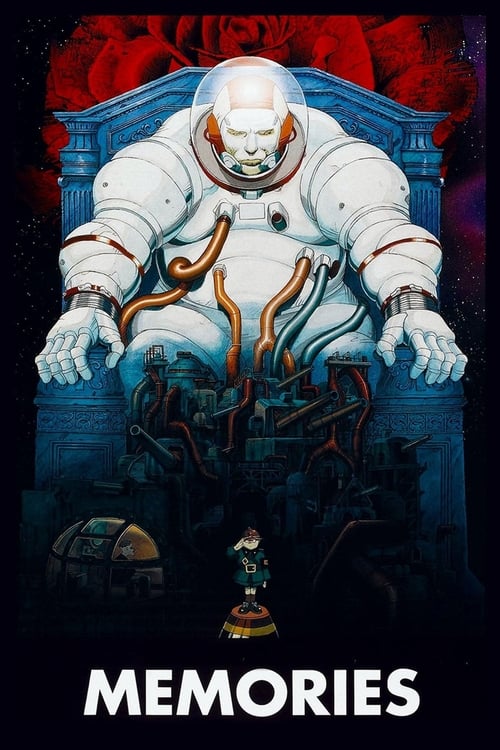
Memories
Memories Is Three Ways a Man Can Be Devoured by What He Refuses to Let Die
Directed by Katsuhiro Otomo
Otomo's anthology looks like three unrelated genres. It is one teaching told three times, each ending in a mind that mistook its own attachment for the world.
Memories is not a sci-fi anthology with a horror short and a comedy attached. The three films rhyme. "Magnetic Rose" is a derelict space station that has become one dead singer's grief made architecture. "Stink Bomb" is a lab technician who becomes a walking plague and never once understands he is the disease. "Cannon Fodder" is a city that exists only to fire artillery at an enemy no one has ever seen. Three men, three sealed systems, three refusals to look at the actual object in front of them. Otomo and his collaborators built a triptych about the specific way consciousness constructs a prison out of the thing it will not release, and then furnishes the prison so beautifully it forgets there is a door.
Buddhist Reading: Magnetic Rose as the Preta Realm in Zero Gravity
The station Corona in "Magnetic Rose" is a hungry-ghost realm rendered in opera and rose petals. In Buddhist cosmology the preta is the being consumed by a craving it can never satisfy, mouth tiny, belly vast, forever reaching for what has already gone. Eva Friel, the diva who once ruled that station, died and did not leave. She built the whole derelict into a hologram of her prime: the grand staircase, the applause, the rose garden that blooms in vacuum.
When the salvage crew boards, the station reads their memories and feeds them back the thing each man most wants restored. Heintz sees his dead daughter Emily, and the corridor becomes his home, and he nearly follows her off a ledge into open space. This is the exact mechanism the bardo teachings warn of: the deceased consciousness, and the living one, both liberated only by recognizing that the vision is self-generated. Heintz survives because at the last instant he sees the daughter is not his daughter, she is his longing wearing her face. Eva never saw it. She is still singing to an empty house, which is the definition of the hungry ghost: appetite outliving the thing that could feed it.
Jungian Reading: Stink Bomb and Cannon Fodder as the Unexamined Shadow Weaponized
The second and third films are the same lesson stripped of romance. In "Stink Bomb," Nobuo swallows an experimental pill thinking it is cold medicine and turns into a biological weapon: everyone near him drops dead while he stays cheerfully oblivious, driving toward Tokyo to deliver the very substance killing the country. He is the shadow that cannot be seen by the one who carries it. The military tracks him with satellites; Nobuo thinks they are escorting him. Jung's warning was exact: what you refuse to make conscious you become, and you inflict it on everyone in range while feeling entirely innocent.
"Cannon Fodder" completes the arc at the collective scale. An entire industrial city wakes, loads, and fires cannons at a phantom enemy across the horizon. The boy narrator dreams of one day aiming the gun himself. No one has seen the enemy. The war is the culture's projected shadow, externalized so thoroughly it has become the economy, the schooling, the reason to rise in the morning. Otomo does not show you the enemy because there is none to show. The gun points outward so the city never has to look in.
Questions this film answers
What is the deeper meaning of Memories?
Memories is not a sci-fi anthology with a horror short and a comedy attached. The three films rhyme. "Magnetic Rose" is a derelict space station that has become one dead singer's grief made architecture. "Stink Bomb" is a lab technician who becomes a walking plague and never once understands he is the disease. "Cannon Fodder" is a city that exists only to fire artillery at an enemy no one has ever seen. Three men, three sealed systems, three refusals to look at the actual object in front of them. Otomo and his collaborators built a triptych about the specific way consciousness constructs a prison out of the thing it will not release, and then furnishes the prison so beautifully it forgets there is a door.
What is the hidden symbolism in Memories?
The station Corona in "Magnetic Rose" is a hungry-ghost realm rendered in opera and rose petals. In Buddhist cosmology the preta is the being consumed by a craving it can never satisfy, mouth tiny, belly vast, forever reaching for what has already gone. Eva Friel, the diva who once ruled that station, died and did not leave. She built the whole derelict into a hologram of her prime: the grand staircase, the applause, the rose garden that blooms in vacuum.
What esoteric traditions appear in Memories?
Memories draws from Buddhism, Jungian traditions. Otomo's anthology looks like three unrelated genres. It is one teaching told three times, each ending in a mind that mistook its own attachment for the world.
Is Memories worth watching for spiritual seekers?
Memories (1995) directed by Katsuhiro Otomo is essential viewing for those interested in Buddhism, Jungian. Memories Is Three Ways a Man Can Be Devoured by What He Refuses to Let Die. It rewards multiple viewings and contemplation.
Rewatch With New Eyes
Now that you've seen the architecture, experience it again. The same film becomes a different film when you know what to watch for.
This time, watch for:
- See impermanence: what clings, what releases, what remains
- Meet the shadow: what is rejected, projected, and finally integrated
Links may include affiliate partnerships that support Media Revelations
The Descent Continues
Where this thread leads next.
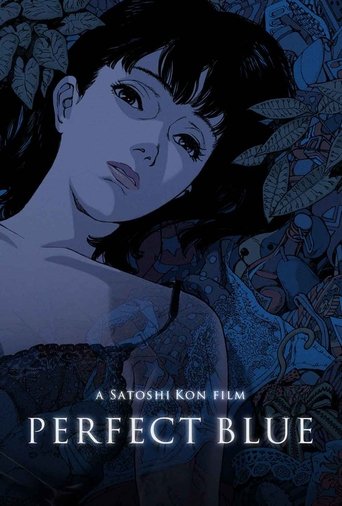
Perfect Blue 1997
The First Horror Film About What Social Media Does to Identity
Read the revelation →