My Neighbors the Yamadas
My Neighbors the Yamadas Is a Zen Teaching Disguised as a Newspaper Comic Strip
Directed by Isao Takahata
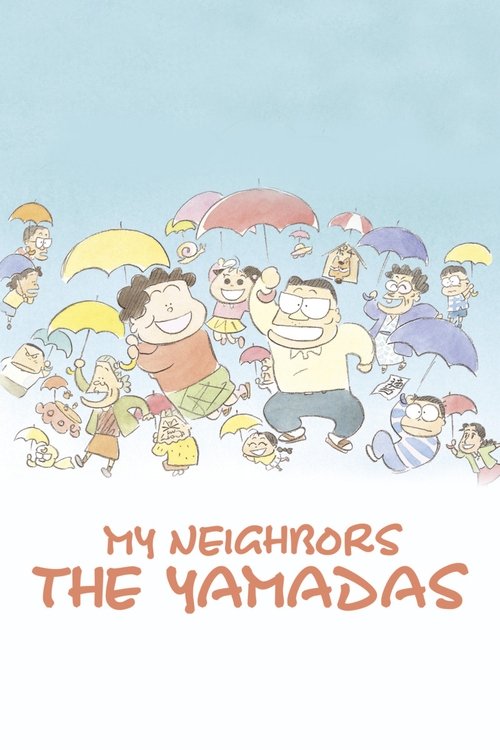
Takahata spent a fortune making a film that looks like a child drew it in watercolor and left the edges unfinished. The look is the message: this is a family, and a life, glimpsed the way everything actually is, sketched, incomplete, dissolving at the borders, and enough.
There is no plot. The Yamadas lose their daughter in a mall and find her. The father cannot bring himself to confront a gang of loud motorcyclists. The grandmother wields her retirement like a weapon. A haiku by Basho or Buson fades in between episodes. What Takahata is doing under the gag structure is teaching a single lesson with monastic patience: ordinary life, the small unheroic friction of a middle-class family, is not the obstacle to meaning. It is the entire site of it. The film refuses every dramatic satisfaction on purpose, because the moment you want the mundane to become something more, you have already left the only place enlightenment was ever available.
Buddhist Reading: The Ordinary Mind Is the Way
The Zen master Nansen said the ordinary mind is the Way, and Takahata builds a whole film to prove he meant it literally. The Yamadas are not on a journey. They are not transforming. The wedding-speech framing device at the opening, which compares married life to a bobsled run, a mountain climb, a voyage, deliberately overpromises, and then the film delivers instead a woman who cannot find the TV remote and a man who will not take out the trash. That gap is the teaching. The grand metaphors are the deluded mind reaching for significance. The actual sled is a couch.
Look at how the film ends: not with resolution but with the family singing "Que Sera, Sera" as watercolor clouds drift past. Whatever will be, will be. This is not resignation. It is the equanimity the sutras point at, the acceptance that liberation was never located in the extraordinary. The Yamadas are enlightened in the only way available to human beings, which is by continuing, together, without needing the day to mean more than it does.
Jungian Reading: The Family as a Single Psyche in Balance
Takahata renders the Yamadas less as five individuals than as one organism, a household psyche whose members carry its functions. The grandmother Shige is the crone, the elder wisdom that has stopped pretending and says exactly what it thinks. The father Takashi is the deflated persona, the man who knows he should be the household's authority and quietly is not. The mother holds the pragmatic center. The two children are the id and the emerging ego. No single member is whole, and the comedy comes from their friction, but the family as a totality is remarkably balanced, self-correcting, durable.
This is the Jungian household as the container of the Self. The recurring image of the family lost and reunited, in the mall, in the storm, in each small crisis, dramatizes the psyche's basic rhythm: dissociation and return, the parts scattering and finding each other again. Takahata never lets any character grow, because the growth is not the point. The point is the ongoing, imperfect coherence of the whole. The family survives not by anyone becoming better but by everyone remaining, in relationship, held.
Questions this film answers
What is the deeper meaning of My Neighbors the Yamadas?
There is no plot. The Yamadas lose their daughter in a mall and find her. The father cannot bring himself to confront a gang of loud motorcyclists. The grandmother wields her retirement like a weapon. A haiku by Basho or Buson fades in between episodes. What Takahata is doing under the gag structure is teaching a single lesson with monastic patience: ordinary life, the small unheroic friction of a middle-class family, is not the obstacle to meaning. It is the entire site of it. The film refuses every dramatic satisfaction on purpose, because the moment you want the mundane to become something more, you have already left the only place enlightenment was ever available.
What is the hidden symbolism in My Neighbors the Yamadas?
The Zen master Nansen said the ordinary mind is the Way, and Takahata builds a whole film to prove he meant it literally. The Yamadas are not on a journey. They are not transforming. The wedding-speech framing device at the opening, which compares married life to a bobsled run, a mountain climb, a voyage, deliberately overpromises, and then the film delivers instead a woman who cannot find the TV remote and a man who will not take out the trash. That gap is the teaching. The grand metaphors are the deluded mind reaching for significance. The actual sled is a couch.
What esoteric traditions appear in My Neighbors the Yamadas?
My Neighbors the Yamadas draws from Buddhism, Jungian traditions. Takahata spent a fortune making a film that looks like a child drew it in watercolor and left the edges unfinished. The look is the message: this is a family, and a life, glimpsed the way everything actually is, sketched, incomplete, dissolving at the borders, and enough.
Is My Neighbors the Yamadas worth watching for spiritual seekers?
My Neighbors the Yamadas (1999) directed by Isao Takahata is essential viewing for those interested in Buddhism, Jungian. My Neighbors the Yamadas Is a Zen Teaching Disguised as a Newspaper Comic Strip. It rewards multiple viewings and contemplation.
Rewatch With New Eyes
Now that you've seen the architecture, experience it again. The same film becomes a different film when you know what to watch for.
This time, watch for:
- See impermanence: what clings, what releases, what remains
- Meet the shadow: what is rejected, projected, and finally integrated
Links may include affiliate partnerships that support Media Revelations
The Descent Continues
Where this thread leads next.

Tokyo Godfathers 2003
Tokyo Godfathers Is a Nativity Where the Three Wise Men Are the Ones Being Reborn
Read the revelation →