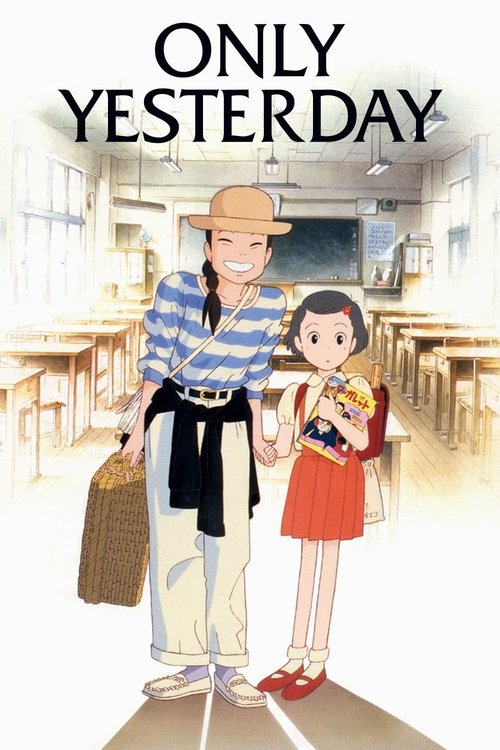
Only Yesterday
Only Yesterday Is About the Child Who Waits Inside You Until You Finally Choose the Life She Wanted
Directed by Isao Takahata
Taeko is twenty-seven, unmarried, riding a night train to the countryside. Her ten-year-old self boards with her, uninvited, and rides the whole way. Takahata made the most radical claim in animation: that the past is not memory but a passenger.
Taeko thinks she is taking a vacation to pick safflowers on a farm. What is actually happening is an integration. Her fifth-grade self keeps surfacing, not as nostalgia but as unfinished business: the fraction she never understood, the pineapple that disappointed, the boy she never answered, the slap from her father that ended her one chance to act on stage. Takahata alternates the burnished present with the pale, edge-dissolving 1966 flashbacks, and the structure is the argument. The child is not behind Taeko. The child is beside her, waiting to find out whether the adult will finally live the life the girl was refused. This is a film about the exact moment a person stops performing the self their family assigned and chooses the one their own soul kept pointing toward.
Alchemical Reading: The Safflower Fields as the Reddening
The alchemical opus ends in the rubedo, the reddening, when the purified self is finally married to life and the work becomes fertile. Takahata builds the entire climax out of red. Taeko learns that safflower, beni, is picked at dawn by hands that bleed from the thorns, and that the humble farmers who suffer to harvest it make the rouge that painted the lips of court ladies who never knew the cost. The dye is drawn from a flower through labor and blood. This is the rubedo stated as literally as cinema can state it: beauty is the red that comes only through willing work and a little suffering, at the hour the sun returns.
Taeko has spent her adult life as unfinished prima materia, respectable and unmarried and vaguely unlived, the raw stuff that was never brought to completion. The farm, the dawn labor, the man named Toshio who works the land, all of it is the vessel where the reddening finally happens. Her decision at the end is the coniunctio, the marriage of the refined self to the actual living world she kept holding at arm's length.
Jungian Reading: Individuation as Turning Back to Retrieve the Abandoned Self
Jung held that in the second half of life the psyche demands individuation: the reclaiming of the parts of the self left behind in service of adaptation. Taeko adapted. She became the good Tokyo daughter, the reliable office worker, the woman who does not make a fuss. The ten-year-old she keeps meeting is her own abandoned wholeness, the girl who wanted to act, who felt everything too intensely, who was slapped for wanting to leave the house in bare feet and told she was not normal.
The film's genius is that individuation does not arrive as insight but as escort. In the final sequence the adult Taeko boards the train to leave, and her fifth-grade classmates, the whole chorus of the abandoned self, gently push her back off it, back toward Toshio and the country life her soul has quietly chosen. Jung called the guiding inner voice the Self, the totality that knows the way before the ego does. Here it takes the form of children, because the wholeness Taeko lost was lost in childhood, and only by turning to face the child can the adult become entire. She does not recover the past. She lets the past finish choosing her future.
Questions this film answers
What is the deeper meaning of Only Yesterday?
Taeko thinks she is taking a vacation to pick safflowers on a farm. What is actually happening is an integration. Her fifth-grade self keeps surfacing, not as nostalgia but as unfinished business: the fraction she never understood, the pineapple that disappointed, the boy she never answered, the slap from her father that ended her one chance to act on stage. Takahata alternates the burnished present with the pale, edge-dissolving 1966 flashbacks, and the structure is the argument. The child is not behind Taeko. The child is beside her, waiting to find out whether the adult will finally live the life the girl was refused. This is a film about the exact moment a person stops performing the self their family assigned and chooses the one their own soul kept pointing toward.
What is the hidden symbolism in Only Yesterday?
The alchemical opus ends in the rubedo, the reddening, when the purified self is finally married to life and the work becomes fertile. Takahata builds the entire climax out of red. Taeko learns that safflower, beni, is picked at dawn by hands that bleed from the thorns, and that the humble farmers who suffer to harvest it make the rouge that painted the lips of court ladies who never knew the cost. The dye is drawn from a flower through labor and blood. This is the rubedo stated as literally as cinema can state it: beauty is the red that comes only through willing work and a little suffering, at the hour the sun returns.
What esoteric traditions appear in Only Yesterday?
Only Yesterday draws from Alchemy, Jungian traditions. Taeko is twenty-seven, unmarried, riding a night train to the countryside. Her ten-year-old self boards with her, uninvited, and rides the whole way. Takahata made the most radical claim in animation: that the past is not memory but a passenger.
Is Only Yesterday worth watching for spiritual seekers?
Only Yesterday (1991) directed by Isao Takahata is essential viewing for those interested in Alchemy, Jungian. Only Yesterday Is About the Child Who Waits Inside You Until You Finally Choose the Life She Wanted. It rewards multiple viewings and contemplation.
Rewatch With New Eyes
Now that you've seen the architecture, experience it again. The same film becomes a different film when you know what to watch for.
This time, watch for:
- Track the stages: blackening, whitening, reddening — death before rebirth
- Meet the shadow: what is rejected, projected, and finally integrated
Links may include affiliate partnerships that support Media Revelations
The Descent Continues
Where this thread leads next.
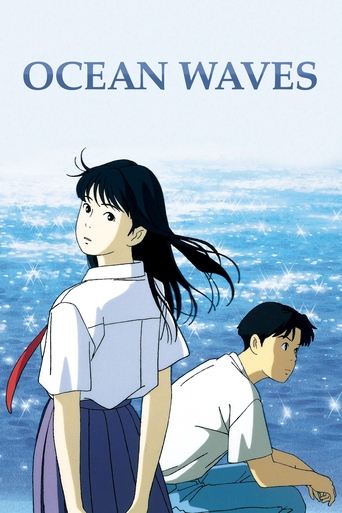
Ocean Waves 1993
Ocean Waves Is a Boy Editing His Own Memory to Avoid Knowing He Was in Love
Read the revelation →