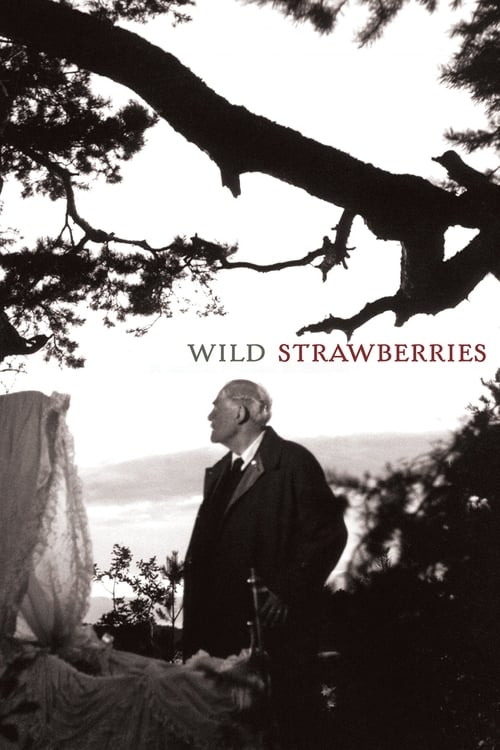
Wild Strawberries
Wild Strawberries Is the Examination a Dying Man Gives Himself Before Anyone Else Can
Directed by Ingmar Bergman
Isak Borg drives to receive an honor and spends the journey on trial. Bergman films a soul auditing its own life in the last light available to it.
Professor Isak Borg, seventy-eight, cold and self-satisfied, drives from Stockholm to Lund to receive an honorary degree. Along the way he revisits the summer house of his childhood, picks up hitchhikers, quarrels with his daughter-in-law Marianne, and slides repeatedly into dreams that indict him. The surface reading is that this is a gentle film about an old man softening before death. It is more surgical than that. Bergman has constructed a psychopomp's journey in the daylight world, a single drive during which Isak is examined, judged, and offered one last chance to feel what he spent a lifetime withholding. The honorary degree is the world's verdict. The dreams are his own, and his own is harsher.
Jungian Reading: The Old Man Meets the Coldness He Mistook for Wisdom
Jung taught that the second half of life is the work of confronting what the first half repressed, and that the persona of the wise elder often conceals a frozen heart. Isak's persona is impeccable, the distinguished doctor, the man of reason. His shadow is his emotional deadness, the withholding that drove his wife to betrayal and his son Evald to a bleak conviction that life is not worth passing on.
The opening dream states the diagnosis without mercy. Isak walks an empty street where the clocks have no hands, a hearse overturns, and a coffin spills open to reveal his own corpse, which reaches up to pull him in. Time has run out, and the dead man he is being shown is himself, still living. The later dream of the examination completes it: an examiner declares Isak guilty of the crime of indifference, then walks him to a window where he watches his young wife embrace another man and hears her name the exact nature of his coldness. This is the shadow speaking in the analyst's chair. Jung would call the whole drive an individuation forced by mortality, the psyche insisting on the reckoning the ego postponed for fifty years.
Initiatory Reading: The Return to the Wild Strawberry Patch as Descent to the Source
Initiation requires a return to the origin, a descent to the place where the self first formed, so it can be re-entered and released. Isak's car becomes the vehicle of descent, and the wild strawberry patch of his youth is the underworld he must revisit. There he watches, invisible, his cousin Sara gathering strawberries and being kissed by his brother, the loss that shaped his lifelong retreat from feeling.
The initiation turns on whether the encounter transforms him or merely wounds him again. Bergman grants the transformation quietly. By the film's end Isak reconciles with his housekeeper, blesses Marianne and Evald's unborn child by refusing to call in a debt, and receives the young hitchhikers' spontaneous serenade beneath his window. The closing image is the true return: Isak, falling asleep, sees his parents across the water waving to him, calm and welcoming. The initiate who descends to the source and is met by the ancestors has completed the passage. He can die now because he has finally arrived where he began.
Questions this film answers
What is the deeper meaning of Wild Strawberries?
Professor Isak Borg, seventy-eight, cold and self-satisfied, drives from Stockholm to Lund to receive an honorary degree. Along the way he revisits the summer house of his childhood, picks up hitchhikers, quarrels with his daughter-in-law Marianne, and slides repeatedly into dreams that indict him. The surface reading is that this is a gentle film about an old man softening before death. It is more surgical than that. Bergman has constructed a psychopomp's journey in the daylight world, a single drive during which Isak is examined, judged, and offered one last chance to feel what he spent a lifetime withholding. The honorary degree is the world's verdict. The dreams are his own, and his own is harsher.
What is the hidden symbolism in Wild Strawberries?
Jung taught that the second half of life is the work of confronting what the first half repressed, and that the persona of the wise elder often conceals a frozen heart. Isak's persona is impeccable, the distinguished doctor, the man of reason. His shadow is his emotional deadness, the withholding that drove his wife to betrayal and his son Evald to a bleak conviction that life is not worth passing on.
What esoteric traditions appear in Wild Strawberries?
Wild Strawberries draws from Jungian, Initiation traditions. Isak Borg drives to receive an honor and spends the journey on trial. Bergman films a soul auditing its own life in the last light available to it.
Is Wild Strawberries worth watching for spiritual seekers?
Wild Strawberries (1957) directed by Ingmar Bergman is essential viewing for those interested in Jungian, Initiation. Wild Strawberries Is the Examination a Dying Man Gives Himself Before Anyone Else Can. It rewards multiple viewings and contemplation.
Rewatch With New Eyes
Now that you've seen the architecture, experience it again. The same film becomes a different film when you know what to watch for.
This time, watch for:
- Meet the shadow: what is rejected, projected, and finally integrated
- Mark the threshold: the old self dies, the ordeal transforms, the new self returns
Links may include affiliate partnerships that support Media Revelations
The Descent Continues
Where this thread leads next.

Fanny and Alexander 1982
Fanny and Alexander Is a War Between Two Fathers for the Soul of a Child Who Sees Ghosts
Read the revelation →