Poetry
Poetry Is About a Woman Learning to See Just as She Begins to Lose the Words
Directed by Lee Chang-dong
Mija enrolls in a poetry class and is told she must look at things truly before she can write. The film asks what looking costs when what you see is unbearable.
Lee Chang-dong made a film about attention as a spiritual discipline, and then buried a horror inside it so that the discipline becomes almost unendurable. Mija is a woman in her sixties, elegant, a little vain, raising her sullen grandson on a home-care worker's wages. Two things arrive at once. A doctor tells her the forgetfulness is early Alzheimer's; her nouns are going first, then everything. And she learns her grandson helped rape a girl who then drowned herself. The poetry teacher's single instruction is to observe: to really see an apple before writing about it. The film's devastating structure is that Mija's assignment to see the world clearly coincides exactly with her discovery of a truth she would give anything not to see, and with the dissolution of the very faculty that names.
Buddhist Reading: True Seeing Arrives With Impermanence, Not Before It
The poetry class is a meditation retreat in disguise. The teacher tells the students they have never truly looked at an apple, that they have only glanced and moved on, and this is precisely the Buddhist diagnosis of ordinary mind: we do not see, we label and dismiss. Mija's dementia strips away the labels one by one. As she loses the word for "wallet," the world grows more vivid, more present, because it can no longer be filed under a name and forgotten. Impermanence is not her enemy here. It is her teacher.
The film insists that real seeing is inseparable from suffering. Mija watches an apricot fallen and bruised on the ground and understands it has thrown itself down to seed the next tree. She sees the girl's mother in a field and cannot deliver the grandmother's bribe money because seeing the woman fully has made the transaction impossible. This is what awakening actually does. It removes the anesthetic. Mija writes her one poem at the moment she has lost almost everything, and the poem, read in the drowned girl's voice, is the fruit of a seeing that cost her the world she was protecting.
Initiatory Reading: The Poem Is Written by the One Who Has Vanished Into the River
The film's final movement is a handing-over. Mija disappears from the frame, and her poem, "Agnes' Song," takes over the soundtrack, spoken first in her voice and then in the dead girl's. This is initiatory transmission at its most complete: the initiate does not keep her transformation, she passes it into the one who was lost. Mija goes to the bridge where the girl fell. She composes from inside the girl's silenced experience, becoming the vessel through which the drowned voice finally speaks. The threshold she crosses is her own erasure, memory and self dissolving, and what survives the crossing is not Mija but the poem, the trace of a seeing that outlasts the one who saw.
Questions this film answers
What is the deeper meaning of Poetry?
Lee Chang-dong made a film about attention as a spiritual discipline, and then buried a horror inside it so that the discipline becomes almost unendurable. Mija is a woman in her sixties, elegant, a little vain, raising her sullen grandson on a home-care worker's wages. Two things arrive at once. A doctor tells her the forgetfulness is early Alzheimer's; her nouns are going first, then everything. And she learns her grandson helped rape a girl who then drowned herself. The poetry teacher's single instruction is to observe: to really see an apple before writing about it. The film's devastating structure is that Mija's assignment to see the world clearly coincides exactly with her discovery of a truth she would give anything not to see, and with the dissolution of the very faculty that names.
What is the hidden symbolism in Poetry?
The poetry class is a meditation retreat in disguise. The teacher tells the students they have never truly looked at an apple, that they have only glanced and moved on, and this is precisely the Buddhist diagnosis of ordinary mind: we do not see, we label and dismiss. Mija's dementia strips away the labels one by one. As she loses the word for "wallet," the world grows more vivid, more present, because it can no longer be filed under a name and forgotten. Impermanence is not her enemy here. It is her teacher.
What esoteric traditions appear in Poetry?
Poetry draws from Buddhism, Initiation traditions. Mija enrolls in a poetry class and is told she must look at things truly before she can write. The film asks what looking costs when what you see is unbearable.
Is Poetry worth watching for spiritual seekers?
Poetry (2010) directed by Lee Chang-dong is essential viewing for those interested in Buddhism, Initiation. Poetry Is About a Woman Learning to See Just as She Begins to Lose the Words. It rewards multiple viewings and contemplation.
Rewatch With New Eyes
Now that you've seen the architecture, experience it again. The same film becomes a different film when you know what to watch for.
This time, watch for:
- See impermanence: what clings, what releases, what remains
- Mark the threshold: the old self dies, the ordeal transforms, the new self returns
Links may include affiliate partnerships that support Media Revelations
The Descent Continues
Where this thread leads next.
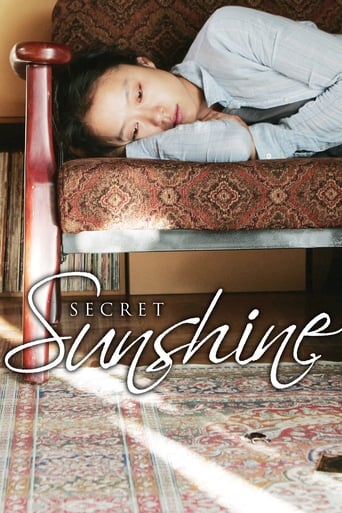
Secret Sunshine 2007
Secret Sunshine Is About the Woman Who Went to Forgive a Murderer and Found God Had Stolen It From Her First
Read the revelation →