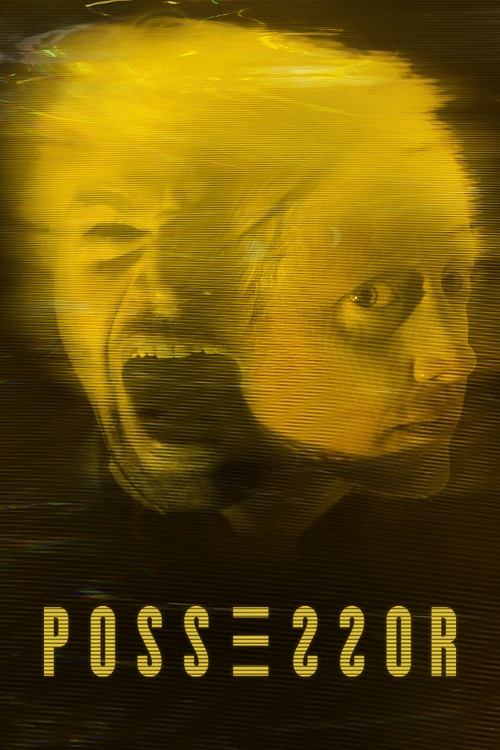
Possessor
Vos Is Already Gone Before the Film Ends: Possessor Is a Study in Soul Fragmentation, Not Assassination
Directed by Brandon Cronenberg
Brandon Cronenberg did not make a sci-fi thriller about corporate murder. He filmed what repeated self-erasure costs the soul that does the erasing.
Tasya Vos inhabits other people's bodies long enough to commit a killing, then exits. The procedure is clean on paper. In practice, each insertion leaves a residue: fragments of the host, borrowed reflexes, desires that aren't hers. The corporate apparatus that runs her treats this as an acceptable loss ratio. What the film reveals is that loss has been accumulating the entire time. By the final act, Vos is not fighting to complete a mission. She is fighting to locate herself inside a self that has already been hollowed out by the work of wearing others.
Jungian: The Calibration Room as Failed Individuation Test
Carl Jung described the persona as the mask the psyche constructs to interface with the world. When the persona becomes the entire identity, the deeper Self goes underground. The ego, cut off from its own roots, cannot recognize itself without the mask's scaffolding.
Possessor opens on exactly this condition, and stages it literally. Before each assignment, Vos submits to a calibration ritual: she recites personal details, handles objects from her life, practices being herself. Her handler Girder runs her through the script as though coaching an actor who has gone method too long. The ritual exists because Vos can no longer access her own identity without external prompting. In one calibration sequence she delivers the correct biographical answers with the right words in the wrong register, each true detail arriving a half-second after it should, performed rather than inhabited.
The scene is a clinical portrait of persona collapse. A person fully integrated into themselves does not need a checklist to remember who they are. Vos does. The corporation gave her the procedure, the targets, the exit protocol. It never gave her a way to protect the center.
Gnosticism: The Corporation as Archon, the Implant as Its Hook
In Gnostic cosmology, the Archon is the lesser power that rules through a body it did not create and cannot truly inhabit. It governs by override, compelling matter to serve functions alien to the soul embedded within it. The soul that survives this does so by remembering its origin. The soul that forgets is absorbed.
The biotech corporation in Possessor operates on this architecture. The neural implant does not ask permission. It is installed, it overrides, it uses the host until the asset completes its task. Vos is the Archon here, the possessing intelligence, but the film makes a deeper move: Vos herself is being possessed, operated by corporate logics so thoroughly internalized that she no longer experiences them as external. Colin's body resists her, his arm reaching toward the woman he loved, his grief breaking through her control in surges she cannot suppress. The host is fighting for the soul the operator lost. What the film stages in the composite-face sequences, where Vos and Colin's features slide and merge, is not surrealist texture. It is the visible record of a pneuma losing its form under sustained override.
The ending confirms it. Vos kills Girder and returns to her family. She sits in the apartment that was once her home and cannot find her way into it. Her husband speaks to her. Her son is there. She is present the way a container is present: correctly shaped, nothing inside that was there before.
Existenz maps the same Cronenberg territory, the body as the Archon's entry point, the self erased by what it agreed to host. Videodrome takes it further: the flesh itself becomes the medium, and the medium forgets it was ever flesh. Annihilation arrives at the same final image by a different route: the self that entered the uncanny space and the self that returns are not the same, and only one of them knows it.
Questions this film answers
What is the deeper meaning of Possessor?
Tasya Vos inhabits other people's bodies long enough to commit a killing, then exits. The procedure is clean on paper. In practice, each insertion leaves a residue: fragments of the host, borrowed reflexes, desires that aren't hers. The corporate apparatus that runs her treats this as an acceptable loss ratio. What the film reveals is that loss has been accumulating the entire time. By the final act, Vos is not fighting to complete a mission. She is fighting to locate herself inside a self that has already been hollowed out by the work of wearing others.
What is the hidden symbolism in Possessor?
Carl Jung described the persona as the mask the psyche constructs to interface with the world. When the persona becomes the entire identity, the deeper Self goes underground. The ego, cut off from its own roots, cannot recognize itself without the mask's scaffolding.
What esoteric traditions appear in Possessor?
Possessor draws from Jungian, Gnosticism traditions. Brandon Cronenberg did not make a sci-fi thriller about corporate murder. He filmed what repeated self-erasure costs the soul that does the erasing.
Is Possessor worth watching for spiritual seekers?
Possessor (2020) directed by Brandon Cronenberg is essential viewing for those interested in Jungian, Gnosticism. Vos Is Already Gone Before the Film Ends: Possessor Is a Study in Soul Fragmentation, Not Assassination. It rewards multiple viewings and contemplation.
Rewatch With New Eyes
Now that you've seen the architecture, experience it again. The same film becomes a different film when you know what to watch for.
This time, watch for:
- Meet the shadow: what is rejected, projected, and finally integrated
- Watch for the false world vs. the real — who is asleep, who awakens
Links may include affiliate partnerships that support Media Revelations