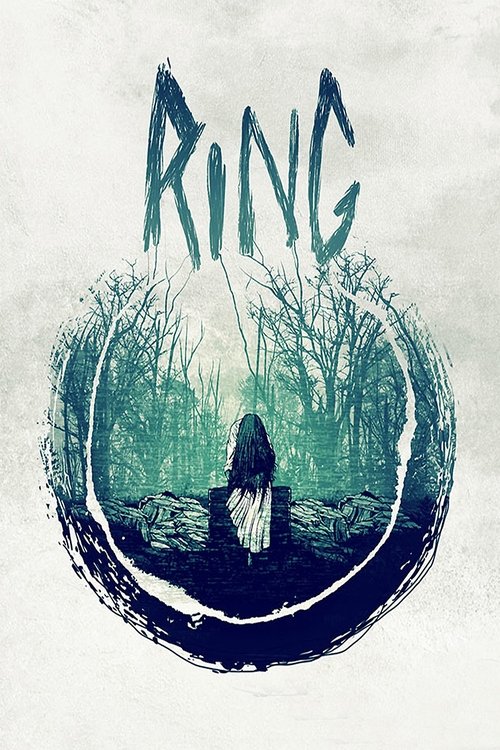
Ring
Sadako Died in the Dark and Ring Is Her Transmission Forcing the Light
Directed by Hideo Nakata
A journalist watches a video tape and has seven days to live. This is the surface. Underneath: Ring is a doctrine about what happens to consciousness that dies unwitnessed, and what it does to reclaim visibility.
Hideo Nakata's film operates on a premise older than cinema. In Japanese Buddhist cosmology, the dead who die in states of extreme suffering, rage, or incompletion become gaki, hungry ghosts, consciousness that cannot dissolve because it has nowhere to go. Sadako Yamamura did not simply die. She was thrown into a well, alone, in the dark, and left to die over days with no one watching, no one witnessing, no ceremony, no passage. Her death was a burial in incompletion. The tape is what that unresolved state produces: a seven-minute transmission demanding one thing and one thing only, to be seen.
The Tape as Hungry Ghost Doctrine
In the Buddhist tradition, a gaki does not haunt arbitrarily. It haunts in the shape of its starvation. Sadako's starvation was witness: she was psychic, violent, feared, and ultimately destroyed in secret. The tape is structured like her death played backward. Watch it, and the experience reaches into you not through your intellect but through your nervous system, the images are nonsensical, surreal, wrong in the way that dreams about dying are wrong. It bypasses understanding. It deposits residue.
The seven-day countdown is not a punishment. It is the duration of her own dying. When you watch the tape, you live, compressed, what she lived in the well. The phone call that follows immediately after Reiko presses stop is the clearest moment in the film: the ringing is contact, the dead consciousness touching the living one who has just been made briefly permeable. She found you. Now the clock that stopped for her has started for you. Pulse, Kiyoshi Kurosawa's parallel vision from the same era, arrives at the same terror from a different angle: technology as the membrane the dead press their faces against.
The Initiatory Reading: Descent Is Required for Survival
The tape alone cannot save you. Copying it and passing it on delays but does not break the curse. The only act that breaks it is discovered by Reiko through direct descent. She physically enters the well, retrieves Sadako's bones, arranges a proper burial. She does what should have been done forty years before. She witnesses, after the fact, a death that was never witnessed.
This is the initiatory structure running under the horror architecture. The well is the underworld. Reiko goes down voluntarily into the place of death, into the darkness and cold water, into the literal space where the ghost was created. In Audition and across the great tradition of Japanese horror, the feminine wound at the center of the story cannot be resolved from outside. It requires someone to go in. Reiko goes in. She returns. She is changed. And yet it still does not work on Ryuji, who shared her descent only through evidence, not presence. He viewed the tape. He did not descend into the wound. Sadako comes through his television screen anyway and kills him with a look, her face half-hidden and rotting, because witnessing at a remove is not witnessing at all.
The child, Yoichi, watches from the door without being destroyed. Children under a certain age still live close enough to the realm of the dead that the gulf does not apply. He can see her. She does not need to kill what can already see.
Questions this film answers
What is the deeper meaning of Ring?
Hideo Nakata's film operates on a premise older than cinema. In Japanese Buddhist cosmology, the dead who die in states of extreme suffering, rage, or incompletion become gaki, hungry ghosts, consciousness that cannot dissolve because it has nowhere to go. Sadako Yamamura did not simply die. She was thrown into a well, alone, in the dark, and left to die over days with no one watching, no one witnessing, no ceremony, no passage. Her death was a burial in incompletion. The tape is what that unresolved state produces: a seven-minute transmission demanding one thing and one thing only, to be seen.
What is the hidden symbolism in Ring?
In the Buddhist tradition, a gaki does not haunt arbitrarily. It haunts in the shape of its starvation. Sadako's starvation was witness: she was psychic, violent, feared, and ultimately destroyed in secret. The tape is structured like her death played backward. Watch it, and the experience reaches into you not through your intellect but through your nervous system, the images are nonsensical, surreal, wrong in the way that dreams about dying are wrong. It bypasses understanding. It deposits residue.
What esoteric traditions appear in Ring?
Ring draws from Buddhism, Initiation traditions. A journalist watches a video tape and has seven days to live. This is the surface. Underneath: Ring is a doctrine about what happens to consciousness that dies unwitnessed, and what it does to reclaim visibility.
Is Ring worth watching for spiritual seekers?
Ring (1998) directed by Hideo Nakata is essential viewing for those interested in Buddhism, Initiation. Sadako Died in the Dark and Ring Is Her Transmission Forcing the Light. It rewards multiple viewings and contemplation.
Rewatch With New Eyes
Now that you've seen the architecture, experience it again. The same film becomes a different film when you know what to watch for.
This time, watch for:
- See impermanence: what clings, what releases, what remains
- Mark the threshold: the old self dies, the ordeal transforms, the new self returns
Links may include affiliate partnerships that support Media Revelations
The Descent Continues
Where this thread leads next.

Forrest Gump 1994
The Holy Fool and the Feather of Grace
Read the revelation →