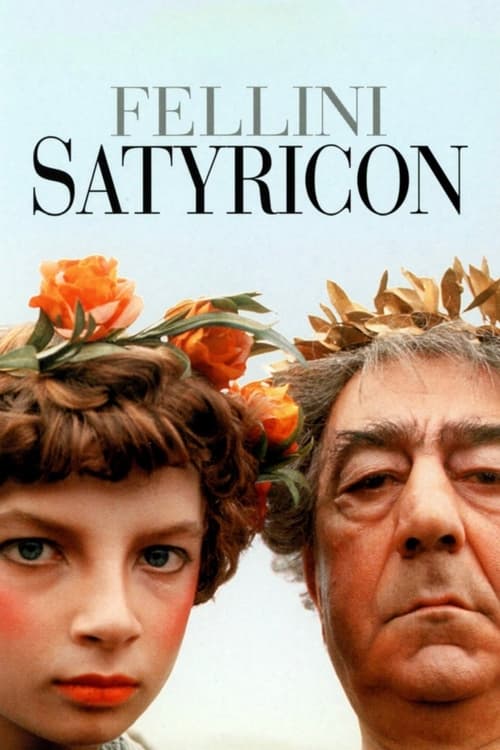
Satyricon
Fellini's Satyricon Is a Descent Through a World That Has Forgotten It Has a Soul
Directed by Federico Fellini
Fellini called it science fiction about the past. He built a Rome so alien it plays like another planet, and that estrangement is the whole point: a civilization drowning in appetite, with no memory of the light it fell from.
Encolpio wanders a fragmented Rome chasing the beautiful boy Gitone, then chasing sensation itself through banquets, brothels, shipwrecks, and rituals that dissolve into one another with no connective logic. The film is deliberately broken, adapted from a text that survives only in fragments, and Fellini refuses to repair the gaps. Viewers call it decadent spectacle, an orgy of Roman excess. That misses what the fragmentation is for. This is a world seen from below, from inside the fall, where nothing connects to anything and every pleasure is consumed and immediately forgotten. Encolpio is not a hero. He is a soul asleep inside matter, moving through a cosmos that has lost the thread back to its source.
Gnostic Reading: The Soul Adrift in the Kenoma
Gnosticism divides reality into the Pleroma, the realm of divine fullness and light, and the kenoma, the emptiness, the deficient world of matter where sparks of the divine lie trapped in forgetfulness. The Gnostic condition is precisely this: a luminous fragment of spirit fallen into a body, drugged by the world into forgetting where it came from. Encolpio's Rome is the kenoma rendered on film. It has no sky worth looking at, no coherent order, only surfaces, flesh, and hunger. The characters copulate and feast and murder without ever asking why, because the question has been erased.
Watch the episode of the Villa of the Suicides, where a noble couple, condemned by the new regime, calmly free their slaves, bathe, and open their veins. It is the one moment of grace in the film, and it is a chosen death, a deliberate exit from the world. In Gnostic terms this is the soul that remembers, that recognizes the world as a prison and steps out with dignity. Set against Encolpio's endless thrashing appetite, the suicides reveal the film's buried thesis: in a world this forgetful, the only lucid act is to stop consuming it. The hermaphrodite oracle, a frail albino demigod the characters kidnap for their own gain and let die in the desert, is the trapped divine spark itself, the sacred exploited by a world that no longer knows what it is holding.
Shamanic Reading: A Journey Through the Underworld With No Guide
The shaman descends into the lower world to retrieve something lost, a soul, a power, a piece of a sick person that has wandered off. The journey moves through monstrous encounters, dismemberment, and trial, and its meaning comes entirely from the intention to bring something back and heal. Satyricon is a shamanic descent stripped of its guide and its purpose. Encolpio moves through every landscape the underworld journey requires, the labyrinth, the cave of the monster, the ritual chamber, but no one is steering.
The Minotaur episode makes this explicit. Encolpio is thrown into a labyrinth to fight a masked man in a ritual meant to honor the god Laughter, the confrontation with the beast at the center of the maze that every underworld journey contains. But it is theater, a joke played on him, and he begs for his life rather than winning a boon. Later, robbed of his sexual potency, he seeks healing from the witch Oenothea and undergoes a rite by fire to restore it, the shaman's cure sought at last. He recovers his power and immediately squanders it. The machinery of transformation is everywhere in this film. What is missing is anyone awake enough to be transformed.
Questions this film answers
What is the deeper meaning of Satyricon?
Encolpio wanders a fragmented Rome chasing the beautiful boy Gitone, then chasing sensation itself through banquets, brothels, shipwrecks, and rituals that dissolve into one another with no connective logic. The film is deliberately broken, adapted from a text that survives only in fragments, and Fellini refuses to repair the gaps. Viewers call it decadent spectacle, an orgy of Roman excess. That misses what the fragmentation is for. This is a world seen from below, from inside the fall, where nothing connects to anything and every pleasure is consumed and immediately forgotten. Encolpio is not a hero. He is a soul asleep inside matter, moving through a cosmos that has lost the thread back to its source.
What is the hidden symbolism in Satyricon?
Gnosticism divides reality into the Pleroma, the realm of divine fullness and light, and the kenoma, the emptiness, the deficient world of matter where sparks of the divine lie trapped in forgetfulness. The Gnostic condition is precisely this: a luminous fragment of spirit fallen into a body, drugged by the world into forgetting where it came from. Encolpio's Rome is the kenoma rendered on film. It has no sky worth looking at, no coherent order, only surfaces, flesh, and hunger. The characters copulate and feast and murder without ever asking why, because the question has been erased.
What esoteric traditions appear in Satyricon?
Satyricon draws from Gnosticism, Shamanism traditions. Fellini called it science fiction about the past. He built a Rome so alien it plays like another planet, and that estrangement is the whole point: a civilization drowning in appetite, with no memory of the light it fell from.
Is Satyricon worth watching for spiritual seekers?
Satyricon (1969) directed by Federico Fellini is essential viewing for those interested in Gnosticism, Shamanism. Fellini's Satyricon Is a Descent Through a World That Has Forgotten It Has a Soul. It rewards multiple viewings and contemplation.
Rewatch With New Eyes
Now that you've seen the architecture, experience it again. The same film becomes a different film when you know what to watch for.
This time, watch for:
- Watch for the false world vs. the real — who is asleep, who awakens
- Follow the descent: what dies, what guides, what returns transformed
Links may include affiliate partnerships that support Media Revelations
The Descent Continues
Where this thread leads next.
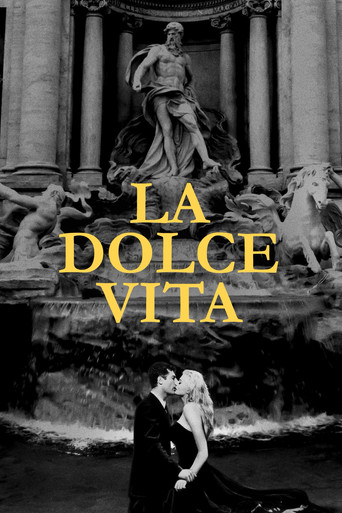
La Dolce Vita 1960
La Dolce Vita Is Seven Nights of a Man Being Offered Salvation and Choosing the Party
Read the revelation →