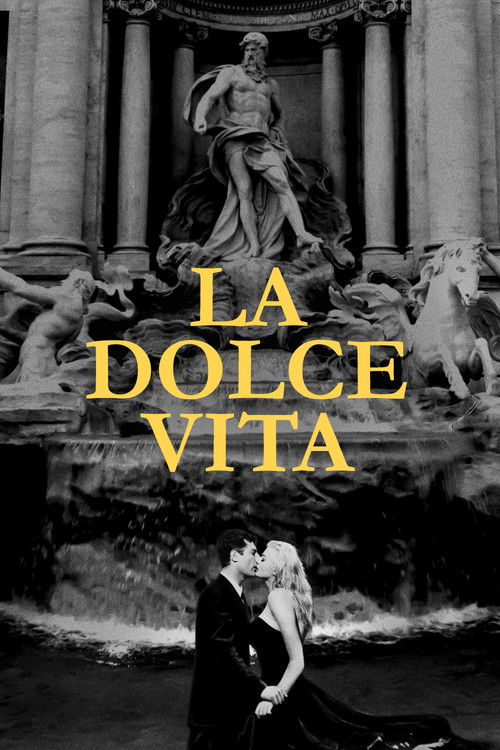
La Dolce Vita
La Dolce Vita Is Seven Nights of a Man Being Offered Salvation and Choosing the Party
Directed by Federico Fellini
Fellini structures the film as seven nights and seven dawns. Each dawn, Marcello is handed a way out. Each night, he hands it back. The sweet life is the name for a slow, comfortable refusal.
Marcello Rubini is a gossip journalist moving through Rome's nocturnal aristocracy, its film stars, its faith healers, its suicides, its parties. The film has no plot in the ordinary sense. It is a series of episodes, each a night that ends at daybreak, and the surface reading calls it a portrait of glamorous emptiness, la dolce vita as ironic title for a hollow world. But the structure is doing something more precise. Each episode places before Marcello a genuine possibility of transformation, love, art, the sacred, the domestic, the true, and each time he witnesses it, tastes it, and drifts on. He is not trapped in the sweet life. He is repeatedly freed from it and keeps walking back in.
Gnostic Reading: The Messenger Who Cannot Hear His Own Message
In Gnostic myth the pneumatic is the person with the divine spark still capable of waking, the one who can receive the call and remember. Marcello is a pneumatic surrounded by calls he refuses to answer. His friend Steiner is the intellectual sage, the man who has apparently reconciled art, family, and the life of the spirit, the very integration Marcello circles. Steiner tells him to beware the sheltered life he has built, and then kills his own children and himself. The one figure who seemed to hold the answer reveals the answer as terror, and Marcello, staring at the corpses, is being shown the stakes with total clarity. He looks directly at it and returns to the parties.
The film's frame makes the Gnostic reading unmistakable. It opens with a helicopter carrying a statue of Christ over Rome, the sacred descending into the modern city, and Marcello following in a second helicopter, flirting with sunbathing women rather than attending the descending god. It ends at dawn on a beach, where a young waitress he once met, the film's image of innocence and unfallen clarity, calls to him across the water. He cannot hear her over the wind, and after a moment he shrugs and turns back to the revelers, a pneumatic built to receive the call declining it one last time at the water's edge.
Alchemical Reading: The Prima Materia That Refuses the Fire
Alchemy begins with the prima materia, the raw base matter that must be dissolved and coagulated, burned and reborn, to become gold. The process requires the operator to submit the material to heat and let it be destroyed so it can be remade. Marcello is himself the prima materia, and the film keeps applying the fire. Every episode is a crucible offered: Sylvia in the Trevi Fountain is the immersion in water that begins the work, the nigredo of desire; his father's visit is the confrontation with his own coming decay; Steiner's death is the calcinatio, the burning that should reduce him to essence.
But the operation never completes because Marcello will not stay in the vessel. He flees each crucible before the transformation can take. By the final beach dawn he has not become gold. He has become fixed in his base state, a man whose face at the end is coarser, harder, less alive than at the start. He has confused motion for change. The alchemist's warning is exact: matter that will not endure the fire does not stay raw, it corrupts. Marcello had every chance to transmute and chose to rot in comfort instead.
Questions this film answers
What is the deeper meaning of La Dolce Vita?
Marcello Rubini is a gossip journalist moving through Rome's nocturnal aristocracy, its film stars, its faith healers, its suicides, its parties. The film has no plot in the ordinary sense. It is a series of episodes, each a night that ends at daybreak, and the surface reading calls it a portrait of glamorous emptiness, la dolce vita as ironic title for a hollow world. But the structure is doing something more precise. Each episode places before Marcello a genuine possibility of transformation, love, art, the sacred, the domestic, the true, and each time he witnesses it, tastes it, and drifts on. He is not trapped in the sweet life. He is repeatedly freed from it and keeps walking back in.
What is the hidden symbolism in La Dolce Vita?
In Gnostic myth the pneumatic is the person with the divine spark still capable of waking, the one who can receive the call and remember. Marcello is a pneumatic surrounded by calls he refuses to answer. His friend Steiner is the intellectual sage, the man who has apparently reconciled art, family, and the life of the spirit, the very integration Marcello circles. Steiner tells him to beware the sheltered life he has built, and then kills his own children and himself. The one figure who seemed to hold the answer reveals the answer as terror, and Marcello, staring at the corpses, is being shown the stakes with total clarity. He looks directly at it and returns to the parties.
What esoteric traditions appear in La Dolce Vita?
La Dolce Vita draws from Gnosticism, Alchemy traditions. Fellini structures the film as seven nights and seven dawns. Each dawn, Marcello is handed a way out. Each night, he hands it back. The sweet life is the name for a slow, comfortable refusal.
Is La Dolce Vita worth watching for spiritual seekers?
La Dolce Vita (1960) directed by Federico Fellini is essential viewing for those interested in Gnosticism, Alchemy. La Dolce Vita Is Seven Nights of a Man Being Offered Salvation and Choosing the Party. It rewards multiple viewings and contemplation.
Rewatch With New Eyes
Now that you've seen the architecture, experience it again. The same film becomes a different film when you know what to watch for.
This time, watch for:
- Watch for the false world vs. the real — who is asleep, who awakens
- Track the stages: blackening, whitening, reddening — death before rebirth
Links may include affiliate partnerships that support Media Revelations
The Descent Continues
Where this thread leads next.
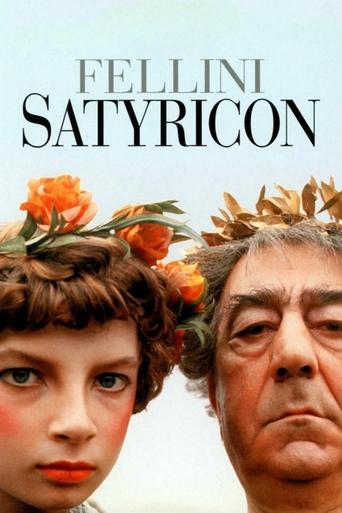
Satyricon 1969
Fellini's Satyricon Is a Descent Through a World That Has Forgotten It Has a Soul
Read the revelation →