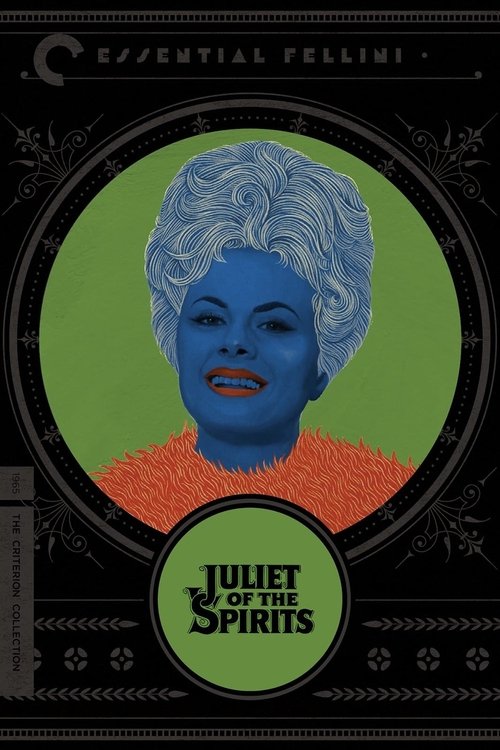
Juliet of the Spirits
Juliet of the Spirits Is a Woman Learning to Stop Obeying the Voices That Aren't Hers
Directed by Federico Fellini
Fellini gave his wife a film about her own psyche and filled it with the ghosts she inherited. The spirits are real. They are also all inside her.
Giulietta suspects her husband of an affair, and the film pretends that is the plot. It is not. The infidelity is the crack through which everything else pours in. Once Giulietta starts listening past her marriage, a whole apparatus of figures rises up around her: the girlhood saint she was trained to become, the grandfather who ran off with a dancer, the pneumatic neighbor Suzy who offers pleasure without shame, and the voices at the séance that whisper of a spirit named Iris. Fellini is not filming the supernatural. He is filming the interior of a woman who has spent her entire life doing what she was told, and who is now surrounded by every internalized authority that told her. The husband's betrayal did not create Giulietta's crisis. It gave her permission to notice it.
Jungian Reading: The Séance Opens the Unconscious, and the Whole Cast Are Its Contents
Jung held that the psyche personifies. What we cannot integrate does not disappear; it appears, as figure, as voice, as visitor. Watch the film with that key and the ensemble reorganizes. Suzy, the sensual neighbor in her tree-house of mirrors and slides into the pool, is Giulietta's disowned Eros, the pleasure her convent childhood forbade. The grandfather, charming and unreliable, is the animus that once tried to fly away and was dragged back to earth. The grandmother, the nuns, the medium: each is a complex wearing a face.
The séance is the threshold. The spirit "Iris" arrives promising love, and a rival voice, cruder, mocks her. These are not entities. They are the split inside Giulietta between the idealized love she was taught to want and the appetite she was taught to fear. Fellini stages the unconscious as a carnival because that is how it actually presents when it finally opens: not orderly, but as a flood of costumed figures all claiming to speak for her. The saint burning on the grille in her childhood pageant, the martyr she was cast as at age eight, is the deepest figure of all. Giulietta was taught that her value was in obedient suffering. The whole film is the psyche assembling everyone who taught her that, so she can finally look at them.
Initiatory Reading: The House Empties So the Initiate Can Leave
Every initiation strips the candidate of the old identity before granting the new one. Giulietta's initiation runs through her house. The film's climax is a haunting: the spirits crowd her home, the childhood saint appears strapped to her flaming rack, and Giulietta is commanded to free her. When she unties the child on the grille, she is untying herself. The martyrdom she was trained for releases its grip.
Then the house goes quiet. The husband has left, the figures disperse, and Giulietta walks out through her garden into the woods. This is the return that initiation requires: not triumph, but a woman alone, finally, with the voices silent. The spirits were never there to save her. They were there to be dismissed one by one until only she remained.
Other Fellini films where the psyche stages itself as spectacle: 8½ (the male version of the same reckoning), La Dolce Vita (the seeking that precedes the séance).
Questions this film answers
What is the deeper meaning of Juliet of the Spirits?
Giulietta suspects her husband of an affair, and the film pretends that is the plot. It is not. The infidelity is the crack through which everything else pours in. Once Giulietta starts listening past her marriage, a whole apparatus of figures rises up around her: the girlhood saint she was trained to become, the grandfather who ran off with a dancer, the pneumatic neighbor Suzy who offers pleasure without shame, and the voices at the séance that whisper of a spirit named Iris. Fellini is not filming the supernatural. He is filming the interior of a woman who has spent her entire life doing what she was told, and who is now surrounded by every internalized authority that told her. The husband's betrayal did not create Giulietta's crisis. It gave her permission to notice it.
What is the hidden symbolism in Juliet of the Spirits?
Jung held that the psyche personifies. What we cannot integrate does not disappear; it appears, as figure, as voice, as visitor. Watch the film with that key and the ensemble reorganizes. Suzy, the sensual neighbor in her tree-house of mirrors and slides into the pool, is Giulietta's disowned Eros, the pleasure her convent childhood forbade. The grandfather, charming and unreliable, is the animus that once tried to fly away and was dragged back to earth. The grandmother, the nuns, the medium: each is a complex wearing a face.
What esoteric traditions appear in Juliet of the Spirits?
Juliet of the Spirits draws from Jungian, Initiation traditions. Fellini gave his wife a film about her own psyche and filled it with the ghosts she inherited. The spirits are real. They are also all inside her.
Is Juliet of the Spirits worth watching for spiritual seekers?
Juliet of the Spirits (1965) directed by Federico Fellini is essential viewing for those interested in Jungian, Initiation. Juliet of the Spirits Is a Woman Learning to Stop Obeying the Voices That Aren't Hers. It rewards multiple viewings and contemplation.
Rewatch With New Eyes
Now that you've seen the architecture, experience it again. The same film becomes a different film when you know what to watch for.
This time, watch for:
- Meet the shadow: what is rejected, projected, and finally integrated
- Mark the threshold: the old self dies, the ordeal transforms, the new self returns
Links may include affiliate partnerships that support Media Revelations