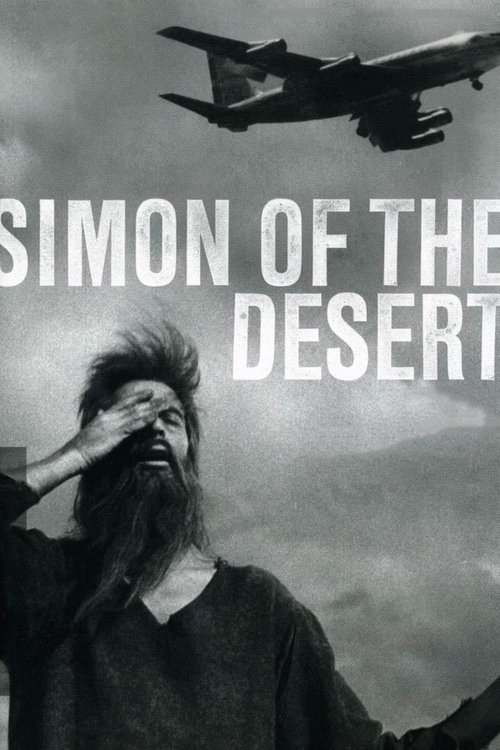
Simon of the Desert
Simon of the Desert Is About a Saint So High on His Pillar He Can No Longer Reach the Ground He Was Trying to Save
Directed by Luis Buñuel
Buñuel films the real Simon Stylites, who stood on a column for thirty-seven years, and then drops him without warning into a New York discotheque. The cut is the argument.
Simon has spent years atop a pillar in the desert, praying, fasting, refusing every comfort. He heals a man's severed hands and the man walks off unmoved, already using them to slap his child. The Devil visits Simon as a schoolgirl, as a bearded Christ, as a woman in a coffin that glides across the sand. His asceticism has made him famous and useless in the same motion: the higher he climbs toward God, the less he touches the human beings below. The surface reading treats this as anticlerical satire, Buñuel mocking sainthood. But the film is sharper and stranger than mockery. It is a precise study of the spiritual trap where the pursuit of holiness becomes its own subtle vanity, and it ends by hurling the saint into the one hell his desert could never contain.
Gnostic Reading: The Ascent That Mistakes Height for Depth
Gnostic teaching values ascent, the soul climbing back toward the light through the spheres. But it warns that the counterfeit ascent, the one driven by the ego's hunger to be pure, only builds a more refined prison. Simon on his column is that counterfeit made visible. He has literally raised himself above the earth, and the elevation has cut him from the world he claims to serve. The healed man's indifference is the film's quiet verdict: Simon's miracles change nothing because they flow from a self that wants to be seen praying.
The Devil, played by Silvia Pinal, understands Simon better than Simon understands himself. She does not tempt him with obvious sin. She tempts him with the recognition that his purity is a performance and his humility a competition. When she offers him the world, she is offering the ground he abandoned, the actual human mess where salvation would have to happen if it happened at all. Simon keeps climbing an inner ladder that leads nowhere, and the desert around him stays exactly as fallen as it was.
Initiatory Reading: The Trial the Candidate Refuses to Complete
Initiation demands descent as much as ascent. The candidate must go down into the underworld, be tested there, and return to serve the community with what was won. Simon has done the ascent and refused the descent. His column is the trial chamber, but he has decided to live in it permanently, to make the ordeal itself his home rather than pass through it. This is the initiate who falls in love with the test and never claims the reward, because the reward is service and service means coming down.
So Buñuel completes the initiation by force. In the final scene, without transition, the Devil transports Simon to a modern nightclub, packed with young people dancing to loud music, the last dance named as the final one, with nowhere left to go after it. The saint sits at a table, a cigarette in his mouth, exiled from his desert forever. The descent he refused arrives as damnation. He wanted to escape the world by rising above it, and the world simply reached up, took him by the collar, and pulled him all the way down into its noise.
Questions this film answers
What is the deeper meaning of Simon of the Desert?
Simon has spent years atop a pillar in the desert, praying, fasting, refusing every comfort. He heals a man's severed hands and the man walks off unmoved, already using them to slap his child. The Devil visits Simon as a schoolgirl, as a bearded Christ, as a woman in a coffin that glides across the sand. His asceticism has made him famous and useless in the same motion: the higher he climbs toward God, the less he touches the human beings below. The surface reading treats this as anticlerical satire, Buñuel mocking sainthood. But the film is sharper and stranger than mockery. It is a precise study of the spiritual trap where the pursuit of holiness becomes its own subtle vanity, and it ends by hurling the saint into the one hell his desert could never contain.
What is the hidden symbolism in Simon of the Desert?
Gnostic teaching values ascent, the soul climbing back toward the light through the spheres. But it warns that the counterfeit ascent, the one driven by the ego's hunger to be pure, only builds a more refined prison. Simon on his column is that counterfeit made visible. He has literally raised himself above the earth, and the elevation has cut him from the world he claims to serve. The healed man's indifference is the film's quiet verdict: Simon's miracles change nothing because they flow from a self that wants to be seen praying.
What esoteric traditions appear in Simon of the Desert?
Simon of the Desert draws from Gnosticism, Initiation traditions. Buñuel films the real Simon Stylites, who stood on a column for thirty-seven years, and then drops him without warning into a New York discotheque. The cut is the argument.
Is Simon of the Desert worth watching for spiritual seekers?
Simon of the Desert (1965) directed by Luis Buñuel is essential viewing for those interested in Gnosticism, Initiation. Simon of the Desert Is About a Saint So High on His Pillar He Can No Longer Reach the Ground He Was Trying to Save. It rewards multiple viewings and contemplation.
Rewatch With New Eyes
Now that you've seen the architecture, experience it again. The same film becomes a different film when you know what to watch for.
This time, watch for:
- Watch for the false world vs. the real — who is asleep, who awakens
- Mark the threshold: the old self dies, the ordeal transforms, the new self returns
Links may include affiliate partnerships that support Media Revelations
The Descent Continues
Where this thread leads next.
L'Âge d'or 1930
L'Âge d'Or Is What Happens When Two Souls Try to Meet and the Whole World Is Built to Prevent It
Read the revelation →