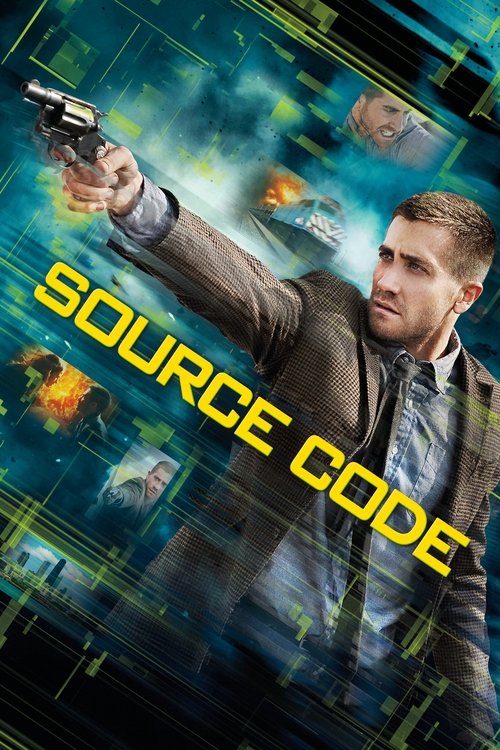
Source Code
Source Code Is a Man Learning to Die Well, Eight Minutes at a Time
Directed by Duncan Jones
Colter Stevens keeps waking on a train to Chicago. He thinks his job is to find the bomber. His actual work is to stop resisting the fact that he is already dead.
The film sells itself as a ticking-clock thriller: a soldier relives the last eight minutes of a stranger's life to identify the man who will blow up a commuter train. But Colter Stevens is not living those eight minutes. He is a burned, dismembered torso wired into a capsule, kept technically alive so the military can farm his neurons. The whole apparatus of the plot, the mission, the bomber, the countdown, is the thing standing between Colter and the only real question the film asks: what does a consciousness do when the body it is fighting to return to no longer exists. Each loop is a rehearsal. The film is not about catching a terrorist. It is about a man practicing his own death until he can meet it awake.
Buddhist Reading: The Eight Minutes Are the Bardo, and He Keeps Failing to Recognize It
In the Tibetan bardo teachings, consciousness after death re-enters vivid, self-generated realities and mistakes them for solid ground. The instruction is always the same: recognize where you are, and you are free. Colter's eight minutes are exactly this. He wakes into a world that feels complete, sunlight on the window, Christina laughing across the table, coffee spilled on his shoe, and he treats it as the thing to be preserved. He fights to stay. He fights to fix it. He is doing what the dying consciousness always does: clutching a projection because it is warmer than the void behind it.
His teacher is Goodwin, the officer who keeps his eyes on him from the capsule. She is the calm voice reading him through the transition, and the film's turning point is when she agrees to grant his final request: send him in one more time, then let the machine turn off. Watch what he does with that last loop. He does not race the clock. He disarms the bomb early, calls his estranged father, walks the train car, kisses Christina, and then, at the moment the eight minutes should reset, they do not. Time holds. He has stopped resisting, and the world that was a prison becomes a place he can simply inhabit. That held frame, the train suspended in a kiss, is the bardo teaching made cinema: the projection stops being a trap the instant you stop trying to escape it.
Gnostic Reading: The Capsule Is the Body, and the Handlers Are the Archons
Behind the eight minutes sits a colder architecture. Dr. Rutledge does not care about Colter as a person. He cares about the asset. He lies to Colter about his condition, promises release he never intends to give, and speaks of him as a resource to be run indefinitely. This is the Gnostic Demiurge in a lab coat: a lower power that mistakes the machinery for the whole of reality and treats a trapped soul as fuel for its system. Colter is the pneumatic spark, the fragment of real consciousness held inside a dead apparatus by beings who cannot see what he is.
Goodwin is the messenger who breaks ranks. She smuggles him the one gift the Demiurge withholds: an actual ending. When she pulls the plug, she is not killing him. She is releasing a spark the system meant to hold forever, and the film's final image, Colter walking free into a Chicago that should not exist, is gnosis rendered literal. He wakes up outside the machine.
Questions this film answers
What is the deeper meaning of Source Code?
The film sells itself as a ticking-clock thriller: a soldier relives the last eight minutes of a stranger's life to identify the man who will blow up a commuter train. But Colter Stevens is not living those eight minutes. He is a burned, dismembered torso wired into a capsule, kept technically alive so the military can farm his neurons. The whole apparatus of the plot, the mission, the bomber, the countdown, is the thing standing between Colter and the only real question the film asks: what does a consciousness do when the body it is fighting to return to no longer exists. Each loop is a rehearsal. The film is not about catching a terrorist. It is about a man practicing his own death until he can meet it awake.
What is the hidden symbolism in Source Code?
In the Tibetan bardo teachings, consciousness after death re-enters vivid, self-generated realities and mistakes them for solid ground. The instruction is always the same: recognize where you are, and you are free. Colter's eight minutes are exactly this. He wakes into a world that feels complete, sunlight on the window, Christina laughing across the table, coffee spilled on his shoe, and he treats it as the thing to be preserved. He fights to stay. He fights to fix it. He is doing what the dying consciousness always does: clutching a projection because it is warmer than the void behind it.
What esoteric traditions appear in Source Code?
Source Code draws from Buddhism, Gnosticism traditions. Colter Stevens keeps waking on a train to Chicago. He thinks his job is to find the bomber. His actual work is to stop resisting the fact that he is already dead.
Is Source Code worth watching for spiritual seekers?
Source Code (2011) directed by Duncan Jones is essential viewing for those interested in Buddhism, Gnosticism. Source Code Is a Man Learning to Die Well, Eight Minutes at a Time. It rewards multiple viewings and contemplation.
Rewatch With New Eyes
Now that you've seen the architecture, experience it again. The same film becomes a different film when you know what to watch for.
This time, watch for:
- See impermanence: what clings, what releases, what remains
- Watch for the false world vs. the real — who is asleep, who awakens
Links may include affiliate partnerships that support Media Revelations
The Descent Continues
Where this thread leads next.
Edge of Tomorrow 2014
Edge of Tomorrow Is a Coward Forced to Rehearse His Own Awakening Until It Takes
Read the revelation →