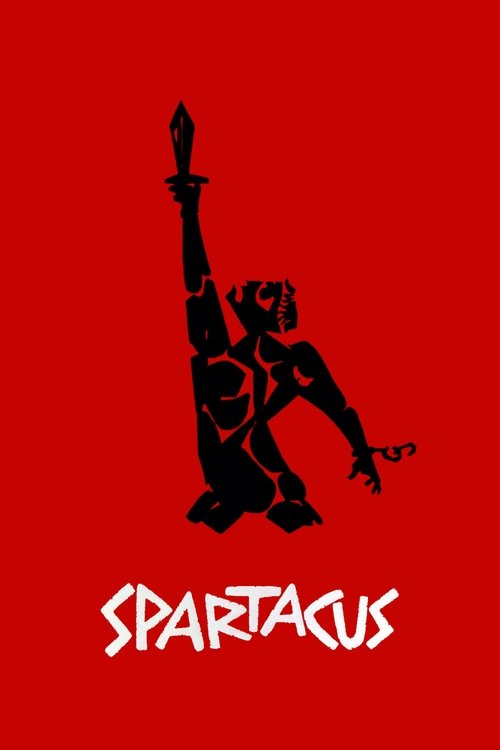
Spartacus
Spartacus Wins the Moment His Men Refuse to Let Him Die Alone
Directed by Stanley Kubrick
Rome crucifies six thousand rebels along the Appian Way and considers the matter closed. The film argues Rome lost, and it makes the argument with a single line spoken by a crowd.
Spartacus is remembered as an epic of rebellion, but the rebellion fails. The slave army is broken, the leader is captured, the crosses go up. If the film were about winning, it would be a tragedy. It is not a tragedy, and the reason is buried in its most famous moment. When the Roman general offers the survivors their lives in exchange for identifying Spartacus, the man himself stands to accept his fate, and before he can speak, the man beside him stands and says "I am Spartacus," and then the next man, and the next, until the whole field of prisoners is on its feet claiming a name that means death. They have understood something the empire cannot understand: that Spartacus was never a single man to be executed. He had become an interior condition, transmitted to every man who followed him, and you cannot crucify a condition. The body dies on the cross. The thing it carried is now loose in six thousand men and cannot be recalled.
Initiatory Reading: The Ludus as the Ordeal That Makes the Free Man
Every initiation begins with a descent into a controlled hell that breaks the old self so a new one can be forged. The gladiator school of Batiatus is a perfect initiatory crucible: men are stripped, ranked, trained to kill, painted with colored marks that designate which body part is a lethal target, reduced entirely to instruments. It is designed to produce obedient weapons. It produces the opposite.
The turning point is the forced duel where Draba, having beaten Spartacus, refuses to deliver the killing blow and instead hurls himself at the watching Romans and dies. That refusal is the initiatory transmission. Draba shows Spartacus that the ordeal meant to enslave him can be inverted into the ground of freedom, that a man can choose the meaning of his own death even when he cannot choose to live. Spartacus enters the ludus a slave and leaves it something the Romans have no word for, a free man who was manufactured by the very machine built to guarantee he never would be. The initiation worked. It simply produced the wrong graduate for the people running the school.
Gnostic Reading: The Name That Cannot Be Captured Because It Was Never a Person
Gnostic teaching turns on a spark of the divine that the rulers of the lower world cannot locate, cannot own, and cannot destroy, because it is not a possession but an awakening that passes from one who knows to one who is ready. Rome operates on the opposite assumption. Rome believes everything is a body, and every body has a price, a chain, a cross. Crassus wants Spartacus the man so he can hang the rebellion on a single frame and be done.
The film denies him this. "I am Spartacus" is a Gnostic act. The spark that the slaves received cannot be handed back by pointing to one throat. It has propagated. Crassus gets a corpse and thinks he has won, while the awakening he tried to extinguish rides home in the memory of a freed woman carrying a free child, a truth the empire never even sees leaving through its own gates.
Questions this film answers
What is the deeper meaning of Spartacus?
Spartacus is remembered as an epic of rebellion, but the rebellion fails. The slave army is broken, the leader is captured, the crosses go up. If the film were about winning, it would be a tragedy. It is not a tragedy, and the reason is buried in its most famous moment. When the Roman general offers the survivors their lives in exchange for identifying Spartacus, the man himself stands to accept his fate, and before he can speak, the man beside him stands and says "I am Spartacus," and then the next man, and the next, until the whole field of prisoners is on its feet claiming a name that means death. They have understood something the empire cannot understand: that Spartacus was never a single man to be executed. He had become an interior condition, transmitted to every man who followed him, and you cannot crucify a condition. The body dies on the cross. The thing it carried is now loose in six thousand men and cannot be recalled.
What is the hidden symbolism in Spartacus?
Every initiation begins with a descent into a controlled hell that breaks the old self so a new one can be forged. The gladiator school of Batiatus is a perfect initiatory crucible: men are stripped, ranked, trained to kill, painted with colored marks that designate which body part is a lethal target, reduced entirely to instruments. It is designed to produce obedient weapons. It produces the opposite.
What esoteric traditions appear in Spartacus?
Spartacus draws from Initiation, Gnosticism traditions. Rome crucifies six thousand rebels along the Appian Way and considers the matter closed. The film argues Rome lost, and it makes the argument with a single line spoken by a crowd.
Is Spartacus worth watching for spiritual seekers?
Spartacus (1960) directed by Stanley Kubrick is essential viewing for those interested in Initiation, Gnosticism. Spartacus Wins the Moment His Men Refuse to Let Him Die Alone. It rewards multiple viewings and contemplation.
Rewatch With New Eyes
Now that you've seen the architecture, experience it again. The same film becomes a different film when you know what to watch for.
This time, watch for:
- Mark the threshold: the old self dies, the ordeal transforms, the new self returns
- Watch for the false world vs. the real — who is asleep, who awakens
Links may include affiliate partnerships that support Media Revelations
The Descent Continues
Where this thread leads next.
The Last Temptation of Christ 1988
The Christ Who Almost Said No
Read the revelation →