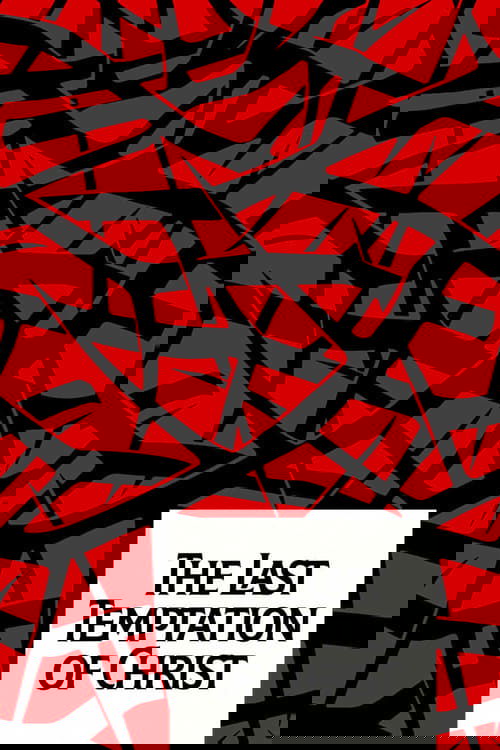
The Last Temptation of Christ
The Christ Who Almost Said No
Directed by Martin Scorsese
The controversy missed the point. Scorsese's Jesus is not a heresy — he is the most honest theological portrait ever filmed. A man who hears God's voice and wishes he didn't. Who feels the nails being forged in his own carpentry shop. The last temptation is not sex. It is normalcy.
The Last Temptation of Christ is the most theologically serious Jesus film ever made — which is why it terrified people who had never seen it. Scorsese and screenwriter Paul Schrader did not depict a heretical Christ. They depicted the Christ of Chalcedonian orthodoxy: fully human and fully divine, which means a man who could be tempted, who could doubt, who could want to escape his fate. The film's power comes from taking the Incarnation seriously. If Jesus was truly human, he experienced human fear. If he was truly tempted, the temptation had to be real. The final sequence — the extended vision of a life unlived, where Jesus marries, has children, grows old — is not Satan offering sin. It is Satan offering normalcy. The deepest temptation is not to be evil but to be ordinary. To have what everyone has. To escape the specific weight of being chosen. Jesus rejects it. He chooses the cross. The film ends with his joy at the rejection — 'It is accomplished!' — which only makes sense if the alternative was genuinely available. A victory over nothing is no victory. Scorsese gave Christ a real battle, which is the only way the cross can mean anything.
The Surface
Protesters who burned Nikos Kazantzakis's novel and picketed Scorsese's film believed they were defending Christ from blasphemy. They had not read the book or seen the film. What they were defending was a Christ so distant from humanity that his sacrifice cost him nothing — which is no sacrifice at all.
The film follows Jesus from his early life as a carpenter who makes crosses for the Romans — a collaboration that torments him — through his ministry, his miracles, his betrayal, and his crucifixion. The controversial material comes in the final thirty minutes: on the cross, Jesus is visited by what appears to be a young girl angel who tells him God has released him from his mission. He descends, marries Mary Magdalene, has children, and lives an ordinary life into old age.
On his deathbed, Judas appears and reveals the truth: the angel was Satan. Jesus has abandoned his mission. The world is burning because he chose comfort over sacrifice. Jesus crawls back to Golgotha, begs God to let him complete the crucifixion, and finds himself back on the cross at the moment of death. 'It is accomplished.' He dies smiling.
The Carpenter of Crosses
The film opens with Jesus making crosses. Not furniture. Not fishing boats. The instruments of Roman execution. He is a collaborator in empire, furnishing the machinery of death. This is Scorsese's first provocation: before Jesus is the sacrifice, he builds the altar.
In Gnostic terms, this is the pneumatic soul trapped in the service of the Archons. Jesus knows what he is doing is wrong. He does it anyway. He cannot stop. He tells Mary Magdalene that he hears God's voice and wants it to stop, that he collaborates with Rome because he wants God to hate him enough to leave him alone.
This is the spiritual condition of the human who knows they are called and refuses the call. The evasion never works. The voice does not go silent. The crosses keep being ordered. Jesus builds them faster, hoping exhaustion will silence the demand. It does not.
When Jesus finally leaves the carpentry shop, it is not triumph but surrender. He has lost the battle against his own vocation. The call has worn him down. This is more honest than any triumphant departure scene in any other Jesus film.
Judas as True Believer
Harvey Keitel's Judas is the film's theological masterstroke. He is not greedy, not jealous, not a villain. He is the most faithful disciple — so faithful that he agrees to betray Jesus because Jesus asks him to.
The scene where Jesus explains the necessity of the betrayal is electrifying. Someone must hand him over. Someone must be willing to be hated forever so that the mission can be completed. It cannot be a stranger. It must be someone who loves him enough to be damned for him. Judas protests. Jesus insists. Judas accepts.
This reading of Judas has ancient precedent. The Gnostic Gospel of Judas depicts him as the only disciple who truly understood Jesus's teaching — the one given the secret knowledge, the one trusted with the most terrible task. Scorsese did not invent this. He visualized what had been suppressed.
When Judas appears at the deathbed to reveal Satan's deception, he is furious. 'You were the strongest. You made me do it. And now you're letting everyone down.' The betrayer holds the betrayed accountable. Judas's faith was absolute. Jesus's, in the dream, wavered.
The Temptation of Normalcy
The final temptation is not sex with Mary Magdalene, though the film shows their marriage bed. The temptation is the life that follows: children, grandchildren, a home, growing old, dying surrounded by family. The temptation is the ordinary.
Satan appears as a beautiful child — an angel of light, offering release from pain. 'God loves you too much to let you suffer.' This is the voice every person on a difficult path hears: the voice that says the mission is too much, that you've done enough, that surely God does not want you to hurt this badly.
The dream sequence is deliberately mundane. Jesus as husband and father is not ecstatic. He is merely comfortable. He ages. His wives die. He remarries. He tends flocks and gardens. He becomes the man he would have been without the call — decent, unremarkable, forgotten.
The horror emerges slowly. Paul is out preaching about a crucified and risen Christ. Jesus approaches him, explains he didn't actually die on the cross. Paul doesn't care. 'I don't care what you did or didn't do. I've created a truth that millions will believe.' The story has escaped its author. The incarnation has been merchandised. Jesus's abdication changed nothing except that he must now watch his myth propagate without him.
The Return to the Cross
On his deathbed, surrounded by the life he chose over Golgotha, Jesus sees Jerusalem burning. The old Judas appears, disguised as a disciple, and reveals the deception. The angel was Satan. The release was refusal. The fire is what happens when the savior saves himself instead.
Jesus, ancient and dying, crawls out of bed and drags himself through the burning streets toward the hill where he should have died. He begs God for another chance. He reaches the cross and the film cuts back — he is there, he has always been there, the dream collapsed the moment he rejected it.
'It is accomplished.' Dafoe delivers this line with joy, not pain. The temptation was real. He saw the life he could have had. He chose the cross anyway. This is the only way the sacrifice means anything.
The theological point is precise: Jesus was not play-acting on the cross. He could have come down. He could have married. He chose not to. The choice cost him everything that humans want most. That is why it is salvation.
The Transmission
The protesters thought they were protecting Jesus from slander. They were protecting themselves from a Christ who could actually save them.
A Jesus who cannot be tempted, who never doubted, who experienced the cross as a formality before his inevitable triumph — this Christ offers nothing to the human in despair. If his victory was assured, it was not a victory. If his suffering was bearable because he knew Sunday was coming, it was not suffering.
Scorsese's Jesus sweats real blood in Gethsemane. He begs for the cup to pass. He is terrified, not serenely accepting. And when he chooses the cross anyway — not because he must but because he wills it — the choice has weight. This is what 'fully human' means. The alternative was available. He said no.
The film transmits a specific salvation: you do not need to want the difficult path. You do not need to feel brave or ready. You need only to choose it when the moment comes. Jesus didn't want the cross. He wanted children and growing old. He chose the cross. That is the gospel.
Questions this film answers
What is the deeper meaning of The Last Temptation of Christ?
The Last Temptation of Christ is the most theologically serious Jesus film ever made — which is why it terrified people who had never seen it. Scorsese and screenwriter Paul Schrader did not depict a heretical Christ. They depicted the Christ of Chalcedonian orthodoxy: fully human and fully divine, which means a man who could be tempted, who could doubt, who could want to escape his fate. The film's power comes from taking the Incarnation seriously. If Jesus was truly human, he experienced human fear. If he was truly tempted, the temptation had to be real. The final sequence — the extended vision of a life unlived, where Jesus marries, has children, grows old — is not Satan offering sin. It is Satan offering normalcy. The deepest temptation is not to be evil but to be ordinary. To have what everyone has. To escape the specific weight of being chosen. Jesus rejects it. He chooses the cross. The film ends with his joy at the rejection — 'It is accomplished!' — which only makes sense if the alternative was genuinely available. A victory over nothing is no victory. Scorsese gave Christ a real battle, which is the only way the cross can mean anything.
What is the hidden symbolism in The Last Temptation of Christ?
Protesters who burned Nikos Kazantzakis's novel and picketed Scorsese's film believed they were defending Christ from blasphemy. They had not read the book or seen the film. What they were defending was a Christ so distant from humanity that his sacrifice cost him nothing — which is no sacrifice at all.
What esoteric traditions appear in The Last Temptation of Christ?
The Last Temptation of Christ draws from Gnosticism, Initiation traditions. The controversy missed the point. Scorsese's Jesus is not a heresy — he is the most honest theological portrait ever filmed. A man who hears God's voice and wishes he didn't. Who feels the nails being forged in his own carpentry shop. The last temptation is not sex. It is normalcy.
What does The Last Temptation of Christ teach about the carpenter of crosses?
Before Jesus is the sacrifice, he builds the altar. The film opens with Jesus making crosses. Not furniture. Not fishing boats. The instruments of Roman execution. He is a collaborator in empire, furnishing the machinery of death. This is Scorsese's first provocation: before Jesus is the sacrifice, he builds the altar.
What does The Last Temptation of Christ teach about judas as true believer?
Judas is so faithful that he agrees to betray Jesus because Jesus asks him to. Harvey Keitel's Judas is the film's theological masterstroke. He is not greedy, not jealous, not a villain. He is the most faithful disciple — so faithful that he agrees to betray Jesus because Jesus asks him to.
What does The Last Temptation of Christ teach about the return to the cross?
The dream was a real alternative. That is why its rejection is victory. On his deathbed, surrounded by the life he chose over Golgotha, Jesus sees Jerusalem burning. The old Judas appears, disguised as a disciple, and reveals the deception. The angel was Satan. The release was refusal. The fire is what happens when the savior saves himself instead.
Is The Last Temptation of Christ worth watching for spiritual seekers?
The Last Temptation of Christ (1988) directed by Martin Scorsese is essential viewing for those interested in Gnosticism, Incarnation, Sacrifice. The Christ Who Almost Said No. It rewards multiple viewings and contemplation.
Rewatch With New Eyes
Now that you've seen the architecture, experience it again. The same film becomes a different film when you know what to watch for.
This time, watch for:
- Watch for the false world vs. the real — who is asleep, who awakens
- Mark the threshold: the old self dies, the ordeal transforms, the new self returns
Links may include affiliate partnerships that support Media Revelations
The Descent Continues
Where this thread leads next.
Silence 2016
God Speaks Once in Silence, When Rodrigues Commits the Act He Fears Most
Read the revelation →