Suzume
Suzume Is What Happens When a Grieving Country Puts a Child in Charge of Closing Its Doors
Directed by Makoto Shinkai
Every door she shuts is a wound. She has to say thank you to the dead before it will latch.
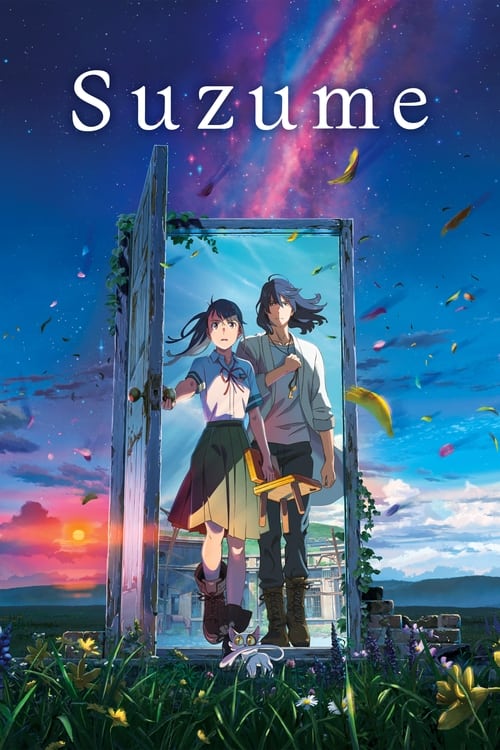
Suzume is a girl who walks toward a ruin. Shinkai builds the whole film out of abandoned places: a drowned resort town, a shuttered school, a derelict amusement park, a subway line under a collapsed district. These are the places where the membrane is thin, where a Door stands open in the empty air and lets the Worm out. The Worm is not a monster in the ordinary sense. It is the accumulated grief of the dead pouring back into the land as earthquake. Suzume's job, inherited by accident and then chosen, is to close those doors. But the doors only close on one condition: she has to feel the lives that were lived in the ruin, hear the voices of everyone who once called that place home, and give them back to death with gratitude. The film disguises a national trauma ritual as a road movie. Japan lost twenty thousand people to water in a single afternoon in 2011, and this is the mourning made into myth.
Shamanic Reading: The Girl Who Closes the Cracks Between the Worlds
The shaman is the one who stands at the tear in the world and mends it so the community can go on living. Suzume is that figure, drafted young. The Ever-After she keeps glimpsing through the doors is the shaman's other world: a starfield sky over cold ground where all times exist at once, past and present and the moment of death all laid flat. Ordinary people cannot see the Worm. Suzume can. This is the shaman's affliction before it is the shaman's gift, and Shinkai marks it precisely: she can see the catastrophe coming because she has already survived one.
Watch what closing a door actually requires. She presses her hands to it while the Worm strains against her, and she cannot latch it by force. She has to listen. The lament of the dead rises, the "itadakimasu" of returning the place to the ground, and only when she has honored the vanished lives does the keyhole turn. That is soul retrieval performed in reverse. The shaman usually goes into the other world to bring a lost soul back. Suzume goes to the threshold to send the unquiet dead home, and the price of every closing is that she must feel the loss completely before it will hold.
Initiatory Reading: The Child at the Door Is the Woman Who Survived
The film's true door is the one Suzume walked through at age four, in Tohoku, searching the snow for a mother who was already dead. Everything else is rehearsal for going back through it. Her descent is literal: she travels the length of Japan northward, toward the disaster region, toward the ruin of her own childhood home, which is the final Door.
In the Ever-After she meets a small girl crying in the snow and comforts her. The girl is herself. This is the initiate meeting the wounded child at the bottom of the underworld and becoming, for that child, the mother who never came back. She hands her younger self the three-legged chair that is all she has left of her mother, and she says the thing no one said to her: you will grow up, you will be loved, the future is not closed. The initiation completes not when the danger ends but when the survivor turns around and parents her own grief.
Questions this film answers
What is the deeper meaning of Suzume?
Suzume is a girl who walks toward a ruin. Shinkai builds the whole film out of abandoned places: a drowned resort town, a shuttered school, a derelict amusement park, a subway line under a collapsed district. These are the places where the membrane is thin, where a Door stands open in the empty air and lets the Worm out. The Worm is not a monster in the ordinary sense. It is the accumulated grief of the dead pouring back into the land as earthquake. Suzume's job, inherited by accident and then chosen, is to close those doors. But the doors only close on one condition: she has to feel the lives that were lived in the ruin, hear the voices of everyone who once called that place home, and give them back to death with gratitude. The film disguises a national trauma ritual as a road movie. Japan lost twenty thousand people to water in a single afternoon in 2011, and this is the mourning made into myth.
What is the hidden symbolism in Suzume?
The shaman is the one who stands at the tear in the world and mends it so the community can go on living. Suzume is that figure, drafted young. The Ever-After she keeps glimpsing through the doors is the shaman's other world: a starfield sky over cold ground where all times exist at once, past and present and the moment of death all laid flat. Ordinary people cannot see the Worm. Suzume can. This is the shaman's affliction before it is the shaman's gift, and Shinkai marks it precisely: she can see the catastrophe coming because she has already survived one.
What esoteric traditions appear in Suzume?
Suzume draws from Shamanism, Initiation traditions. Every door she shuts is a wound. She has to say thank you to the dead before it will latch.
Is Suzume worth watching for spiritual seekers?
Suzume (2022) directed by Makoto Shinkai is essential viewing for those interested in Shamanism, Initiation. Suzume Is What Happens When a Grieving Country Puts a Child in Charge of Closing Its Doors. It rewards multiple viewings and contemplation.
Rewatch With New Eyes
Now that you've seen the architecture, experience it again. The same film becomes a different film when you know what to watch for.
This time, watch for:
- Follow the descent: what dies, what guides, what returns transformed
- Mark the threshold: the old self dies, the ordeal transforms, the new self returns
Links may include affiliate partnerships that support Media Revelations