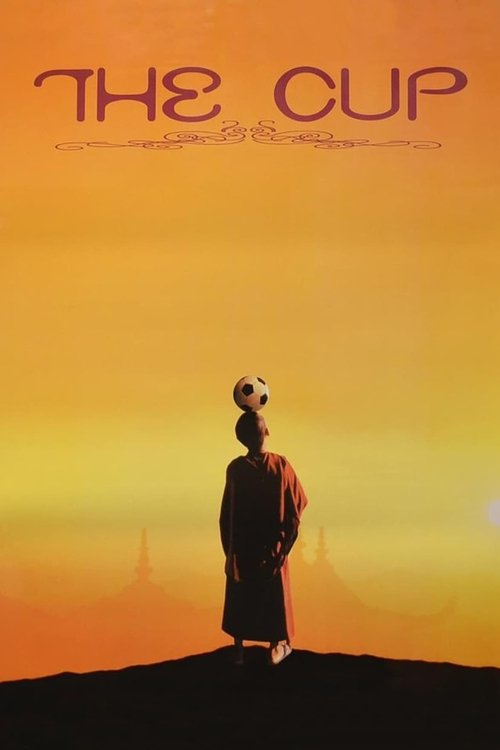
The Cup
The Cup Proves Enlightenment and Wanting to Watch the World Cup Are the Same Impulse
Directed by Khyentse Norbu
A Tibetan lama directed a comedy about monks obsessed with football, and hid a complete dharma teaching inside the joke.
At a Tibetan monastery in exile in India, the young monks are supposed to be memorizing scripture and preparing for the abbot's teachings. Instead they are sneaking out at night to watch the 1998 World Cup on a village television, and the ringleader, a boy called Orgyen, hatches a scheme to rent a TV and satellite dish so the whole monastery can watch the final. The film, directed by the reincarnate lama Khyentse Norbu, looks like a gentle comedy about kids being kids. It is that. It is also a precise teaching about desire, told by a teacher who refuses to pretend that monks are not human. The abbot does not punish the football. He watches how it moves through the boys, and he uses it.
Buddhism Reading: The Abbot Grants the Wish to Teach Its Emptiness
The pivotal move is that the monastery gets its way. The dish goes up, the monks crowd around the little screen, France plays Brazil, and the thing they wanted so desperately arrives exactly as wanted. And in the wanting-fulfilled there is a lesson no lecture could deliver. Geko, the disciplinarian, frets and forbids and finally relents. The old abbot, near the end, asks Geko simply what the boys were so excited about, and receives the answer: two civilized nations fighting over a ball. He nods. The absurdity is the point, and the point is not that football is beneath them.
This is the Buddhist analysis of craving rendered as farce. The Second Noble Truth says suffering arises from tanha, the thirst that reaches toward objects. The film demonstrates that the thirst is structurally identical whether the object is a trophy or liberation itself. Orgyen chases the World Cup with the exact energy he is supposed to bring to the path. The abbot sees this and does not condemn it. He recognizes the fuel. A student who can want that intensely can be pointed somewhere worth wanting.
Initiation Reading: Orgyen's Debt and the Turning of the Ordinary
The film's real initiatory beat is small and easy to miss. Orgyen, to fund the TV rental, borrows and connives, and ends up owing more than he can pay, offering as collateral a watch that turns out to be worthless. His scheme collapses into obligation. The wild energy that drove the plot runs into consequence, and the boy who was all appetite is confronted with what appetite costs.
Then the older monk quietly covers the shortfall and the tension dissolves into ordinary kindness. There is no thunderous transformation. That restraint is the initiation. Norbu, an initiated teacher himself, knows that most real turning happens without spectacle: a boy learns the weight of what he grasped for, an elder absorbs the cost, and the community holds. The World Cup ends, France wins, and the next morning the monastery goes back to its bells and its butter tea, unchanged and completely changed. The lesson was never anti-football. It was that the whole tremendous longing can be watched, honored, spent, and released, and life simply continues.
Questions this film answers
What is the deeper meaning of The Cup?
At a Tibetan monastery in exile in India, the young monks are supposed to be memorizing scripture and preparing for the abbot's teachings. Instead they are sneaking out at night to watch the 1998 World Cup on a village television, and the ringleader, a boy called Orgyen, hatches a scheme to rent a TV and satellite dish so the whole monastery can watch the final. The film, directed by the reincarnate lama Khyentse Norbu, looks like a gentle comedy about kids being kids. It is that. It is also a precise teaching about desire, told by a teacher who refuses to pretend that monks are not human. The abbot does not punish the football. He watches how it moves through the boys, and he uses it.
What is the hidden symbolism in The Cup?
The pivotal move is that the monastery gets its way. The dish goes up, the monks crowd around the little screen, France plays Brazil, and the thing they wanted so desperately arrives exactly as wanted. And in the wanting-fulfilled there is a lesson no lecture could deliver. Geko, the disciplinarian, frets and forbids and finally relents. The old abbot, near the end, asks Geko simply what the boys were so excited about, and receives the answer: two civilized nations fighting over a ball. He nods. The absurdity is the point, and the point is not that football is beneath them.
What esoteric traditions appear in The Cup?
The Cup draws from Buddhism, Initiation traditions. A Tibetan lama directed a comedy about monks obsessed with football, and hid a complete dharma teaching inside the joke.
Is The Cup worth watching for spiritual seekers?
The Cup (1999) directed by Khyentse Norbu is essential viewing for those interested in Buddhism, Initiation. The Cup Proves Enlightenment and Wanting to Watch the World Cup Are the Same Impulse. It rewards multiple viewings and contemplation.
Rewatch With New Eyes
Now that you've seen the architecture, experience it again. The same film becomes a different film when you know what to watch for.
This time, watch for:
- See impermanence: what clings, what releases, what remains
- Mark the threshold: the old self dies, the ordeal transforms, the new self returns
Links may include affiliate partnerships that support Media Revelations
The Descent Continues
Where this thread leads next.
Spring, Summer, Fall, Winter... and Spring 2003
Spring, Summer, Fall, Winter... and Spring Is the Same Sin Watched Until It Becomes the Path
Read the revelation →