Seth Brundle is not a mad scientist. He is an alchemist who achieves transmutation and discovers it was the wrong transmutation. The teleporter is the alchemical vessel. The fly is the impurity that corrupts the work. The body horror is the nigredo that never ends because there is no purified matter on the other side.
The Fly is David Cronenberg's most complete statement on the body as enemy and ally — the 'new flesh' that his other films hint at, here rendered as graphic decay. But beneath the body horror is a precise alchemical tragedy. Seth Brundle has built a vessel for transformation. He enters it seeking transcendence. What emerges is dissolution without reconstitution. In alchemy, the Great Work requires breaking down the base matter (nigredo), purifying it (albedo), and reconstituting it as gold (rubedo). Brundle's teleportation achieves the first stage and cannot proceed. He is broken down, merged with an impurity, and stuck in endless decomposition. The gold never arrives. The opus fails. The horror is not the fly. The horror is the alchemist who gets what he asked for — transformation — without the wisdom to control what he transforms into. Cronenberg shows us what initiation looks like when it goes wrong. It looks like your fingernails falling off. It looks like vomiting acid. It looks like begging the woman you love to end it.
The Surface
Seth Brundle is a brilliant physicist who has invented teleportation pods — devices that can disintegrate matter in one location and reassemble it in another. He demonstrates the technology to journalist Veronica Quaife, who becomes his lover and documentarian. He cannot yet teleport living things; the computer fails to understand flesh.
After a breakthrough, Seth teleports himself. He does not notice the housefly that entered the pod with him. The computer did not teleport two organisms. It fused them. Seth emerges feeling better than ever — stronger, more energetic, sexually inexhaustible. Veronica notices changes. His behavior becomes erratic. His skin develops lesions.
What follows is ninety minutes of transformation tracked with Cronenberg's characteristic precision: every falling piece of flesh, every revealed exoskeleton, every failure of the human form to hold together. By the end, 'Brundlefly' is a creature that can barely speak, that digests food externally, that proposes one final fusion — with Veronica and their unborn child — as the only escape from what it has become.
The Alchemical Vessel
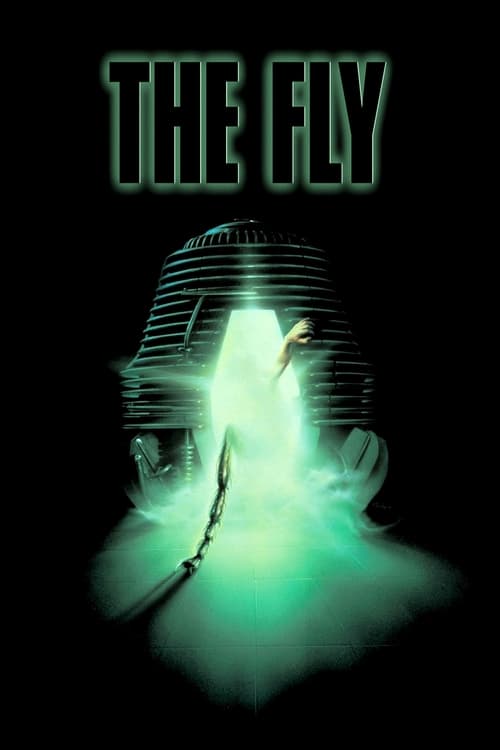
Brundle's teleportation pods are eggs. Cronenberg designed them this way deliberately — ovoid, organic-looking despite their technology. They are vessels for transformation, and vessel symbolism runs through every alchemical tradition.
The alchemist places base matter in the vessel and applies heat, pressure, timing. The matter breaks down. From the breakdown, purified substance emerges. The key is that the vessel must be sealed correctly, the work must be performed in proper sequence, and no impurities can be introduced.
Seth violates all of this. He enters the vessel drunk, angry at Veronica, impatient. He does not check for impurities. He is not prepared for what transformation requires. The alchemist who begins the Great Work without proper attention does not fail to transform. He transforms wrong.
The fly is the impurity that corrupts the opus. At a molecular level, Seth is now part insect. There is no backing out. The fusion has already occurred before anyone notices. By the time symptoms appear, the transformation is complete. What remains is the manifestation.
The Nigredo That Never Ends
Nigredo is the blackening — the first stage of the alchemical process where the old form dies. It is depicted as rotting, as dissolution, as the breakdown of everything stable. In successful transformation, nigredo gives way to albedo (whitening, purification) and then rubedo (reddening, the creation of the philosopher's stone).
Seth achieves nigredo and cannot proceed. His body breaks down progressively — first internally, then visibly. Fingernails detach. Ears fall off. Skin sloughs away. The human form liquefies around the insect form emerging beneath.
There is no albedo because there is nothing to purify. The fusion itself is the impurity. The fly genes cannot be separated from the human genes. The operation cannot be reversed. Nigredo becomes the permanent state rather than the transitional one.
Cronenberg shoots the decay clinically, almost lovingly. Every stage is documented. The medicine cabinet of fallen body parts. The hairs emerging from wounds. The gradual loss of recognizable human features. This is what endless nigredo looks like: not death, but decomposition without end.
The New Flesh Corrupted
Cronenberg's career-long obsession with the 'new flesh' — the transformed body that represents evolved humanity — reaches its tragic limit here. Seth initially experiences the fusion as upgrade. His strength increases. His reflexes sharpen. His sexual stamina becomes superhuman.
He preaches to Veronica about the possibilities: what if teleportation could purify, improve, elevate? He has become a prophet of his own technology. He wants to put Veronica in the pods and transform her too. His enthusiasm is genuine and terrifying.
But the new flesh is not transcendence. It is disease. The improvement was always the first stage of deterioration. The shamanic dismemberment that should precede rebirth becomes permanent fragmentation. The initiate who enters the other world to be torn apart never returns reassembled.
Seth's tragedy is that he experiences this in full consciousness. He knows what he is becoming. He cannot stop it. He keeps a journal of the transformation, dictating his observations as his mouth changes shape. The scientist documents his own dissolution.
The Final Fusion
In the climax, Seth — now barely recognizable as human — has one more idea. If the pods fused him with the fly, perhaps they can fuse him with Veronica and the child she is carrying. Three into one. A new configuration that might dilute the insect enough to restore something human.
This is not madness but logic. The alchemist who cannot reverse the operation attempts to add new elements. If the mixture cannot be purified, perhaps it can be balanced. Seth is still thinking, still problem-solving, even as he drags Veronica toward the pod with appendages that no longer resemble arms.
The fusion fails. The pod merges Seth with the pod itself — the vessel becomes part of the content. What emerges is a hybrid of flesh, insect, and metal that cannot survive. It points the shotgun at itself. Veronica fires.
Cronenberg frames the killing as mercy. Veronica sobs as she shoots. The creature she kills was the man she loved. The fusion was not his choice. The corruption was not his fault. But it was also not survivable. Some transformations leave no room for the one who transforms.
The Transmission
Cronenberg made The Fly at the height of the AIDS epidemic. The parallels were noticed immediately: the invisible infection, the progressive deterioration, the partner watching helplessly, the transformation from vibrant health to unrecognizable decay. Seth's line 'I'm dying' is not metaphor.
But the film transcends its historical moment through its alchemical precision. This is not just a film about disease. It is a film about the danger of transformation — any transformation — undertaken without full knowledge of what one is entering.
We all want to transform. We diet and exercise and meditate and seek therapy and take substances. We enter vessels hoping to emerge better. The Fly asks: What if the vessel contains something you did not see? What if the transformation goes wrong in ways that cannot be corrected?
The answer is not 'do not transform.' The answer is that transformation is not guaranteed to improve. The alchemist who does not prepare pays with his body. The opus has no safety net. Seth Brundle achieved transmutation. It killed him. Be afraid. Be very afraid.
Questions this film answers
What is the deeper meaning of The Fly?
The Fly is David Cronenberg's most complete statement on the body as enemy and ally — the 'new flesh' that his other films hint at, here rendered as graphic decay. But beneath the body horror is a precise alchemical tragedy. Seth Brundle has built a vessel for transformation. He enters it seeking transcendence. What emerges is dissolution without reconstitution. In alchemy, the Great Work requires breaking down the base matter (nigredo), purifying it (albedo), and reconstituting it as gold (rubedo). Brundle's teleportation achieves the first stage and cannot proceed. He is broken down, merged with an impurity, and stuck in endless decomposition. The gold never arrives. The opus fails. The horror is not the fly. The horror is the alchemist who gets what he asked for — transformation — without the wisdom to control what he transforms into. Cronenberg shows us what initiation looks like when it goes wrong. It looks like your fingernails falling off. It looks like vomiting acid. It looks like begging the woman you love to end it.
What is the hidden symbolism in The Fly?
Seth Brundle is a brilliant physicist who has invented teleportation pods — devices that can disintegrate matter in one location and reassemble it in another. He demonstrates the technology to journalist Veronica Quaife, who becomes his lover and documentarian. He cannot yet teleport living things; the computer fails to understand flesh.
What esoteric traditions appear in The Fly?
The Fly draws from Alchemy, Shamanism traditions. Seth Brundle is not a mad scientist. He is an alchemist who achieves transmutation and discovers it was the wrong transmutation. The teleporter is the alchemical vessel. The fly is the impurity that corrupts the work. The body horror is the nigredo that never ends because there is no purified matter on the other side.
What does The Fly teach about the alchemical vessel?
The alchemist who begins the Great Work without proper attention does not fail to transform. He transforms wrong. Brundle's teleportation pods are eggs. Cronenberg designed them this way deliberately — ovoid, organic-looking despite their technology. They are vessels for transformation, and vessel symbolism runs through every alchemical tradition.
What does The Fly teach about the new flesh corrupted?
The shamanic dismemberment that should precede rebirth becomes permanent fragmentation. Cronenberg's career-long obsession with the 'new flesh' — the transformed body that represents evolved humanity — reaches its tragic limit here. Seth initially experiences the fusion as upgrade. His strength increases. His reflexes sharpen. His sexual stamina becomes superhuman.
Is The Fly worth watching for spiritual seekers?
The Fly (1986) directed by David Cronenberg is essential viewing for those interested in Alchemy, Body Horror, Cronenberg. The Alchemist Who Transformed Wrong. It rewards multiple viewings and contemplation.
Rewatch With New Eyes
Now that you've seen the architecture, experience it again. The same film becomes a different film when you know what to watch for.
This time, watch for:
- Track the stages: blackening, whitening, reddening — death before rebirth
- Follow the descent: what dies, what guides, what returns transformed
Links may include affiliate partnerships that support Media Revelations
The Descent Continues
Where this thread leads next.
Videodrome 1983
The New Flesh as Technological Possession
Read the revelation →