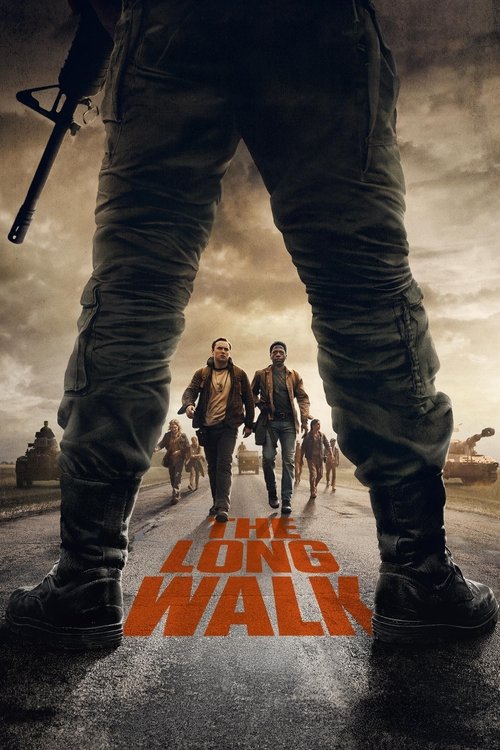
The Long Walk
Winning Is Indistinguishable From Dying: the Self That Started Is Already Gone
Directed by Francis Lawrence
The Long Walk is not a dystopian sports movie. It is a via negativa, a stripping-away initiation staged as an endurance contest, and the reason "the long walk ending explained" is the thing everyone searches after the credits is that the ending refuses to feel like a victory.
The Long Walk is not a dystopian sports movie. It is a via negativa, a stripping-away initiation staged as an endurance contest, and the reason "the long walk ending explained" is the thing everyone searches after the credits is that the ending refuses to feel like a victory. It cannot feel like a victory. The boy who is left standing at the end is not the boy who stepped onto the road. Everything that made him someone has been walked out of him. The Prize is that you get to keep living as the emptied thing the Walk made you. This is the oldest structure in every wisdom tradition, and Stephen King wrote it in 1979 without a single robe or temple in sight: an ordeal that removes everything nonessential until only naked will remains, and then asks whether naked will was ever a self at all. The film gives you the rules in the first minutes so you will spend the rest of the runtime forgetting they are a cosmology. One hundred boys walk. You keep above the minimum pace or you get a warning. Three warnings and the soldiers on the halftrack shoot you dead. The last one walking gets the Prize, anything he wants for the rest of his life. There is no finish line. The Walk ends only when everyone but one is dead. Read that again as a description of being alive and you will understand why the crowd cheers.
The Surface: One Hundred Boys, One Road, One Direction
Every year in a near-future America, one hundred teenage boys volunteer for the Long Walk.
They set out down a highway under armed guard. The single rule is speed: drop below the pace and you earn a warning, earn three warnings and the soldiers execute you on the spot. There are no rest stops, no sleep, no end point other than the death of ninety-nine boys. Ray Garraty, our entry point, walks alongside Peter McVries, a boy with a scar and a private wound, and a shifting cluster of others who become, over the miles, the only people in the world who matter. They talk. They tell each other their lives. They keep each other awake and moving when the body begins to fail. And one by one, as feet blister and cramp and legs simply stop, they are shot, until the road behind the survivors is a trail of the friends they made and could not save.
The standard reading is obvious and correct as far as it goes: a totalitarian state manufactures spectacle from the bodies of its young, the crowd is complicit, the Walk is a critique of reality television and militarism and the machinery that turns human death into entertainment. Francis Lawrence, who spent four Hunger Games films on exactly this terrain, knows how to shoot that reading, and he shoots it well. The desaturated road, the mechanical inevitability of the halftrack, the boys reduced to numbers pinned to their shirts.
But that reading treats the Walk as an aberration, a thing a sick society does that a healthy one would not. The film's real horror is the opposite. The Walk strips the padding from the human condition and shows what was underneath the whole time. And the boys did not have to be conscripted. They volunteered.
The Walk Is the Via Negativa, Subtraction Until Only Will Remains
Watch what the Walk actually does across its miles, and you are watching a classical initiation run in reverse gear.
Most initiations add. They give the initiate a secret, a name, a mark, a new membership. The Walk gives nothing. It only takes. In the first hours the boys shed their bravado, their strategies, their belief that they have a plan. By the middle miles they have shed their comfort, their feet, their dignity, the fiction that willpower can be rationed. By the final stretch they have shed their friends. Each thing removed was something the boy thought he was. The Walk is the apophatic path made literal, the "way of negation" that the mystics of every tradition described: you do not arrive at the essential by accumulating truths about it, you arrive by subtracting everything it is not, until what cannot be subtracted is all that is left.
This is why the rule is pace and only pace. The Walk does not test intelligence, virtue, strength, or worth. It tests the one thing underneath all of those, the raw capacity to continue, and it burns off everything else as fuel. Garraty's memories of his mother, his half-formed love for a girl, his reasons for volunteering: the road consumes them all. There comes a point in the novel and the film where boys can no longer remember why they entered, and it does not matter, because the Walk long ago stopped being about why. A boy named Olson keeps walking after his mind is gone, a body moving on the far side of the person who used to inhabit it, and the other boys look at him with the specific horror of seeing where the road leads. Olson is the teaching made flesh. Strip a man of everything and the walking continues without him. What you called your self was a passenger.
The initiate's ordeal has always had this shape. The vision quest without food or water, the sun dance, the desert fast, the sleepless vigil, the sweat lodge: all of them apply pressure until the constructed self cracks and something more basic is exposed. The Long Walk is that ordeal with the exit sealed. In a real initiation the elders bring you back. Here there are no elders, only soldiers, and the only way back is to be one of the ninety-nine the road keeps.
Everyone Is on the Walk, and the Crowd Cheers to Forget It
The crowd is the part of the film people find hardest to sit with, and it is the part the Buddha explained twenty-five centuries early.
Spectators line the route. They wave, they bet, they bring their children, they cheer the survivors and, in the ugliest register, they cheer the deaths. The easy interpretation is that they are monsters, desensitized by a cruel regime. The truer interpretation is that they are us, and their cheering is a defense mechanism against a fact they cannot afford to feel: they are on the Walk too. Everyone is. The Walk moves in exactly one direction, it never lets you rest, and it ends for every single participant in death. The film never has to reach for the allegory. A human life already works this way, once the sentiment is removed.
The first noble truth is that existence is dukkha, usually translated as suffering but closer to unsatisfactoriness, the built-in friction of a conditioned life that is always in motion, always aging, never able to stop and hold its ground. The Walk is dukkha with a soundtrack. You cannot pause. To pause is to die. Impermanence, anicca, is not a spiritual concept here, it is the rule of the road: everything you have you are losing at a fixed pace, and the pace is enforced by men with rifles who represent nothing more than time itself. The soldiers on the halftrack are not evil. They are impartial. They come for the boy who slows down without malice and without exception, the way death comes.
So why does the crowd cheer? Because watching someone else fall lets you feel, for one merciful second, that you are the one still walking, the exception, the survivor. The crowd's roar is the mind's oldest refusal, the refusal to know that the halftrack is behind everyone. This is what the Buddhist teachers meant by the sleep of beings: not stupidity but a trance of selective attention, a whole civilization organized to keep one fact out of view. The genius of the Walk as an image is that it puts the crowd and the walkers in the same frame and shows they are the same people at different distances from the truth. The spectator will be on the road soon enough. The boy on the road was cheering from the curb last year.
Garraty begins to see this. Somewhere in the late miles the cheering crowd stops looking like an audience and starts looking like a mirror, and the film lets his face register the moment the spectacle collapses into recognition. There is no them. There is only the Walk, and everyone is on it, and the cheering is the sound a species makes to avoid hearing its own footsteps.
Garraty and McVries Are the Two Directions of the Initiate
Put Garraty and McVries side by side and you have the whole psychology of anyone who ever set out toward something difficult, split cleanly into two boys.
Garraty walks toward. He has a hometown on the route, a mother who may be watching, a girl, a future he is moving into. He is pulled forward by attachment, by the world he still believes is waiting for him. McVries walks away. He carries the scar and the shame behind it, the wound he entered the Walk to outrun, and his motion is propulsion from a burning house rather than approach toward a lit one. One boy is fleeing the self he was. The other is chasing the self he hopes to become. Between them they map the two engines of every seeker: desire and disgust, the pull of the goal and the push of the wound, and the Walk grinds both down to the same neutral fuel.
The Gnostics understood the trap both boys are in. The material world, the kosmos, is a machinery designed to keep the divine spark asleep, running on exactly these two drives: the craving that chases the world's rewards and the aversion that flees the world's pains, both of them keeping the soul in motion inside the prison, both of them mistaken for freedom. Garraty's forward-love and McVries's backward-flight are the two hands of the Demiurge, and the Walk is the Demiurge's road. It offers a Prize precisely so that the walkers will keep walking, will keep believing the motion means something, will not sit down. To win is to serve the machine best. To sit down is the one gesture the whole system is built to prevent, because sitting down, refusing the pace, is the only act that is genuinely free. The boys who stop are shot, but for one second before the halftrack reaches them they are the only free people on the road.
And here the two poles meet their fate. McVries, the one walking away, reaches a point where the fleeing simply ends. In the novel he sits down, spent, and lets the road take him, and Garraty runs back to him in the film's most tender and terrible beat, trying to haul his friend up, to keep him walking, to keep him. He cannot. The one who walked away from himself finally stops running, and stopping kills him. The one who walked toward something has to watch the person who became his whole reason for continuing become one more body on the road he is still, horribly, walking down. The friendship was real. The Walk was built to make sure it would cost everything. That is not a flaw in the game. That is the game's actual subject.
The Ending Explained: The Prize Is That You Get to Keep Being No One
Here is the ending, and here is why it lands like grief instead of triumph.
Garraty wins. He is the last boy walking. Ninety-nine are dead behind him, including McVries, including everyone who made the miles bearable, and the Walk is over, and he has anything he could ask for. And he keeps walking. In the novel's final image he sees a dark figure ahead of him on the road and walks toward it, unable to stop, because the thing the Walk removed cannot be given back at a finish line. It removed the person who could receive a prize. Winning is indistinguishable from dying because the self that started the Walk is gone, subtracted mile by mile, and what crosses the line is a walking that has forgotten it was ever a boy. Olson kept moving after his mind was gone. So does the winner. The difference between them is a technicality the crowd calls victory.
This is the film's deepest and most Buddhist revelation, and it is not nihilism, which is the thing shallow readings mistake it for. The teaching is that there was never a solid, continuous self to preserve in the first place. The Walk did not destroy Garraty's self. It revealed that the self was a process, a pace, a story the mind told to make the walking feel like it belonged to someone. Anatta, no-self, is the doctrine that the "I" is a verb the mind mistakes for a noun. The Long Walk stages anatta as horror because the boys, and we, are so attached to the noun. But turn the same insight a quarter degree and it is liberation: if there was no self to lose, then the losing is not a tragedy but an unmasking. The winner walking into the dark is a soul that has finally run out of everything it was carrying, and the road ahead is empty, and that emptiness is either the abyss or the open, and the film has the honesty to not tell you which.
The Prize, then, is the cruelest and truest joke in the story. You are promised that if you endure the stripping, you will be rewarded with the fulfillment of any desire. But desire was one of the things the road subtracted. You cross the line having lost the capacity to want the thing you were promised, which means the Prize is unclaimable by definition, which means the real Prize was always just this: you get to keep walking, now without even the company of the friends who made the walking mean something. Everyone is on the Walk. It moves one direction only. And the one who wins learns first what the crowd is cheering not to know, that there was never a finish line, and there was never quite a self, and the road was the whole of it all along.
You will not watch a survival story the same way again once you see what the Long Walk actually is. Not a contest that produces a winner. A subtraction that produces the truth, which is that the walking was never yours, and the moment you stop needing it to be is the only place on the road where the halftrack cannot reach you.
Questions this film answers
What is the deeper meaning of The Long Walk?
The Long Walk is not a dystopian sports movie. It is a via negativa, a stripping-away initiation staged as an endurance contest, and the reason "the long walk ending explained" is the thing everyone searches after the credits is that the ending refuses to feel like a victory. It cannot feel like a victory. The boy who is left standing at the end is not the boy who stepped onto the road. Everything that made him someone has been walked out of him. The Prize is that you get to keep living as the emptied thing the Walk made you. This is the oldest structure in every wisdom tradition, and Stephen King wrote it in 1979 without a single robe or temple in sight: an ordeal that removes everything nonessential until only naked will remains, and then asks whether naked will was ever a self at all. The film gives you the rules in the first minutes so you will spend the rest of the runtime forgetting they are a cosmology. One hundred boys walk. You keep above the minimum pace or you get a warning. Three warnings and the soldiers on the halftrack shoot you dead. The last one walking gets the Prize, anything he wants for the rest of his life. There is no finish line. The Walk ends only when everyone but one is dead. Read that again as a description of being alive and you will understand why the crowd cheers.
What is the hidden symbolism in The Long Walk?
Every year in a near-future America, one hundred teenage boys volunteer for the Long Walk.
What esoteric traditions appear in The Long Walk?
The Long Walk draws from Buddhism, Initiation, Gnosticism traditions. The Long Walk is not a dystopian sports movie. It is a via negativa, a stripping-away initiation staged as an endurance contest, and the reason "the long walk ending explained" is the thing everyone searches after the credits is that the ending refuses to feel like a victory.
Is The Long Walk worth watching for spiritual seekers?
The Long Walk (2025) directed by Francis Lawrence is essential viewing for those interested in Initiation, Buddhism, Via Negativa. Winning Is Indistinguishable From Dying: the Self That Started Is Already Gone. It rewards multiple viewings and contemplation.
Rewatch With New Eyes
Now that you've seen the architecture, experience it again. The same film becomes a different film when you know what to watch for.
This time, watch for:
- See impermanence: what clings, what releases, what remains
- Mark the threshold: the old self dies, the ordeal transforms, the new self returns
- Watch for the false world vs. the real — who is asleep, who awakens
Links may include affiliate partnerships that support Media Revelations
The Descent Continues
Where this thread leads next.
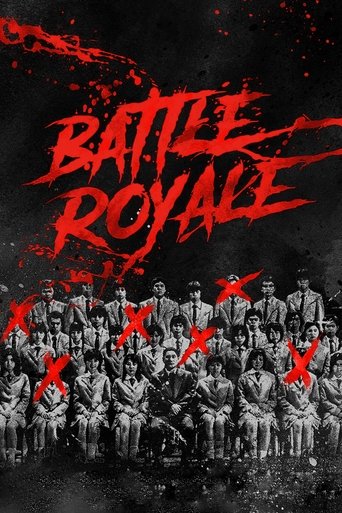
Battle Royale 2000
Battle Royale Is a Bardo Text Disguised as a Dystopia
Read the revelation →