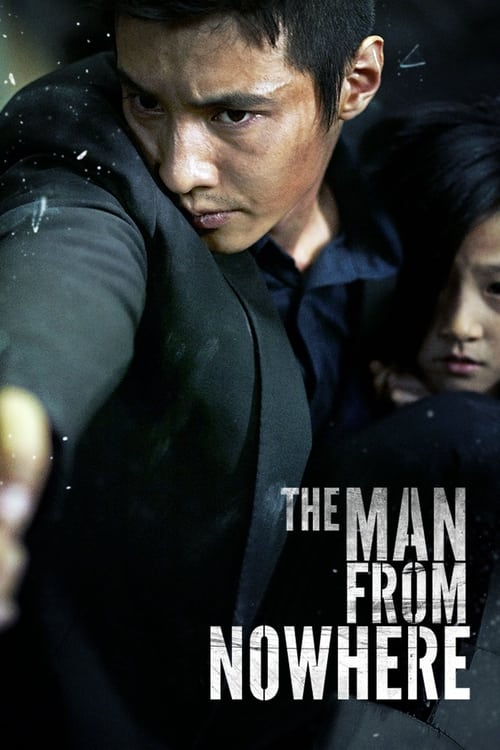
The Man from Nowhere
The Man from Nowhere Is About a Dead Man Learning He Is Still Bound to the World
Directed by Lee Jeong-beom
A pawnshop owner who talks to no one lets one child in, and losing her drags him out of the tomb he built for himself.
Lee Jeong-beom made a revenge thriller whose surface is so slick it hides its actual subject. Cha Tae-sik runs a pawnshop and lives like a hermit, unshaven, silent, a ghost among his own belongings. He was a black-ops agent whose pregnant wife was murdered, and he has responded by dying while continuing to breathe. Then So-mi, the neglected girl next door, appoints herself his only tie to the living, and when a organ-harvesting ring takes her, Tae-sik detonates. The film reads as a genre exercise about a killer resuming his craft. It is stranger than that. It is about a man who believed he had renounced the world, discovering through one small attachment that renunciation without love is not liberation. It is just a colder death.
Buddhist Reading: The Bond He Cannot Sever Is the One That Saves Him
Tae-sik's isolation looks like detachment, the Buddhist virtue, but the film exposes it as its counterfeit. True detachment releases clinging; his is clinging to grief, a fortress built around one wound. He has not let go of his wife. He has let go of everything except her, which is the opposite of freedom. So-mi cracks this open. Her card to him, the drawing that reads "the ugly Mr. Cha," is the single thread of genuine connection in his life, and it is precisely this thread that pulls him back into suffering, and therefore back into being alive.
The film's most Buddhist image is the interrogation-room haircut, where Tae-sik shears off his long hair and shaves before the final assault. It reads as a warrior preparing, but it is also the monk's tonsure inverted. He is not renouncing the world to enter the monastery. He is renouncing the monastery of his grief to re-enter the world, even though re-entry means violence, exposure, the full weight of caring again. Compassion, the tradition insists, is attachment purified into willingness to bleed for another, not its absence.
Initiatory Reading: He Goes Underground to Bring the Child Back
The plot follows the descent-and-return of every initiatory myth with unusual precision. To recover So-mi, Tae-sik must go down into a literal underworld: the drug labs, the harvesting operation, the trafficking network that runs beneath the visible city. He passes the guardians, the enforcers and dealers, and confronts the ruler of the dead, the man who trades in stolen organs and stolen children. The initiate who descends to retrieve a soul from the underworld is the oldest story there is, and Tae-sik is Orpheus with a knife. What he wins is not So-mi's body alone but his own return from the death he had been living. He went down a corpse and climbed out a man.
Questions this film answers
What is the deeper meaning of The Man from Nowhere?
Lee Jeong-beom made a revenge thriller whose surface is so slick it hides its actual subject. Cha Tae-sik runs a pawnshop and lives like a hermit, unshaven, silent, a ghost among his own belongings. He was a black-ops agent whose pregnant wife was murdered, and he has responded by dying while continuing to breathe. Then So-mi, the neglected girl next door, appoints herself his only tie to the living, and when a organ-harvesting ring takes her, Tae-sik detonates. The film reads as a genre exercise about a killer resuming his craft. It is stranger than that. It is about a man who believed he had renounced the world, discovering through one small attachment that renunciation without love is not liberation. It is just a colder death.
What is the hidden symbolism in The Man from Nowhere?
Tae-sik's isolation looks like detachment, the Buddhist virtue, but the film exposes it as its counterfeit. True detachment releases clinging; his is clinging to grief, a fortress built around one wound. He has not let go of his wife. He has let go of everything except her, which is the opposite of freedom. So-mi cracks this open. Her card to him, the drawing that reads "the ugly Mr. Cha," is the single thread of genuine connection in his life, and it is precisely this thread that pulls him back into suffering, and therefore back into being alive.
What esoteric traditions appear in The Man from Nowhere?
The Man from Nowhere draws from Buddhism, Initiation traditions. A pawnshop owner who talks to no one lets one child in, and losing her drags him out of the tomb he built for himself.
Is The Man from Nowhere worth watching for spiritual seekers?
The Man from Nowhere (2010) directed by Lee Jeong-beom is essential viewing for those interested in Buddhism, Initiation. The Man from Nowhere Is About a Dead Man Learning He Is Still Bound to the World. It rewards multiple viewings and contemplation.
Rewatch With New Eyes
Now that you've seen the architecture, experience it again. The same film becomes a different film when you know what to watch for.
This time, watch for:
- See impermanence: what clings, what releases, what remains
- Mark the threshold: the old self dies, the ordeal transforms, the new self returns
Links may include affiliate partnerships that support Media Revelations
The Descent Continues
Where this thread leads next.

A Bittersweet Life 2005
A Bittersweet Life Is a Buddhist Parable About a Man Who Died for One Moment of Real Feeling
Read the revelation →