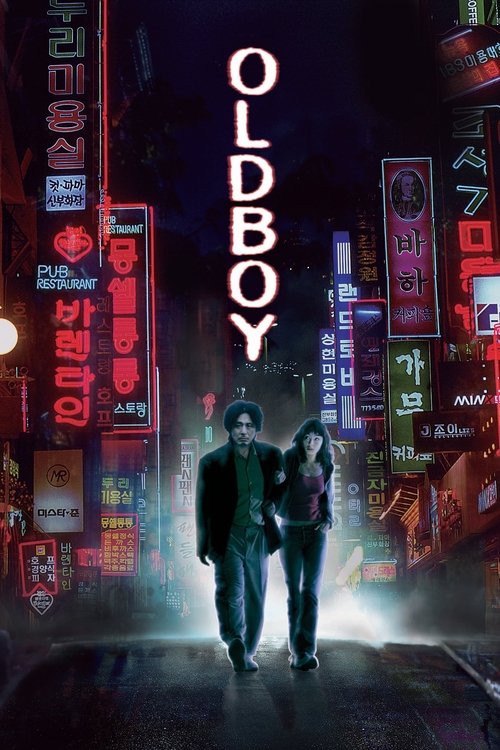
Park Chan-wook made the most disciplined film about karma since Greek tragedy. Oh Dae-su was locked in a room for fifteen years not for what he did but for what he said — a rumor that destroyed two lives in five seconds and that he forgot the moment he said it. The revenge structure inverts itself: he is not the avenger. He is the consequence finally arriving at its source. The hypnotist erasing his memory at the end is the only mercy karma permits.
Oldboy is the most precise film about karma ever made in a major motion picture industry. Park Chan-wook did not make a revenge thriller. He made a sustained Buddhist meditation on the operation of cause and effect across decades, on the violence of speech, and on the impossibility of ever cleanly settling a debt incurred by a sentence the speaker has forgotten. Oh Dae-su's fifteen years of imprisonment are not arbitrary cruelty. They are time. The seed he planted with five thoughtless words took fifteen years to grow into the apparatus that would consume him. The film's deepest cruelty is its honesty: Dae-su cannot undo what he did, cannot apologize sufficiently, and cannot escape what he made except by asking to forget that he ever knew. The hypnotist's blade is the kindest tool in the film.
The Surface
Oh Dae-su is kidnapped on his daughter's birthday and imprisoned in a single hotel-style room for fifteen years with no contact and no information about who is holding him or why. He is released abruptly into a Seoul he no longer recognizes. He vows revenge. He pursues his captor through a series of escalating discoveries, including a romance with a young sushi chef named Mi-do. The captor reveals himself as Lee Woo-jin, a wealthy man whose sister Dae-su unwittingly destroyed by spreading a rumor about her in high school. Woo-jin has been arranging Dae-su's life since his release, ensuring that the woman Dae-su has fallen in love with is his own grown daughter. Dae-su cuts out his own tongue. Woo-jin shoots himself in an elevator. Dae-su asks a hypnotist to erase his memory of what he has learned.
On surface, Oldboy is a relentlessly stylish revenge film and the middle entry in Park's Vengeance Trilogy. The hammer fight, the live octopus, the corridor in slow motion — these set pieces dominated its initial reception.
The set pieces are real. They are also the wrapping. Inside is one of the most careful Buddhist dramas in modern cinema. Park has said in interviews that he intended the film as a meditation on the impossibility of revenge: every revenge structurally creates the conditions for the next revenge, and the original wrong was always made of speech that nobody bothered to consider before letting it leave their mouth.
The Tongue and the Karma
Buddhist teaching on karma is precise about speech. The mouth is one of the three doors of action — body, speech, mind. Right speech is one of the eight limbs of the noble path because speech, more than action, plants seeds whose consequences ripen long after the speaker has forgotten what they said. Words travel. Words enter ears. Words become repeated. Words eventually return to the speaker, often unrecognizably changed and decades later.
Oh Dae-su's original sin is a single sentence said in a high school stairway. He saw Woo-jin and his sister together. He passed on a rumor about her. He moved on. He moved schools. He forgot the conversation. The sister, ostracized and pregnant from the rumor's amplification, killed herself. Woo-jin began the fifteen-year project that the rest of the film documents.
Park is unsparing about the proportionality. Dae-su's words took five seconds to speak. The consequence took fifteen years to ripen and then exploded over months. This is the actual time signature of karma. Most acts produce small consequences. Some acts plant seeds that take decades to germinate. The speaker cannot tell the difference at the moment of speaking. The mouth produces the future without consulting the rest of the person.
Dae-su cutting out his own tongue at the end is the film's most precise gesture. He has finally understood. He removes the instrument that began the chain. He does so too late. The damage has already cascaded. But the gesture is the only honest acknowledgment available. The tongue was the original weapon. The owner returns it.
Lee Woo-jin as Mirror
Woo-jin is the film's most theologically interesting character. He is not just a villain. He is karma operating with surgical precision in human form. He has spent his entire adult life — and most of his fortune — designing an apparatus that will deliver to Dae-su, on schedule, an experience exactly proportionate to what Dae-su delivered to him.
Woo-jin's project is to make Dae-su love his own daughter as Woo-jin loved his sister, then reveal it. Not to punish Dae-su. To make Dae-su feel what he, Woo-jin, has felt for fifteen years. This is karma without the metaphysical guarantee — karma as it actually operates when the mechanism has been hijacked by a human consciousness willing to embody it.
What makes Woo-jin tragic rather than monstrous is that he understands he is participating in the same mechanism that destroyed his sister. He has not transcended the wheel. He has accelerated it. He kills himself in the elevator immediately after revealing the truth because, once the revenge is complete, there is no further reason for him to exist. He was the function. The function has been executed. The functionary self-deletes.
This is the Buddhist diagnosis of revenge in its purest form. The avenger and the original wrongdoer become structurally indistinguishable. Both have organized their lives around an act that, once completed, leaves nothing of either of them. Woo-jin gets his revenge. Dae-su gets his retribution. Neither of them is left at the end of the film. There are only consequences walking around in the bodies that used to host them.
The Snow and the Hypnotist
The film's final passage is its most contested. Dae-su, having cut out his tongue, having watched Woo-jin shoot himself, having learned what Mi-do is to him, requests the services of the same hypnotist Woo-jin used to manipulate him. He asks her to split him into two — the monster who knows, and the man who will love Mi-do without knowing what he is loving. She agrees. The procedure is performed in falling snow.
Most viewers read this as horror — Dae-su's solution to incest is to make himself forget that it is incest. But Park is operating in a more complicated register. The final shot is Dae-su's face, after the hypnosis, holding Mi-do. He smiles, then his expression flickers. The film does not tell us whether the hypnosis worked. It also does not tell us whether forgetting would be enough even if it did.
This is the Buddhist position on memory and karma. Forgetting does not undo what happened. The seeds remain in consciousness regardless of whether the surface mind has access to them. The flicker in Dae-su's expression is the seed surfacing despite the hypnotist's work. The work is provisional. The work is partial. The work is what is available.
But partial mercy is mercy. Dae-su has chosen to love what he loves, even though he knows what loving it means. The hypnotist's procedure does not erase the truth. It buys him intervals of forgetting in which the love can be expressed without being crushed by the knowledge of what it is. This is the closest thing to absolution the film will allow. It is small. It is contingent. It is more than nothing.
The Transmission
Oldboy transmits a particular sobriety about the mouth. After this film, the casual rumor, the unconsidered insult, the small cruelty passed forward to the next conversation become harder to perform without noticing. Park has installed a microphone in the viewer that records what their own mouth produces. The microphone does not turn off. Years later, you will notice yourself about to say something and pause for half a second because Oldboy is still there.
This is the unusual gift of the film. Most revenge thrillers extend the impulse they pretend to critique. Park's film does the opposite. It makes revenge legible as a mechanism that destroys both parties and that, once initiated, has no clean stopping point. The viewer who genuinely receives the film leaves with less capacity for vengeful fantasy than they entered with. The mechanism has been shown. The mechanism is not appealing once you have watched it operate.
Park is not preaching nonviolence. He is doing something stranger and more useful. He is performing the autopsy on revenge so carefully that the live impulse, when it next arises in the viewer, is met with the image of the autopsy. This is karma teaching itself through cinema. Five thoughtless words. Fifteen years of imprisonment. A tongue cut out in a penthouse. A bullet in an elevator. A daughter who must never know. The film hands you the chain. The chain is what stays.
Questions this film answers
What is the deeper meaning of Oldboy?
Oldboy is the most precise film about karma ever made in a major motion picture industry. Park Chan-wook did not make a revenge thriller. He made a sustained Buddhist meditation on the operation of cause and effect across decades, on the violence of speech, and on the impossibility of ever cleanly settling a debt incurred by a sentence the speaker has forgotten. Oh Dae-su's fifteen years of imprisonment are not arbitrary cruelty. They are time. The seed he planted with five thoughtless words took fifteen years to grow into the apparatus that would consume him. The film's deepest cruelty is its honesty: Dae-su cannot undo what he did, cannot apologize sufficiently, and cannot escape what he made except by asking to forget that he ever knew. The hypnotist's blade is the kindest tool in the film.
What is the hidden symbolism in Oldboy?
Oh Dae-su is kidnapped on his daughter's birthday and imprisoned in a single hotel-style room for fifteen years with no contact and no information about who is holding him or why. He is released abruptly into a Seoul he no longer recognizes. He vows revenge. He pursues his captor through a series of escalating discoveries, including a romance with a young sushi chef named Mi-do. The captor reveals himself as Lee Woo-jin, a wealthy man whose sister Dae-su unwittingly destroyed by spreading a rumor about her in high school. Woo-jin has been arranging Dae-su's life since his release, ensuring that the woman Dae-su has fallen in love with is his own grown daughter. Dae-su cuts out his own tongue. Woo-jin shoots himself in an elevator. Dae-su asks a hypnotist to erase his memory of what he has learned.
What esoteric traditions appear in Oldboy?
Oldboy draws from Buddhism, Initiation traditions. Park Chan-wook made the most disciplined film about karma since Greek tragedy. Oh Dae-su was locked in a room for fifteen years not for what he did but for what he said — a rumor that destroyed two lives in five seconds and that he forgot the moment he said it. The revenge structure inverts itself: he is not the avenger. He is the consequence finally arriving at its source. The hypnotist erasing his memory at the end is the only mercy karma permits.
What does Oldboy teach about the tongue and the karma?
The actual time signature of karma. Dae-su's words took five seconds to speak. The consequence took fifteen years to ripen. Buddhist teaching on karma is precise about speech. The mouth is one of the three doors of action — body, speech, mind. Right speech is one of the eight limbs of the noble path because speech, more than action, plants seeds whose consequences ripen long after the speaker has forgotten what they said. Words travel. Words enter ears. Words become repeated. Words eventually return to the speaker, often unrecognizably changed and decades later.
What does Oldboy teach about lee woo-jin as mirror?
Karma without the metaphysical guarantee — karma as it actually operates when the mechanism has been hijacked by a human consciousness willing to embody it. Woo-jin is the film's most theologically interesting character. He is not just a villain. He is karma operating with surgical precision in human form. He has spent his entire adult life — and most of his fortune — designing an apparatus that will deliver to Dae-su, on schedule, an experience exactly proportionate to what Dae-su delivered to him.
Is Oldboy worth watching for spiritual seekers?
Oldboy (2003) directed by Park Chan-wook is essential viewing for those interested in Karma, Revenge, Buddhism. The Karma the Mouth Could Not Stop Making. It rewards multiple viewings and contemplation.
Rewatch With New Eyes
Now that you've seen the architecture, experience it again. The same film becomes a different film when you know what to watch for.
This time, watch for:
- See impermanence: what clings, what releases, what remains
- Mark the threshold: the old self dies, the ordeal transforms, the new self returns
Links may include affiliate partnerships that support Media Revelations