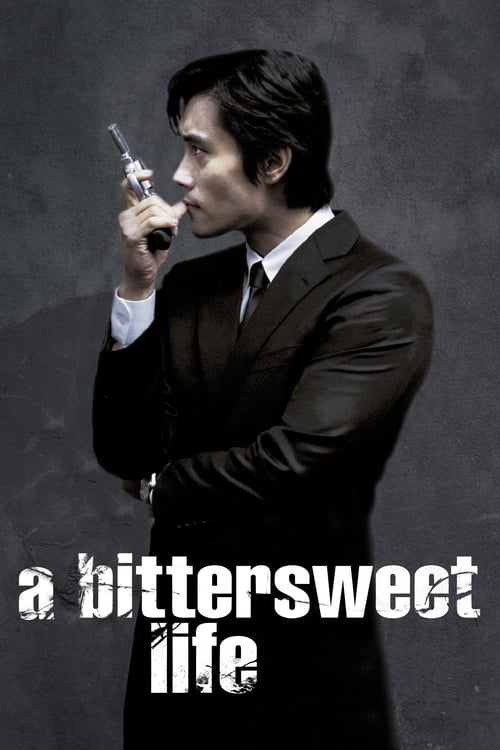
A Bittersweet Life
A Bittersweet Life Is a Buddhist Parable About a Man Who Died for One Moment of Real Feeling
Directed by Kim Jee-woon
Kim Jee-woon tells you the meaning in the first thirty seconds, then makes you watch a beautiful man be destroyed to prove he meant it.
The film opens with a Zen story. A disciple sees branches swaying and asks the master whether it is the branch that moves or the wind. The master answers: it is neither. It is your mind that moves. Then the gangster story begins, and Sun-woo, a flawless enforcer, is sent to watch his boss's young mistress and kill her if she is unfaithful. She is. But when the moment comes, Sun-woo cannot do it. He lets her go. This single act of mercy, this one refusal to follow the order, unleashes a catastrophe that ends with almost everyone dead, including him. The surface reading is a stylish Korean noir about loyalty and revenge. But Kim frames the whole thing with that opening parable for a reason. Sun-woo is destroyed not by his enemies but by the movement of his own mind, the sudden stirring of feeling in a man who had spent his life perfectly still.
Buddhist Reading: The Branch, the Wind, and the Mind That Finally Moved
Sun-woo's tragedy is that he was, until the moment of mercy, a man of no attachments and no feeling, and this looked like peace. He eats alone in his elegant apartment. He moves through violence without a ripple. He is the false stillness of a mind that has simply gone numb. The mistress, Hee-soo, playing cello in the afternoon light, is the branch that begins to sway. And Sun-woo's mind moves. For the first time something in him responds, wants, cares.
The Zen teaching in the frame is not that stillness is the goal and Sun-woo failed it. It is subtler and sadder. Sun-woo mistook numbness for the still mind, and when real feeling finally arrives, he has no practice, no ground, no way to hold it. The film's closing image returns to him alone, and in a final flashback he weeps at the memory of that afternoon of music. He was never more alive than in the moment that killed him. The parable asks whether it was the branch or the wind. The answer the film gives is that Sun-woo's mind moved, and having never moved before, it swept him away.
Jungian Reading: The Persona of Perfect Loyalty and the Feeling Buried Beneath It
Sun-woo is a persona with almost no man behind it. He is loyalty made flesh, the ideal instrument, defined entirely by his function for the boss Kang. Jung warned that a life spent as pure function starves the feeling-function, the capacity to value and to be moved, until it lives only in the shadow, waiting.
Hee-soo activates exactly that buried function. Notice that Sun-woo cannot even articulate why he spared her. When Kang later demands an explanation, Sun-woo has none, and the honest answer, that something in him woke up, is unspeakable in the world he belongs to. The entire war that follows is the shadow erupting after decades of suppression. What makes the film bitter rather than tragic is that Sun-woo never gets to integrate this feeling into a whole life. It surfaces only as violence and death. The dying man's tears are for the self he glimpsed and was never allowed to become.
Questions this film answers
What is the deeper meaning of A Bittersweet Life?
The film opens with a Zen story. A disciple sees branches swaying and asks the master whether it is the branch that moves or the wind. The master answers: it is neither. It is your mind that moves. Then the gangster story begins, and Sun-woo, a flawless enforcer, is sent to watch his boss's young mistress and kill her if she is unfaithful. She is. But when the moment comes, Sun-woo cannot do it. He lets her go. This single act of mercy, this one refusal to follow the order, unleashes a catastrophe that ends with almost everyone dead, including him. The surface reading is a stylish Korean noir about loyalty and revenge. But Kim frames the whole thing with that opening parable for a reason. Sun-woo is destroyed not by his enemies but by the movement of his own mind, the sudden stirring of feeling in a man who had spent his life perfectly still.
What is the hidden symbolism in A Bittersweet Life?
Sun-woo's tragedy is that he was, until the moment of mercy, a man of no attachments and no feeling, and this looked like peace. He eats alone in his elegant apartment. He moves through violence without a ripple. He is the false stillness of a mind that has simply gone numb. The mistress, Hee-soo, playing cello in the afternoon light, is the branch that begins to sway. And Sun-woo's mind moves. For the first time something in him responds, wants, cares.
What esoteric traditions appear in A Bittersweet Life?
A Bittersweet Life draws from Buddhism, Jungian traditions. Kim Jee-woon tells you the meaning in the first thirty seconds, then makes you watch a beautiful man be destroyed to prove he meant it.
Is A Bittersweet Life worth watching for spiritual seekers?
A Bittersweet Life (2005) directed by Kim Jee-woon is essential viewing for those interested in Buddhism, Jungian. A Bittersweet Life Is a Buddhist Parable About a Man Who Died for One Moment of Real Feeling. It rewards multiple viewings and contemplation.
Rewatch With New Eyes
Now that you've seen the architecture, experience it again. The same film becomes a different film when you know what to watch for.
This time, watch for:
- See impermanence: what clings, what releases, what remains
- Meet the shadow: what is rejected, projected, and finally integrated
Links may include affiliate partnerships that support Media Revelations