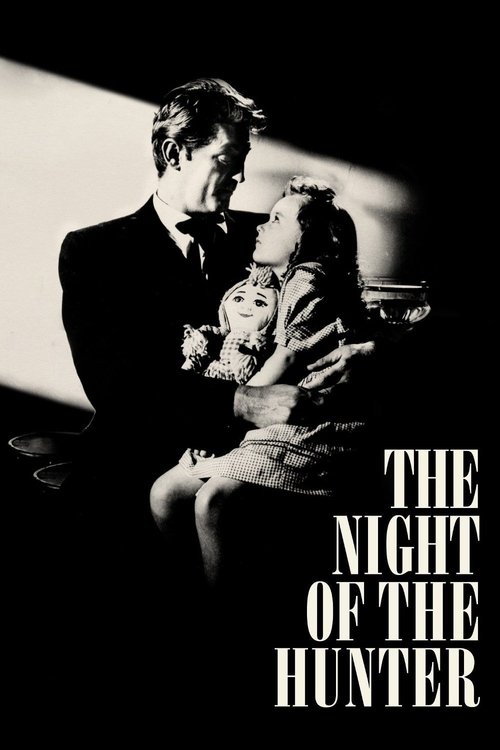
The Night of the Hunter
The Night of the Hunter Is the Fight Between LOVE and HATE, and It Refuses to Let Either Win Cleanly
Directed by Charles Laughton
A preacher with those two words tattooed across his knuckles hunts two children down a river of nightmares. The film is a hymn and a horror story at once, because it knows evil often arrives quoting scripture and salvation often arrives armed.
The Night of the Hunter tells a fairy tale in the register of a nightmare. Harry Powell, a self-appointed preacher who murders widows for their money, marries and kills the mother of two children who alone know where their father hid a stolen fortune. He stalks them relentlessly, and the children flee downriver into a dreamlike country of owls and spiderwebs and moonlit water, until they are taken in by Rachel Cooper, an old woman who fosters strays and meets Powell's evil with a shotgun and a psalm. Charles Laughton, directing his only film, staged the whole thing as a religious parable made visible: the letters LOVE and HATE inked on Powell's fingers, the false shepherd against the true one, a story about the war between the two forces those tattooed hands describe. But the film is far stranger and more honest than a morality play. It knows that HATE speaks fluent gospel, and that LOVE, to survive, must sit up all night with a gun.
Jungian Reading: The Terrible Father and the Great Mother
Read through Jung, the film is a clean confrontation between two archetypes fighting over the psyche of the child. Powell is the Terrible Father, the devouring patriarchal shadow who pursues, and Rachel Cooper is the Great Mother, protective, rooted, gathering the abandoned to herself. The children's flight is the ego crossing between them, escaping the archetype that would consume it toward the one that would nurture it.
The film's most indelible image seals this. Late one night Powell sits outside Rachel's house singing the hymn Leaning on the Everlasting Arms, and Rachel, cradling her shotgun on the porch, joins her voice to his, harmonizing with her hunter. The Great Mother does not deny the shadow's existence or its song. She answers it in the same key and outlasts it. Integration here is not victory by erasure. It is the mother who can hold the whole terrible night in her arms, sing along with what wants to kill the children, and still not fall asleep.
Questions this film answers
What is the deeper meaning of The Night of the Hunter?
The Night of the Hunter tells a fairy tale in the register of a nightmare. Harry Powell, a self-appointed preacher who murders widows for their money, marries and kills the mother of two children who alone know where their father hid a stolen fortune. He stalks them relentlessly, and the children flee downriver into a dreamlike country of owls and spiderwebs and moonlit water, until they are taken in by Rachel Cooper, an old woman who fosters strays and meets Powell's evil with a shotgun and a psalm. Charles Laughton, directing his only film, staged the whole thing as a religious parable made visible: the letters LOVE and HATE inked on Powell's fingers, the false shepherd against the true one, a story about the war between the two forces those tattooed hands describe. But the film is far stranger and more honest than a morality play. It knows that HATE speaks fluent gospel, and that LOVE, to survive, must sit up all night with a gun.
What is the hidden symbolism in The Night of the Hunter?
Gnostic thought divides the world's authorities into those who trap the soul and those who free it, and it locates salvation in a hidden treasure, a knowledge concealed inside something ordinary and overlooked. Powell is the false prophet in his purest cinematic form, a man who wears the outward robes of the divine while serving the appetite of the Demiurge for possession and control. He preaches the parable of LOVE and HATE with his hands in the tavern, performing spirituality as a hunting technique. He is the counterfeit spiritual authority the Gnostics warned of, and the film makes his counterfeit total: he genuinely believes God sends him the widows to kill.
What esoteric traditions appear in The Night of the Hunter?
The Night of the Hunter draws from Gnosticism, Jungian traditions. A preacher with those two words tattooed across his knuckles hunts two children down a river of nightmares. The film is a hymn and a horror story at once, because it knows evil often arrives quoting scripture and salvation often arrives armed.
Is The Night of the Hunter worth watching for spiritual seekers?
The Night of the Hunter (1955) directed by Charles Laughton is essential viewing for those interested in Gnosticism, Jungian. The Night of the Hunter Is the Fight Between LOVE and HATE, and It Refuses to Let Either Win Cleanly. It rewards multiple viewings and contemplation.
Rewatch With New Eyes
Now that you've seen the architecture, experience it again. The same film becomes a different film when you know what to watch for.
This time, watch for:
- Watch for the false world vs. the real — who is asleep, who awakens
- Meet the shadow: what is rejected, projected, and finally integrated
Links may include affiliate partnerships that support Media Revelations
The Descent Continues
Where this thread leads next.
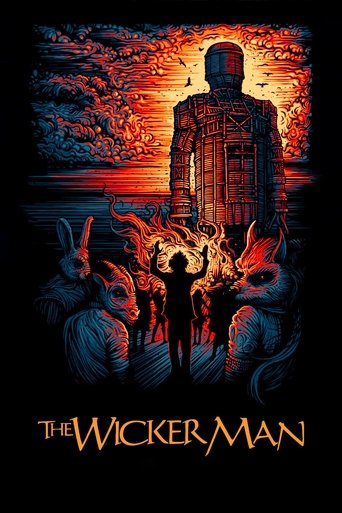
The Wicker Man 1973
The Sacrifice the Christian Did Not Know He Volunteered For
Read the revelation →