Visitor Q
Visitor Q Is a Trickster God Who Fixes a Family by Refusing to Judge It
Directed by Takashi Miike
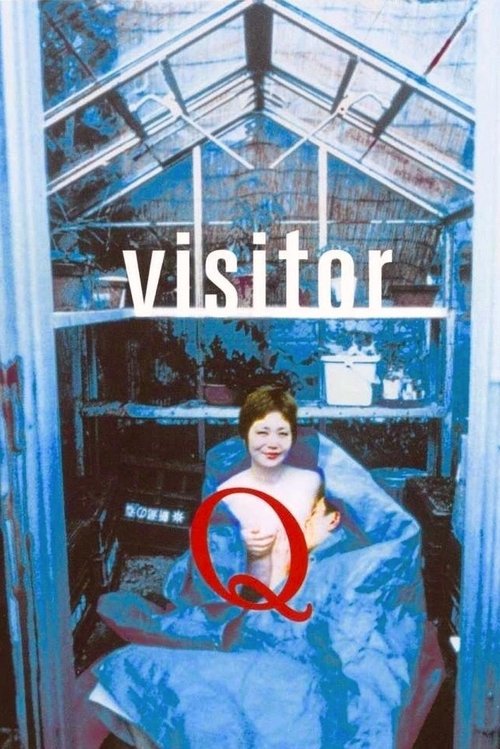
Miike made this on a shoestring for a direct-to-video series, and it is one of the most transgressive films ever released. It is also, structurally, a nativity story. A stranger arrives, and by the end there is milk, and rebirth, and peace.
The dysfunction is total and the film refuses to flinch. The father is a disgraced TV journalist who films his own daughter working as a prostitute and later sleeps with her. The mother is a heroin addict beaten by her bullied son and forced into prostitution. Into this arrives Q, a silent stranger who opens the film by hitting the father on the head with a rock and never explains himself again. Q does nothing conventionally helpful. He watches. He participates in the family's worst acts without a flicker of judgment. And under his presence the family slowly, grotesquely, reassembles into something that functions. The obvious reading is shock for its own sake. The actual structure is far stranger and far older. Q is not a character. He is a catalyst who has to be present for the transformation and who cannot be the one who transforms.
Shamanic Reading: The Trickster Who Heals by Breaking the Frame
Across shamanic traditions the trickster is the figure who cannot be moralized: coyote, Eshu, the heyoka who does everything backward. The trickster heals not by fixing what is broken but by shattering the frame that made the brokenness invisible, dragging every hidden thing into the open where it can no longer fester in secret. Q is that figure stripped to its essence. He arrives with violence, the rock to the head, the classic shamanic blow that cracks the ordinary self open. Then he simply refuses to react to anything, and his refusal removes the shame that was holding every pathology in place. The family's sicknesses were all secrets, filmed and hidden and denied. Q makes them ordinary by witnessing them without recoil, and once they are no longer secret they lose their grip. The final image of the mother lactating enormously, feeding the whole family, is the trickster's gift delivered whole: the wasteland made fertile, the abused body become the nourishing one. He does not teach. He breaks the frame and lets nature flood back in.
Jungian Reading: The Shadow Integrated by Being Fully Lived
Jung insisted the shadow cannot be defeated, only integrated, and integration means the disowned material must be consciously met rather than repressed. This family has repressed nothing in behavior and everything in awareness. They act out incest, murder, and abuse while remaining psychologically asleep to what they are, the acts sealed off from feeling. Q forces the acts into consciousness by making them witnessed, and once witnessed they can finally be felt and therefore moved through rather than endlessly repeated. Miike's provocation, and it is a real one, is that the path out of the family's hell runs straight through its center, not around it. There is no bypass. The shadow demands to be fully lived into awareness before it will release its hold, and the film has the nerve to follow that logic to its most unbearable conclusion and out the far side into something that looks, impossibly, like grace.
Questions this film answers
What is the deeper meaning of Visitor Q?
The dysfunction is total and the film refuses to flinch. The father is a disgraced TV journalist who films his own daughter working as a prostitute and later sleeps with her. The mother is a heroin addict beaten by her bullied son and forced into prostitution. Into this arrives Q, a silent stranger who opens the film by hitting the father on the head with a rock and never explains himself again. Q does nothing conventionally helpful. He watches. He participates in the family's worst acts without a flicker of judgment. And under his presence the family slowly, grotesquely, reassembles into something that functions. The obvious reading is shock for its own sake. The actual structure is far stranger and far older. Q is not a character. He is a catalyst who has to be present for the transformation and who cannot be the one who transforms.
What is the hidden symbolism in Visitor Q?
Across shamanic traditions the trickster is the figure who cannot be moralized: coyote, Eshu, the heyoka who does everything backward. The trickster heals not by fixing what is broken but by shattering the frame that made the brokenness invisible, dragging every hidden thing into the open where it can no longer fester in secret. Q is that figure stripped to its essence. He arrives with violence, the rock to the head, the classic shamanic blow that cracks the ordinary self open. Then he simply refuses to react to anything, and his refusal removes the shame that was holding every pathology in place. The family's sicknesses were all secrets, filmed and hidden and denied. Q makes them ordinary by witnessing them without recoil, and once they are no longer secret they lose their grip. The final image of the mother lactating enormously, feeding the whole family, is the trickster's gift delivered whole: the wasteland made fertile, the abused body become the nourishing one. He does not teach. He breaks the frame and lets nature flood back in.
What esoteric traditions appear in Visitor Q?
Visitor Q draws from Shamanism, Jungian traditions. Miike made this on a shoestring for a direct-to-video series, and it is one of the most transgressive films ever released. It is also, structurally, a nativity story. A stranger arrives, and by the end there is milk, and rebirth, and peace.
Is Visitor Q worth watching for spiritual seekers?
Visitor Q (2001) directed by Takashi Miike is essential viewing for those interested in Shamanism, Jungian. Visitor Q Is a Trickster God Who Fixes a Family by Refusing to Judge It. It rewards multiple viewings and contemplation.
Rewatch With New Eyes
Now that you've seen the architecture, experience it again. The same film becomes a different film when you know what to watch for.
This time, watch for:
- Follow the descent: what dies, what guides, what returns transformed
- Meet the shadow: what is rejected, projected, and finally integrated
Links may include affiliate partnerships that support Media Revelations
The Descent Continues
Where this thread leads next.
Audition 2000
The Audition Is a Magic Ritual. Aoyama Summoned Exactly What He Was.
Read the revelation →