Henry's baby is everything he didn't ask for and can't escape — responsibility, flesh, the horror of bringing life into industrial wasteland. The Lady in the Radiator is dissociation as salvation. In heaven, everything is fine.
Eraserhead is the most precise depiction of unwanted incarnation ever filmed. Henry Spencer has been born into industrial wasteland, conscripted into a relationship he did not consent to, handed a child who is not quite a child and cannot be cared for, and surrounded by a world whose textures hum with malevolence. Lynch is not making horror. He is making the diagnostic film for the soul that arrives in a body it does not recognize. The Lady in the Radiator is the only escape on offer — dissociation as salvation, the fantasy heaven where everything is fine. Henry chooses her. He was always going to choose her.
The Surface
Henry Spencer lives in a single room in an industrial wasteland. His girlfriend Mary gives birth to a deformed infant — a wet, bleating, semi-reptilian thing wrapped in bandages. She abandons them. The baby will not stop crying. Henry's body begins to fail. A woman in his radiator sings about heaven. He dreams of his head being made into pencils. The film ends in obliterating light.
Lynch spent five years making this film, often homeless, sometimes sleeping on the set. He has refused to explain it for fifty years. He has said only that no one has ever published an interpretation he agrees with. This is a useful warning. Eraserhead does not yield to symbolic decoding.
It yields to phenomenological reading. Watch it not as 'what does this mean' but as 'what is this like to be.' What does it feel like to be Henry Spencer? That is the film's content. The plot is irrelevant. The atmosphere is the message.
The Wrong Body, The Wrong World
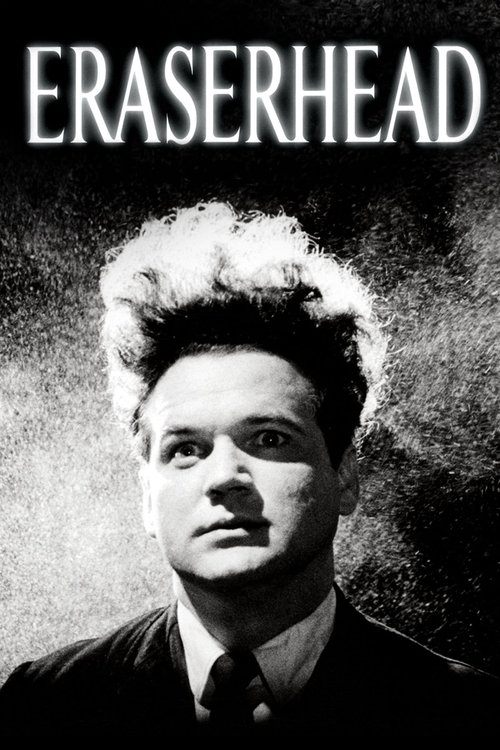
Henry exists in a state of constant subtle wrongness. The sounds in his apartment are too loud, too mechanical, just slightly off. His hair stands up in a way no human hair stands up. His clothing constricts him. The world is composed of textures that the body recognizes as hostile before the mind can articulate why.
This is the Gnostic experience of incarnation. The pneumatic soul recognizes that the material world is wrong — not that it contains bad things, but that the substrate itself is alien. Henry is the most pneumatic protagonist in cinema. He is awake to the wrongness from the first frame. He has no defense against it.
The hostility of the world is not metaphorical. The boiler hisses. The radiator pings. The wind is a low continuous howl. Every surface — wet, gritty, metallic — registers as adversarial to flesh. Lynch built the world specifically so that the audience's nervous system would experience what Henry experiences: the body in a place that does not want it.
Modern life produces this experience routinely. Anyone who has woken up in a fluorescent-lit office, on a chemical mattress, beside a partner whose presence they cannot account for, has been Henry for a moment. Eraserhead is the moment extended to ninety minutes.
The Baby as the Refused Real
The baby is the film's central refusal of interpretation. It is a real puppet that Lynch will not discuss. It bleats. It vomits. It will not be soothed. It will not be loved into shape. It is everything Henry did not ask for and cannot make better.
The baby is the Shadow made flesh. It is the consequence of a body that wanted things the mind would not acknowledge wanting. Henry slept with Mary; the baby is what arrived. The film does not let him claim he is innocent. He did the things that produce babies. The baby is here. It is his.
But the baby is also the real itself — the part of life that does not perform, does not improve, does not become anything other than what it is. Real responsibility has this quality. It does not get easier. It does not reward you. It is just there, demanding to be met, every hour of every day, in a body that is failing to meet it.
When Henry finally cuts the bandages — finds that the baby has no body, just the head and the wet pulsing inside — he is opening the consequence to see what it actually is. The film says: you do not want to know. He kills it. The world ends. The radiator opens. He goes inside.
The Lady in the Radiator
In Henry's radiator lives a woman with swollen cheeks who sings: 'In heaven, everything is fine.' She is the only image in the film that is not hostile. She smiles. She crushes worms underfoot in a gesture that reads as joyful even as it would be disturbing in any other film.
She is dissociation as religion. The Lady in the Radiator is what the mind builds when the body's life becomes unbearable. She is heaven not as theological reality but as functional escape — a place inside the apparatus where the noise stops and someone is glad to see you.
The Buddhist tradition would call this a god-realm — a state of consciousness that offers relief but is itself a kind of trap. The god-realms feel like liberation but are not. They are sophisticated avoidances of the actual work of liberation, which requires the body and the world to be met, not escaped.
Lynch is not endorsing or condemning Henry's choice. He is showing what choice is available when the alternative is unbearable. Most people who have suffered deeply have found a Lady in the Radiator. The question the film leaves open is whether this is salvation, surrender, or both.
The Transmission
Eraserhead does not transmit a message. It transmits a state — the state of being Henry. By the time the credits roll, your nervous system has been entrained to the ambient drone of his world. You leave the theater hearing things you would not normally hear. Fluorescent lights buzz too loudly. Radiators tick. Your hair feels wrong.
This is the film working as designed. Lynch is not telling you about a wrong world. He is loaning you Henry's body for ninety minutes. You experience the wrongness directly. You feel what it is to be the soul that recognizes the substrate as adversarial and has no theology to explain why.
When you can name what Eraserhead does to you, you can begin to notice when ordinary life is doing it more quietly. Some days the boiler hisses too loud. Some days the baby will not stop. Some days the Lady is the only image you can hold. Lynch made the diagnostic film. The diagnosis is for life as such, sometimes, for some people, in the wrong body in the wrong city in the wrong year.
Questions this film answers
What is the deeper meaning of Eraserhead?
Eraserhead is the most precise depiction of unwanted incarnation ever filmed. Henry Spencer has been born into industrial wasteland, conscripted into a relationship he did not consent to, handed a child who is not quite a child and cannot be cared for, and surrounded by a world whose textures hum with malevolence. Lynch is not making horror. He is making the diagnostic film for the soul that arrives in a body it does not recognize. The Lady in the Radiator is the only escape on offer — dissociation as salvation, the fantasy heaven where everything is fine. Henry chooses her. He was always going to choose her.
What is the hidden symbolism in Eraserhead?
Henry Spencer lives in a single room in an industrial wasteland. His girlfriend Mary gives birth to a deformed infant — a wet, bleating, semi-reptilian thing wrapped in bandages. She abandons them. The baby will not stop crying. Henry's body begins to fail. A woman in his radiator sings about heaven. He dreams of his head being made into pencils. The film ends in obliterating light.
What esoteric traditions appear in Eraserhead?
Eraserhead draws from Jungian, Gnosticism traditions. Henry's baby is everything he didn't ask for and can't escape — responsibility, flesh, the horror of bringing life into industrial wasteland. The Lady in the Radiator is dissociation as salvation. In heaven, everything is fine.
Is Eraserhead worth watching for spiritual seekers?
Eraserhead (1977) directed by David Lynch is essential viewing for those interested in Shadow, Creation, Lynch. The Nightmare of Unwanted Creation. It rewards multiple viewings and contemplation.
Rewatch With New Eyes
Now that you've seen the architecture, experience it again. The same film becomes a different film when you know what to watch for.
This time, watch for:
- Meet the shadow: what is rejected, projected, and finally integrated
- Watch for the false world vs. the real — who is asleep, who awakens
Links may include affiliate partnerships that support Media Revelations
The Descent Continues
Where this thread leads next.

Mulholland Drive 2001
The Blue Key and the Dissolution of Identity
Read the revelation →