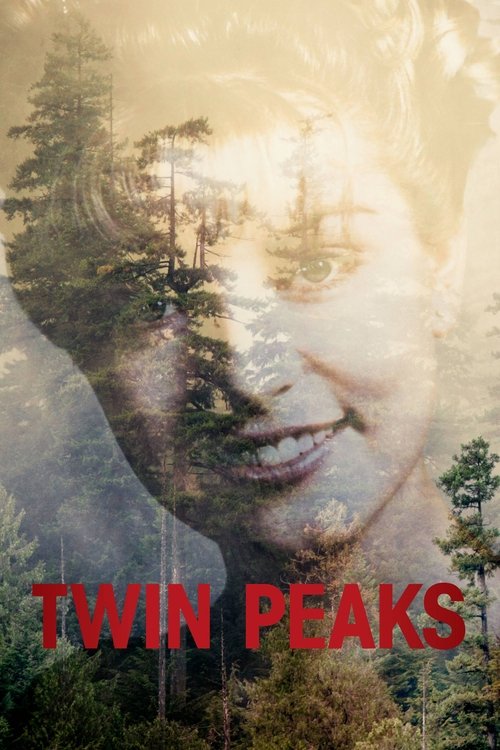
Twin Peaks: The Return
18 Hours of Controlled Awakening
Directed by David Lynch
A ritual technology disguised as television. Episode 8's nuclear explosion is the birth of the shadow in collective consciousness. The closest TV has come to mystical transmission.
Twin Peaks: The Return is not a television series. It is an eighteen-hour initiation ritual disguised as premium cable content. Lynch spent twenty-five years preparing this transmission. What he delivered is the most sustained esoteric work in the history of the medium — a systematic dismantling of identity, time, and the hope that good will simply overcome evil. The original Twin Peaks asked 'Who killed Laura Palmer?' The Return asks something far more disturbing: 'What if saving her creates something worse?'
The Surface
Agent Dale Cooper has been trapped in the Black Lodge for twenty-five years. His doppelganger — his shadow self — has been loose in the world, causing harm. Cooper finally escapes, but his consciousness fractures: part of him becomes 'Dougie Jones,' a childlike shell who can barely function. The doppelganger continues his work. The town of Twin Peaks has changed. Laura Palmer may not be as dead as we thought.
Viewers expecting the quirky charm of the original series were confronted with something else entirely. Long scenes of nothing happening. A character staring at a box for minutes. Violence that made the original look tame. And Episode 8 — a fifty-minute detour into surrealist cosmology that includes a nuclear explosion, a convenience store filled with demons, and the apparent origin of evil itself.
The Return is difficult by design. Lynch was offered complete creative control by Showtime and used it to make something that fundamentally refuses to entertain in conventional ways. The pacing, the non-sequiturs, the dead ends — these are not failures of storytelling. They are the structure through which the actual content is delivered.
The Lodges
The Black Lodge and White Lodge are the cosmological poles of the Twin Peaks universe. They are not simply 'good' and 'evil' places. They are dimensions where different rules apply — where time moves differently, where identity is unstable, where beings exist that feed on human pain or protect against it.
The Black Lodge is accessed through fear. Its inhabitants — BOB, the Arm, the Doppelgangers — are not external demons. They are dissociated aspects of human psyche given autonomous life. BOB possesses Leland Palmer not because Leland is innocent but because Leland's denial of his own darkness created a vacuum that BOB could fill.
Cooper enters the Lodge at the end of Season 2 and emerges after twenty-five years having lost something essential. He is not the same agent who went in. The Dougie Jones persona is what remains when the ego has been stripped away — a being of pure reaction, without narrative self-continuity.
Lynch understands what shamanic traditions describe: there are realms beyond the ordinary that can be entered, but entering them changes you. The shaman who returns from the underworld is never the same person who descended. Something is lost. Something else is gained. The question is whether what returns is still human.
Episode 8: The Birth of Evil
Episode 8 is the most radical hour of television ever broadcast. It begins with a Nine Inch Nails performance, proceeds to show the first atomic bomb test in 1945, and then descends into pure surrealist imagery for the remaining thirty minutes.
The nuclear explosion — Trinity — births BOB. The camera enters the mushroom cloud and finds the realm of the Fireman and Señorita Dido. The Giant (now called the Fireman) watches the explosion on a movie screen and responds by creating a golden orb containing Laura Palmer's face. He sends it to Earth. BOB and Laura are born at the same moment, from the same catastrophe.
This is the creation myth of Twin Peaks. The splitting of the atom is the splitting of the psyche. When humanity discovered how to release the energy locked in matter, it also released forces that had been contained. The shadow — individual and collective — was freed. Laura is the response: the light that balances the darkness, sent from whatever realm the Fireman inhabits.
Lynch is not making metaphysics. He is depicting phenomenology — what it feels like to recognize that the darkness in the world is not separate from us, that the bomb that killed hundreds of thousands was also a birth, that the forces we unleash have their own life and do not care what we intended.
Dougie Jones and Ego Death
For much of The Return, Cooper is not Cooper. He is Dougie Jones — a manufactured person created by the doppelganger to absorb Cooper when he escaped the Lodge. Dougie is passive, childlike, barely verbal. He wins at slot machines by seeing lights. He says 'coffee' with transcendent joy. He cannot tie his shoes.
Critics were baffled and frustrated. Where was the Cooper they loved? Why was Lynch wasting so much time on this vegetative character? But the Dougie sequences are the heart of the show's teaching. This is what remains when the ego structure dissolves. This is the state before reconstruction.
Dougie is not stupid. He solves complex problems by recognizing patterns his conscious mind cannot process. He sees through lies immediately. He affects everyone around him positively without trying. What he lacks is the self that narrates, judges, and controls. He lacks the 'I' that claims credit for what is done.
The reconstruction takes eighteen hours. When Cooper finally 'wakes up,' he is capable and decisive — but he is not the same Cooper from before the Lodge. He has been remade. And as the finale reveals, something essential may still be missing.
The Finale: What Year Is This?
The finale of The Return is one of the most disturbing hours in television history. Cooper, now fully himself, enters the past to save Laura Palmer before her murder. He takes her hand in the woods. She vanishes, screaming.
In another timeline, Cooper finds a woman who looks like Laura but calls herself Carrie Page. He drives her to the Palmer house in Twin Peaks. A different family lives there. Carrie seems to remember nothing. Then Cooper asks: 'What year is this?' Carrie screams. The lights go out. End of series.
What has happened? The most generous reading: Cooper's intervention created a timeline where Laura was never murdered but also never became the sacrifice that balanced BOB's evil. The less generous reading: there is no timeline where Laura can be saved. There is no undoing of trauma. The attempt to fix the past breaks the present.
Lynch has said the ending means exactly what it appears to mean. But what does it appear to mean? That is the question The Return leaves with its viewers — not as a puzzle to solve but as a koan to sit with. What year is this? What self is asking? What can be saved and what is lost the moment we try?
The Transmission
Twin Peaks: The Return is not for everyone. It is slow, confusing, and refuses to provide the satisfactions that television normally offers. It ended and immediately generated a thousand interpretation videos, none of which capture what it actually does.
What it does is work on you over eighteen hours, dismantling expectations, forcing presence in scenes that seem to go nowhere, building dread that has no release. You cannot watch it passively. You cannot multitask. Either you submit to its rhythm or you turn it off.
Lynch has spent his career making art that operates below the level of conscious understanding. The Return is his most complete statement — a work that uses the prestige television format to smuggle in something that prestige television was not designed to carry.
The question at the end is not 'What does it mean?' but 'What has it done to me?' If you watched all eighteen hours and sat in the darkness after Carrie's scream, you know. Something shifted. You may not be able to name it. Lynch doesn't need you to name it. He needed you to experience it. That is the transmission.
Questions this film answers
What is the deeper meaning of Twin Peaks: The Return?
Twin Peaks: The Return is not a television series. It is an eighteen-hour initiation ritual disguised as premium cable content. Lynch spent twenty-five years preparing this transmission. What he delivered is the most sustained esoteric work in the history of the medium — a systematic dismantling of identity, time, and the hope that good will simply overcome evil. The original Twin Peaks asked 'Who killed Laura Palmer?' The Return asks something far more disturbing: 'What if saving her creates something worse?'
What is the hidden symbolism in Twin Peaks: The Return?
Agent Dale Cooper has been trapped in the Black Lodge for twenty-five years. His doppelganger — his shadow self — has been loose in the world, causing harm. Cooper finally escapes, but his consciousness fractures: part of him becomes 'Dougie Jones,' a childlike shell who can barely function. The doppelganger continues his work. The town of Twin Peaks has changed. Laura Palmer may not be as dead as we thought.
What esoteric traditions appear in Twin Peaks: The Return?
Twin Peaks: The Return draws from Jungian, Shamanism traditions. A ritual technology disguised as television. Episode 8's nuclear explosion is the birth of the shadow in collective consciousness. The closest TV has come to mystical transmission.
What does Twin Peaks: The Return teach about the lodges?
BOB possesses Leland not because Leland is innocent but because Leland's denial created a vacuum. The Black Lodge and White Lodge are the cosmological poles of the Twin Peaks universe. They are not simply 'good' and 'evil' places. They are dimensions where different rules apply — where time moves differently, where identity is unstable, where beings exist that feed on human pain or protect against it.
What does Twin Peaks: The Return teach about dougie jones and ego death?
This is what remains when the ego structure dissolves. This is the state before reconstruction. For much of The Return, Cooper is not Cooper. He is Dougie Jones — a manufactured person created by the doppelganger to absorb Cooper when he escaped the Lodge. Dougie is passive, childlike, barely verbal. He wins at slot machines by seeing lights. He says 'coffee' with transcendent joy. He cannot tie his shoes.
Is Twin Peaks: The Return worth watching for spiritual seekers?
Twin Peaks: The Return (2017) directed by David Lynch is essential viewing for those interested in Ritual, Transmission, Shadow. 18 Hours of Controlled Awakening. It rewards multiple viewings and contemplation.
Rewatch With New Eyes
Now that you've seen the architecture, experience it again. The same film becomes a different film when you know what to watch for.
This time, watch for:
- Meet the shadow: what is rejected, projected, and finally integrated
- Follow the descent: what dies, what guides, what returns transformed
Links may include affiliate partnerships that support Media Revelations
The Descent Continues
Where this thread leads next.
Mulholland Drive 2001
The Blue Key and the Dissolution of Identity
Read the revelation →