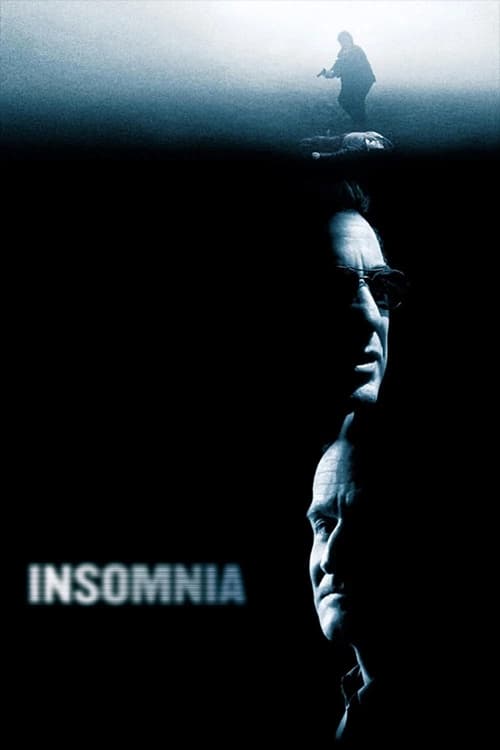
Insomnia
Insomnia Is a Detective Who Cannot Sleep Because the Land Refuses to Let Him Hide
Directed by Christopher Nolan
Nolan sets his one remake in a town where the sun never goes down, then gives his hero a crime that requires darkness to bury. The whole film is a man begging for a night that will not come.
Insomnia is remembered as a procedural, but the case is solved early and almost incidentally. The real subject is what happens to Detective Will Dormer after he shoots his partner in the Alaskan fog, tells himself it was an accident, and then spends the rest of the film unable to sleep. Nolan makes the perpetual daylight of the Arctic summer into a spiritual condition. Dormer has spent a career deciding who is guilty, planting evidence when he was sure, living in the comfortable half-light where a good man's small corruptions stay hidden. Now the sun will not set. There is no dark to fall asleep in and no dark to hide the killing in. The town's endless day is his own conscience externalized into weather, and it will not let him look away from what he did. His name is Dormer, from dormir, to sleep, and the film is the story of a man who has lost the right to it.
Jungian Reading: Walter Finch Is the Shadow Dormer Has Spent His Life Refusing to Meet
Jung's shadow is the disowned self, the part of a man's own psyche he projects outward and hunts in others so he never has to see it in the mirror. Nolan builds the killer Walter Finch as Dormer's shadow made flesh. Finch is calm, articulate, and reasonable, and everything he says implicates the detective. "You and I share a secret now," he tells Dormer over the phone, and he is right. They are two men who killed and are constructing stories to live with it.
The film's tightest scene is the two of them talking across a table on the ferry, mirror images bargaining, each holding the other's ruin. Finch insists they are the same, and Dormer's fury is the fury of a man hearing his own defense mechanism spoken back to him by the thing he was supposed to arrest. Jung said the shadow is not integrated by being defeated but by being consciously owned. Dormer never owns it. He hunts the projection to the end, and it costs both of them their lives, because a shadow killed instead of integrated takes the whole self down with it.
Alchemical Reading: The Nigredo That Will Not Blacken
The alchemical work begins with the nigredo, the blackening, the descent into rot and dissolution that must precede any purification. It requires darkness. The prima materia has to putrefy in a sealed, lightless vessel before it can be reborn as anything cleaner. Insomnia is the story of a soul that desperately needs its nigredo and is denied the darkness to have it.
Dormer is a substance that needs to break down and cannot, because the sun never sets on the vessel. His guilt has nowhere to ferment into either confession or peace, so it simply corrodes him awake, hour after sleepless hour, the decomposition happening in full light where he is forced to witness every stage. Only in the final scene, dying, does he get his release: he refuses to let the young detective bury the truth to protect his own reputation, and with the words "don't lose your way," he blackens at last. The dissolution completes only at death, the one darkness the endless day could not keep out.
Questions this film answers
What is the deeper meaning of Insomnia?
Insomnia is remembered as a procedural, but the case is solved early and almost incidentally. The real subject is what happens to Detective Will Dormer after he shoots his partner in the Alaskan fog, tells himself it was an accident, and then spends the rest of the film unable to sleep. Nolan makes the perpetual daylight of the Arctic summer into a spiritual condition. Dormer has spent a career deciding who is guilty, planting evidence when he was sure, living in the comfortable half-light where a good man's small corruptions stay hidden. Now the sun will not set. There is no dark to fall asleep in and no dark to hide the killing in. The town's endless day is his own conscience externalized into weather, and it will not let him look away from what he did. His name is Dormer, from dormir, to sleep, and the film is the story of a man who has lost the right to it.
What is the hidden symbolism in Insomnia?
Jung's shadow is the disowned self, the part of a man's own psyche he projects outward and hunts in others so he never has to see it in the mirror. Nolan builds the killer Walter Finch as Dormer's shadow made flesh. Finch is calm, articulate, and reasonable, and everything he says implicates the detective. "You and I share a secret now," he tells Dormer over the phone, and he is right. They are two men who killed and are constructing stories to live with it.
What esoteric traditions appear in Insomnia?
Insomnia draws from Jungian, Alchemy traditions. Nolan sets his one remake in a town where the sun never goes down, then gives his hero a crime that requires darkness to bury. The whole film is a man begging for a night that will not come.
Is Insomnia worth watching for spiritual seekers?
Insomnia (2002) directed by Christopher Nolan is essential viewing for those interested in Jungian, Alchemy. Insomnia Is a Detective Who Cannot Sleep Because the Land Refuses to Let Him Hide. It rewards multiple viewings and contemplation.
Rewatch With New Eyes
Now that you've seen the architecture, experience it again. The same film becomes a different film when you know what to watch for.
This time, watch for:
- Meet the shadow: what is rejected, projected, and finally integrated
- Track the stages: blackening, whitening, reddening — death before rebirth
Links may include affiliate partnerships that support Media Revelations
The Descent Continues
Where this thread leads next.
Shutter Island 2010
Shutter Island Is a Man Choosing to Die as a Monster Rather Than Live as Himself
Read the revelation →