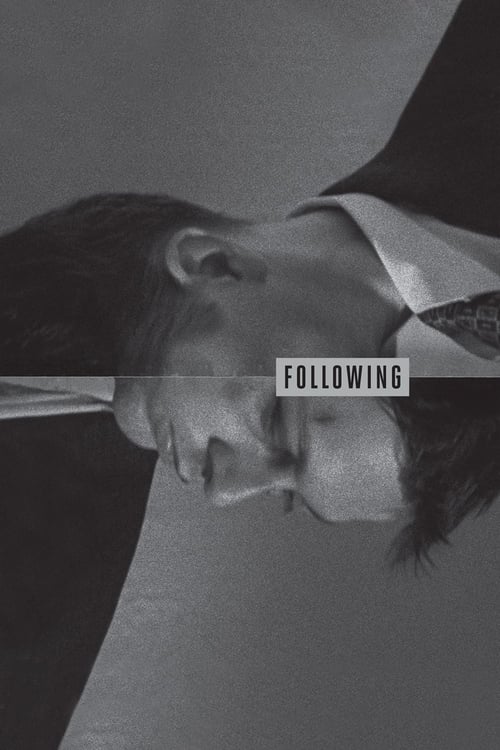
Following
Following Is About a Man Who Thought He Was the Author and Was Only Ever a Character
Directed by Christopher Nolan
Nolan's first feature is a trap that flatters the watcher with the feeling of control, then reveals he was written into someone else's script from the opening frame.
Bill is a lonely aspiring writer who follows strangers through London for material, telling himself he can stop whenever he chooses. One target, a sharp-dressed burglar named Cobb, catches him and inverts the game: Cobb invites Bill along on break-ins, teaching him that entering a stranger's flat reveals who they are. Bill believes he is the observer, the one gathering the story. The surface reading is a clever neo-noir about a man drawn into crime. What Nolan is actually building, in scrambled non-linear fragments, is a study of the watcher's fatal delusion. Bill thinks he selects his targets. He was selected. Every apparent free choice he makes, the blonde he falls for, the flat he burgles, the disguise he adopts, was arranged by Cobb to frame him for a murder. The man who watches to feel like an author discovers he never held the pen.
Gnostic Reading: The Archon Who Convinces You the Cage Is Your Own Idea
Gnostic cosmology describes the archons, deceiving powers who rule the lower world by making the trapped soul believe its captivity is freedom. The archon does not chain you visibly. It arranges the board so that every move you think is yours leads exactly where it wants. Cobb is a near-perfect archon. He offers Bill a false gnosis, a counterfeit awakening: the thrill of seeing into strangers' lives, of understanding what people are through their possessions. This feels like knowledge. It is bait.
Watch how Cobb reshapes Bill from the outside in. He tells him to cut his hair, buy a suit, change his whole appearance. Bill experiences this as self-improvement, becoming a new man. It is the archon dressing the sacrifice. By the time the police lay out the murder Bill has been maneuvered into, we see the entire structure: the flat, the woman, the crowbar, the alibi, all planted. The false light Cobb offered was never illumination. It was the deeper darkness that pretends to be waking up. Bill sought to see and was blinded by the exact appetite that made him easy to steer.
Jungian Reading: Cobb as the Shadow That Wears the Persona You Envy
Cobb is not merely a criminal. He is what Bill wishes he were: confident, transgressive, sexually assured, unbound by the timid rules that keep Bill small. In Jungian terms, Cobb is Bill's shadow projected outward and given a body, the disowned dark potency the writer secretly admires. Bill's fascination is the tell. You do not follow a stranger for weeks unless he carries something you have exiled in yourself.
The mistake is treating the shadow as a mentor rather than a mirror. Bill absorbs Cobb's persona, the suit, the swagger, the burglar's coldness, believing he is integrating strength. He is only being colonized. When the shadow is worshipped instead of faced, it does not make you whole. It uses you and discards you, which is precisely Cobb's plan. The film's shuffled timeline mirrors this psychic disorder: Bill cannot see the pattern of his own life because he is living it out of sequence, one seduced fragment at a time, unable to assemble the shape that would reveal he is the mark. Only the viewer, given all the pieces, sees what Bill never can.
Questions this film answers
What is the deeper meaning of Following?
Bill is a lonely aspiring writer who follows strangers through London for material, telling himself he can stop whenever he chooses. One target, a sharp-dressed burglar named Cobb, catches him and inverts the game: Cobb invites Bill along on break-ins, teaching him that entering a stranger's flat reveals who they are. Bill believes he is the observer, the one gathering the story. The surface reading is a clever neo-noir about a man drawn into crime. What Nolan is actually building, in scrambled non-linear fragments, is a study of the watcher's fatal delusion. Bill thinks he selects his targets. He was selected. Every apparent free choice he makes, the blonde he falls for, the flat he burgles, the disguise he adopts, was arranged by Cobb to frame him for a murder. The man who watches to feel like an author discovers he never held the pen.
What is the hidden symbolism in Following?
Gnostic cosmology describes the archons, deceiving powers who rule the lower world by making the trapped soul believe its captivity is freedom. The archon does not chain you visibly. It arranges the board so that every move you think is yours leads exactly where it wants. Cobb is a near-perfect archon. He offers Bill a false gnosis, a counterfeit awakening: the thrill of seeing into strangers' lives, of understanding what people are through their possessions. This feels like knowledge. It is bait.
What esoteric traditions appear in Following?
Following draws from Gnosticism, Jungian traditions. Nolan's first feature is a trap that flatters the watcher with the feeling of control, then reveals he was written into someone else's script from the opening frame.
Is Following worth watching for spiritual seekers?
Following (1999) directed by Christopher Nolan is essential viewing for those interested in Gnosticism, Jungian. Following Is About a Man Who Thought He Was the Author and Was Only Ever a Character. It rewards multiple viewings and contemplation.
Rewatch With New Eyes
Now that you've seen the architecture, experience it again. The same film becomes a different film when you know what to watch for.
This time, watch for:
- Watch for the false world vs. the real — who is asleep, who awakens
- Meet the shadow: what is rejected, projected, and finally integrated
Links may include affiliate partnerships that support Media Revelations