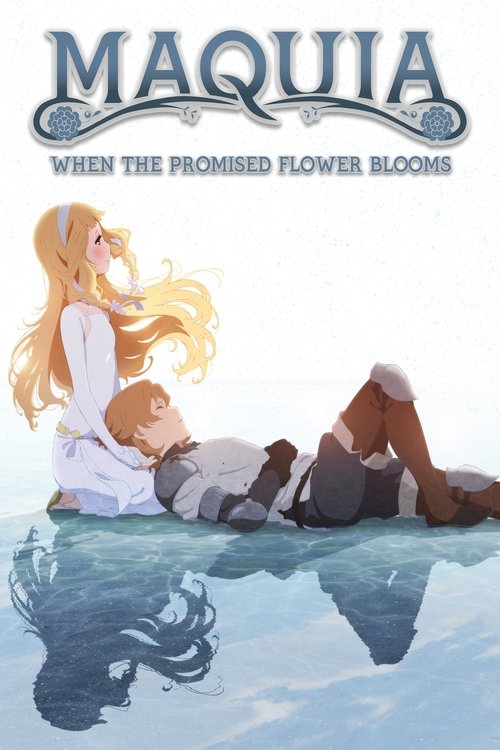
Maquia: When the Promised Flower Blooms
Maquia Is About Loving Something You Are Built to Outlive, and Doing It Anyway
Directed by Mari Okada
Okada, who wrote it and directed it herself, said she made Maquia the year she began to understand her own mother. The film is a mother's entire life compressed into the one lesson that impermanence is not the enemy of love. It is the reason love means anything.
Maquia is not a fantasy about an immortal woman raising a mortal boy. It is the clearest film ever made about the actual terms of parenthood, exaggerated only enough to become visible. Maquia belongs to the Iorph, a people who live for centuries in eternal youth, weaving their days into an endless cloth called the Hibiol. Her clan's first law is never to love an outsider, because to love the short-lived is to guarantee grief. Maquia breaks the law the moment she finds an orphaned human infant clutching his dead mother, and raises Ariel as her own. She will stay a girl. He will become a man, an old man, and die. The film asks whether a love with a guaranteed ending is worth beginning, and answers by making you watch the whole arc without letting you look away.
Buddhist Reading: The Hibiol Cloth and the Truth of Impermanence Chosen, Not Escaped
The Iorph weave the Hibiol, a cloth meant to preserve time, to hold the days so nothing is lost. It is a perfect image of the human refusal of impermanence: the attempt to fix the flowing into the permanent, to escape the first mark of existence, anicca, that all conditioned things pass. The Iorph live centuries precisely so they never have to face what mortals face. And they are, the film quietly insists, less alive for it. They weave time instead of spending it.
Maquia's whole arc is the choice to leave the loom and enter time. By loving a being who will die, she accepts loss as the price of presence, which is the exact Buddhist inversion: suffering does not come from impermanence, it comes from resisting it. She does not learn to hold on longer. She learns that the holding was never the point. In the final scene she attends the deathbed of the old man who was once her infant, and she weeps, and the weeping is not defeat. It is the completion of a love that agreed, decades earlier, to end. The Iorph who never leave the cloth never earn that grief, and so never earn that love.
Initiatory Reading: The Mother as the One Who Must Cross the Threshold of Her Own Grief
Maquia's initiation is unusual: the threshold she must cross is not danger but time itself, and the ordeal is watching the beloved age past her. Every rite of passage tests the initiate with something they cannot control, and demands they emerge transformed. Maquia cannot control that Ariel grows, resents her, leaves her, marries, has a child, and grows old. She can only decide what she becomes in response to it.
The film stages her transformation against a second mother, Leilia, an Iorph forced to bear a half-human child and then forbidden to hold her, kept as a caged bloodline. Leilia is the mother who was denied the ordeal and is destroyed by the denial, hollowed into a ghost at the window. Maquia is the mother who walks fully into the grief and is deepened by it. She crosses the threshold Leilia never got to cross, and returns able to say the film's final words to the dying man she raised: that she is glad she cried, glad she loved, glad it hurt this much. That is the initiate who came back whole.
Questions this film answers
What is the deeper meaning of Maquia: When the Promised Flower Blooms?
Maquia is not a fantasy about an immortal woman raising a mortal boy. It is the clearest film ever made about the actual terms of parenthood, exaggerated only enough to become visible. Maquia belongs to the Iorph, a people who live for centuries in eternal youth, weaving their days into an endless cloth called the Hibiol. Her clan's first law is never to love an outsider, because to love the short-lived is to guarantee grief. Maquia breaks the law the moment she finds an orphaned human infant clutching his dead mother, and raises Ariel as her own. She will stay a girl. He will become a man, an old man, and die. The film asks whether a love with a guaranteed ending is worth beginning, and answers by making you watch the whole arc without letting you look away.
What is the hidden symbolism in Maquia: When the Promised Flower Blooms?
The Iorph weave the Hibiol, a cloth meant to preserve time, to hold the days so nothing is lost. It is a perfect image of the human refusal of impermanence: the attempt to fix the flowing into the permanent, to escape the first mark of existence, anicca, that all conditioned things pass. The Iorph live centuries precisely so they never have to face what mortals face. And they are, the film quietly insists, less alive for it. They weave time instead of spending it.
What esoteric traditions appear in Maquia: When the Promised Flower Blooms?
Maquia: When the Promised Flower Blooms draws from Buddhism, Initiation traditions. Okada, who wrote it and directed it herself, said she made Maquia the year she began to understand her own mother. The film is a mother's entire life compressed into the one lesson that impermanence is not the enemy of love. It is the reason love means anything.
Is Maquia: When the Promised Flower Blooms worth watching for spiritual seekers?
Maquia: When the Promised Flower Blooms (2018) directed by Mari Okada is essential viewing for those interested in Buddhism, Initiation. Maquia Is About Loving Something You Are Built to Outlive, and Doing It Anyway. It rewards multiple viewings and contemplation.
Rewatch With New Eyes
Now that you've seen the architecture, experience it again. The same film becomes a different film when you know what to watch for.
This time, watch for:
- See impermanence: what clings, what releases, what remains
- Mark the threshold: the old self dies, the ordeal transforms, the new self returns
Links may include affiliate partnerships that support Media Revelations
The Descent Continues
Where this thread leads next.
Wolf Children 2012
Wolf Children Is About the Moment a Mother's Job Becomes to Let Her Children Choose What They Are
Read the revelation →