Tales from Earthsea
Tales from Earthsea Is About the Fear of Death Turned Into a Man
Directed by Goro Miyazaki
The film fumbles the plot and keeps the teaching. Cob is not a villain who wants power. Cob is what a person becomes when they refuse to die, and the world sickens because he does.
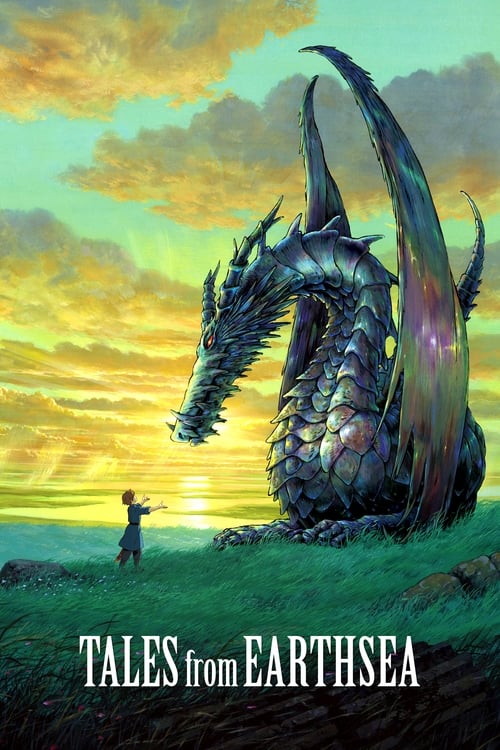
Tales from Earthsea is widely judged a lesser Ghibli, and its narrative is genuinely muddled: Prince Arren murders his father in the opening minutes for reasons the film never grounds, and the wizard Ged trails him across a world that is inexplicably decaying. But underneath the clumsy structure sits Ursula Le Guin's actual teaching, mostly intact. The land is losing its balance, dragons appear where they should not, magic fails, people go mad. The cause is Cob, a sorcerer who has torn open the door between life and death in his terror of dying, and in clinging to immortality he has disordered the entire world. The film is not about a quest to defeat evil. It is about what happens to everything when a single being refuses the one boundary that gives life its meaning.
Buddhist Reading: The Refusal of Impermanence as the Root of All Sickness
The first mark of existence in Buddhism is anicca, impermanence, and the teaching is blunt: suffering arises from the craving that everything stay. Cob is craving made into a body. He has looked at death and refused it absolutely, and the film shows that this refusal is not a private sin but a cosmic one, because a world where one thing will not pass is a world where nothing can properly live. His immortality drains color from everything around him, which is precisely what clinging does to a life.
Ged states the counter-teaching directly. He tells Arren that life without death would be no life at all, that the fear of death is the fear that hollows a person out. Cob has purchased endlessness and spent his soul to buy it, and endlessness turns out to be the emptiest thing there is. Arren's arc is the reversal: a boy fleeing his own shadow, terrified of death, who learns that accepting mortality is what lets him finally stop running. The dragon at the end, life and death fused in one creature, is impermanence restored to its throne.
Jungian Reading: Arren and the Shadow He Cannot Outrun
Arren spends the film pursued by a dark double, a shadow-figure that hunts him and terrifies him, and the film's one genuinely strong idea is that this shadow is Arren himself. He committed a monstrous act, killing his father, and split it off from his self-image, projecting his own darkness outward as a phantom he can flee. This is the Jungian shadow in textbook form: the disowned material that follows you precisely because you refuse to look at it.
The resolution comes only when Arren stops running and turns to face the shadow, and in facing it recognizes it as his own. Integration, not defeat, is the cure. Cob functions as the film's warning of the alternative, a man who never integrated his terror and so was consumed by it, becoming the thing he feared. Arren survives because he does what Cob could not: he owns the darkness and death inside him, and in owning them becomes whole enough to live.
Questions this film answers
What is the deeper meaning of Tales from Earthsea?
Tales from Earthsea is widely judged a lesser Ghibli, and its narrative is genuinely muddled: Prince Arren murders his father in the opening minutes for reasons the film never grounds, and the wizard Ged trails him across a world that is inexplicably decaying. But underneath the clumsy structure sits Ursula Le Guin's actual teaching, mostly intact. The land is losing its balance, dragons appear where they should not, magic fails, people go mad. The cause is Cob, a sorcerer who has torn open the door between life and death in his terror of dying, and in clinging to immortality he has disordered the entire world. The film is not about a quest to defeat evil. It is about what happens to everything when a single being refuses the one boundary that gives life its meaning.
What is the hidden symbolism in Tales from Earthsea?
The first mark of existence in Buddhism is anicca, impermanence, and the teaching is blunt: suffering arises from the craving that everything stay. Cob is craving made into a body. He has looked at death and refused it absolutely, and the film shows that this refusal is not a private sin but a cosmic one, because a world where one thing will not pass is a world where nothing can properly live. His immortality drains color from everything around him, which is precisely what clinging does to a life.
What esoteric traditions appear in Tales from Earthsea?
Tales from Earthsea draws from Jungian, Buddhism traditions. The film fumbles the plot and keeps the teaching. Cob is not a villain who wants power. Cob is what a person becomes when they refuse to die, and the world sickens because he does.
Is Tales from Earthsea worth watching for spiritual seekers?
Tales from Earthsea (2006) directed by Goro Miyazaki is essential viewing for those interested in Jungian, Buddhism. Tales from Earthsea Is About the Fear of Death Turned Into a Man. It rewards multiple viewings and contemplation.
Rewatch With New Eyes
Now that you've seen the architecture, experience it again. The same film becomes a different film when you know what to watch for.
This time, watch for:
- Meet the shadow: what is rejected, projected, and finally integrated
- See impermanence: what clings, what releases, what remains
Links may include affiliate partnerships that support Media Revelations
The Descent Continues
Where this thread leads next.
Princess Mononoke 1997
The Apocalypse That Already Happened and You Didn't Notice
Read the revelation →