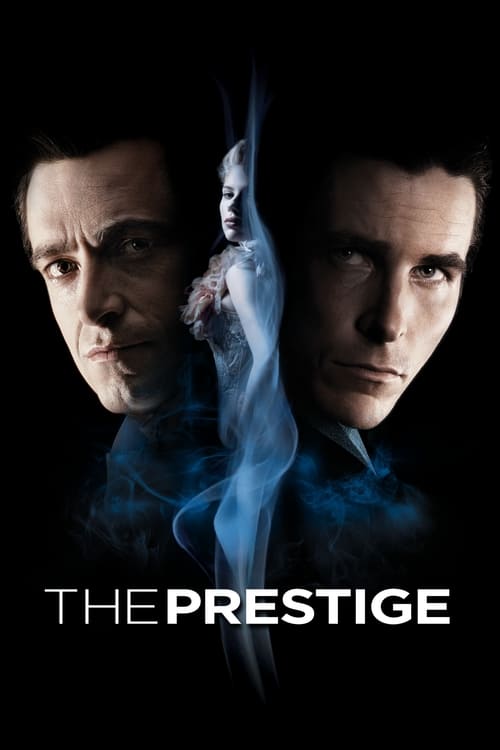
The Prestige
The Sacrifice the Magician Refuses to Name
Directed by Christopher Nolan
Nolan made a film about magic that is actually about what magic costs. The Prestige is a parable about the price of every revelation: someone, somewhere, is being drowned offscreen so the trick can land. The audience pays in attention. The magician pays in soul.
The Prestige is the most precise film ever made about the cost of mastery. Nolan structures the entire movie as a three-act magic trick — pledge, turn, prestige — and uses that structure to deliver a teaching most of his audience refuses to receive: every transcendent moment is built on a sacrifice the audience has agreed not to look at. Angier sacrifices the same man over and over. Borden sacrifices half of his own life. Both men get the trick. Both lose everything else. The film is not about magicians. It is about anyone who has ever wanted to do something extraordinary and refused to count what the extraordinary required. The drowned tanks under the stage are the price of every act on top of it.
The Surface
Two stage magicians in turn-of-the-century London become obsessed rivals after an accident kills one's wife during a performance. Their feud escalates through sabotage, theft, and self-mutilation as each tries to discover and surpass the other's signature illusion, the Transported Man. By the end, one has been hanged for the murder of the other's apparent body. The other is revealed to have been performing his trick through actual cloning, drowning a copy of himself every night.
Most viewers leave with the satisfaction of the twist — the Borden 'twins,' the Angier machine — and miss what Nolan was actually building. The film is structured as a magic trick about magic tricks. Every clue is shown. The audience is told three times, in voiceover, that they will refuse to see what they are being shown.
Nolan is doing what Cutter says magicians do. He is performing the trick on the viewer while explaining the trick to the viewer. The dual film makes the same point as the dual brothers: you are watching the same thing twice and convincing yourself it is one thing.
The Drowned Copy
Angier's machine, built by Tesla, makes a perfect duplicate of him each time he uses it. One body is teleported across the theater to receive the applause. The other body falls through the trapdoor into a tank of water below the stage and drowns. He performs this trick one hundred times. He drowns one hundred Angiers.
Every prestige requires a body. This is the film's secret theology. The visible miracle on stage is bought with an invisible corpse beneath it. Nolan keeps the drowned bodies onscreen — Angier inspects them, lines them up in tanks like jars of preserved sin. The miracle and the murder are the same act.
This is a Gnostic diagnosis of every system that produces extraordinary effects. The shining surface of the spectacle is funded by what the surface refuses to acknowledge. The factory line. The supply chain. The body of the artist. The marriages that ended so the career could exist. The Angier who appears on stage and the Angier who drowns under it are the same man — and the only way to be the one above is to keep making the one below.
The cruel question Nolan refuses to soften: Angier never knows which one he will be on any given night. The man in the box and the man in the tank are both him. The trick demands he keep gambling that he will be the one who lives. He keeps losing. He keeps playing.
Borden's Vow
Borden's secret is older and stranger than Angier's. He and his twin have agreed, since they were boys, to share a single identity. One body is always offstage. One name. One wife. One mistress. Each brother has only half a life at any moment. They have made a vow no civilian could understand and no priest would sanctify.
This is the structure of every serious initiation. Something is surrendered that the uninitiated cannot conceive of surrendering. The fingers cut off on Borden's hand by his brother for the sake of the trick. The wife who cannot be told. The fact that the children will only see one father at a time and never know they have two. The vow is total. It is also private. Nobody but the two of them can ever know what they have given up to do what they do.
Cutter, the engineer, names the principle without realizing he is naming it: 'You're a magician. They'll never get it.' The trick works because it costs more than any rational person would pay. Civilians cannot follow because civilians have not agreed to surrender what the trick requires. The Borden twins do the trick by being the trick. Their lives are the device.
The film does not romanticize this. The brother who loves Sarah cannot save her because the other brother is in love with Olivia, and the persona must remain consistent. The vow eats the marriage. The brother who hangs at the end did not commit the murder he is hanged for, but he also did commit it, because they are one person under oath. The hanging is not unjust by their own internal accounting. The trick was always going to cost a life. They just did not know which one.
The Pledge, the Turn, the Prestige
Cutter's voiceover frames the film as the three acts of a magic trick. The pledge: the magician shows you something ordinary. The turn: he does something extraordinary with it. The prestige: he brings it back. Nolan is not just describing magic. He is describing alchemy — the three-stage opus of transformation that every initiatory tradition encodes.
Nigredo is the pledge: the prima materia, the unchanged thing, the ordinary bird in the cage. Albedo is the turn: the dissolution, the disappearance, the moment when the bird is no longer where it was. Rubedo is the prestige: the reappearance, the bird returned, the new thing that did not exist before — although in the magician's version, the bird that returns is not the bird that vanished. The first bird was crushed under a tablecloth.
This is the film's deepest claim. Every prestige is built on a corpse the alchemist has agreed to ignore. The transformation looks like resurrection because the magician produced something that resembled what disappeared. But the original bird, the original Angier, the original day of the artist's life, is dead and was killed for the show. The alchemy is real. So is the killing.
Nolan is not anti-transformation. He is doing the harder thing: insisting that real transformation has a body count, and that the people who pretend otherwise are not magicians, they are charlatans selling pretend prestiges that cost nothing because they accomplish nothing.
The Transmission
The Prestige is a film about you, sitting in the dark, refusing to see. Nolan tells you this directly through Cutter. He tells you again in the film's structure. He shows you Borden's twin in early scenes and trusts you to dismiss what your eyes saw. By the time the twist arrives, you have completed your own demonstration of the film's thesis: humans prefer the trick to the truth, even when the truth is shown to them in plain sight.
What it transmits is a permanent suspicion. After this film, you cannot watch a great performance — a great athlete, a great career, a great work — without wondering what is in the tank below. Sometimes there is nothing. Often there is a marriage. Often there is a body the audience never saw. Always there is a cost the prestige refuses to acknowledge.
Nolan made one film about magic and a thousand films about himself. The director who works seven-day weeks, who films on real locations and in real cameras, who has built every blockbuster on a tank somewhere that nobody is allowed to see — he was confessing. The Prestige is his clearest statement of the price of doing the thing he does. The audience clapped. The bodies kept falling. The trick worked.
Questions this film answers
What is the deeper meaning of The Prestige?
The Prestige is the most precise film ever made about the cost of mastery. Nolan structures the entire movie as a three-act magic trick — pledge, turn, prestige — and uses that structure to deliver a teaching most of his audience refuses to receive: every transcendent moment is built on a sacrifice the audience has agreed not to look at. Angier sacrifices the same man over and over. Borden sacrifices half of his own life. Both men get the trick. Both lose everything else. The film is not about magicians. It is about anyone who has ever wanted to do something extraordinary and refused to count what the extraordinary required. The drowned tanks under the stage are the price of every act on top of it.
What is the hidden symbolism in The Prestige?
Two stage magicians in turn-of-the-century London become obsessed rivals after an accident kills one's wife during a performance. Their feud escalates through sabotage, theft, and self-mutilation as each tries to discover and surpass the other's signature illusion, the Transported Man. By the end, one has been hanged for the murder of the other's apparent body. The other is revealed to have been performing his trick through actual cloning, drowning a copy of himself every night.
What esoteric traditions appear in The Prestige?
The Prestige draws from Gnosticism, Initiation, Alchemy traditions. Nolan made a film about magic that is actually about what magic costs. The Prestige is a parable about the price of every revelation: someone, somewhere, is being drowned offscreen so the trick can land. The audience pays in attention. The magician pays in soul.
What does The Prestige teach about the drowned copy?
The visible miracle on stage is bought with an invisible corpse beneath it. The miracle and the murder are the same act. Angier's machine, built by Tesla, makes a perfect duplicate of him each time he uses it. One body is teleported across the theater to receive the applause. The other body falls through the trapdoor into a tank of water below the stage and drowns. He performs this trick one hundred times. He drowns one hundred Angiers.
What does The Prestige teach about borden's vow?
The trick works because it costs more than any rational person would pay. The Borden twins do the trick by being the trick. Borden's secret is older and stranger than Angier's. He and his twin have agreed, since they were boys, to share a single identity. One body is always offstage. One name. One wife. One mistress. Each brother has only half a life at any moment. They have made a vow no civilian could understand and no priest would sanctify.
Is The Prestige worth watching for spiritual seekers?
The Prestige (2006) directed by Christopher Nolan is essential viewing for those interested in Initiation, Sacrifice, Doppelgänger. The Sacrifice the Magician Refuses to Name. It rewards multiple viewings and contemplation.
Rewatch With New Eyes
Now that you've seen the architecture, experience it again. The same film becomes a different film when you know what to watch for.
This time, watch for:
- Watch for the false world vs. the real — who is asleep, who awakens
- Mark the threshold: the old self dies, the ordeal transforms, the new self returns
- Track the stages: blackening, whitening, reddening — death before rebirth
Links may include affiliate partnerships that support Media Revelations
The Descent Continues
Where this thread leads next.
Memento 2000
The Self as Hostile Editor of Its Own Memory
Read the revelation →