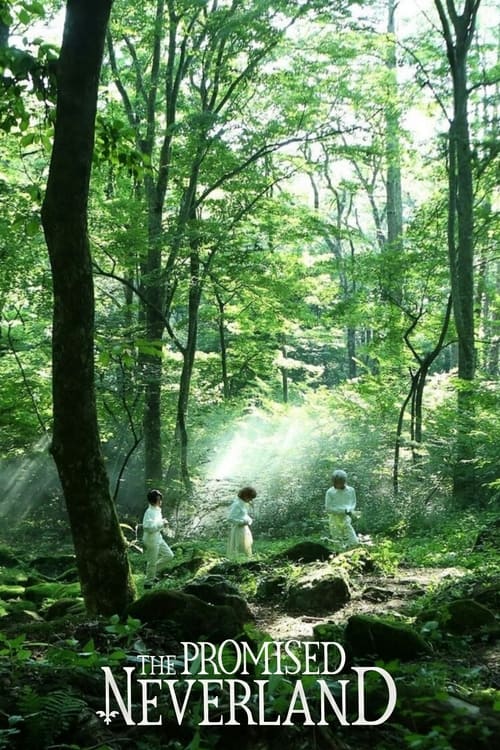
The Promised Neverland
The Orphanage Is Eden and God Is Farming You
Directed by Yuichiro Hirakawa
A paradise with a wall is not a paradise. It is a pen. The Promised Neverland is the moment a child works out the difference.
Grace Field House is the most beautiful prison ever animated. Warm food, a loving Mama, a garden, siblings, a swing under an open sky. The children are bright, cherished, tested daily on exams they treat as play. Then Conny is "adopted," forgets her stuffed rabbit, and Emma and Norman run it to the gate to return it. They find her corpse in the truck, a white flower blooming from a stem driven into her chest, and demons paying for the harvest. The whole idyll reverses in a single frame. Every kindness they were raised on was fattening. The exams were quality control. The love was a farmer's love for livestock. What the show understands, and refuses to soften, is that the trap was never the wall. The trap was the happiness. A child who is content does not check the fence.
Gnostic Reading: The Demiurge Wears the Face of Your Mother
Gnosticism names a specific horror: the world is a fabrication, and the being who made it and rules it, the Demiurge, presents himself as benevolent while running a farm for something higher up. Isabella is that figure rendered with terrifying precision. She is called Mama. She is genuinely warm, genuinely attentive, and she is raising these children to be eaten. She loves them the way the Demiurge loves the souls trapped in his cosmos: as inventory kept comfortable so it does not resist.
The numbers tattooed on the children's necks are the tell. In Gnostic terms, the archons brand what they own, and the branded soul mistakes the brand for its identity. Emma discovers hers only when she starts looking for the seams in her world. The gate the demons come through is the boundary of the fabricated cosmos, the place where the manufactured heaven touches the real order that feeds on it. Gnosis, in this system, brings no comfort. It arrives as the sickening recognition that the good father is a jailer and the beautiful home is a slaughterhouse with curtains. Emma receives that gnosis at the gate and cannot un-know it. Salvation begins as nausea.
Initiatory Reading: The Cliff Past the Wall Is the Threshold
Every initiation stages a threshold the initiate must cross knowing it may kill them. Here the threshold is literal and doubled. First there is the wall, scaled in secret, revealing not freedom but a sheer cliff dropping into a chasm, an abyss between the known world and whatever lies past it. The wall does not open onto a road. It opens onto a fall.
The initiatory pattern insists the old self must be spent to cross. Norman, the strategist, is "shipped" and seemingly sacrificed so the escape can proceed, the companion who carries the plan but cannot make the crossing. Ray sets himself on fire as diversion, offering his body to the flames of the passage. Emma leads the youngest over the wall in the cold, into the dark, toward a world she has been told is death. This is the shape of every genuine initiation: you leave the mother, you burn what protected you, and you go into the dark on the word of a truth that terrifies you. The children who make it across are not the children who lived in the garden. The garden raised food. The cliff makes people.
Questions this film answers
What is the deeper meaning of The Promised Neverland?
Grace Field House is the most beautiful prison ever animated. Warm food, a loving Mama, a garden, siblings, a swing under an open sky. The children are bright, cherished, tested daily on exams they treat as play. Then Conny is "adopted," forgets her stuffed rabbit, and Emma and Norman run it to the gate to return it. They find her corpse in the truck, a white flower blooming from a stem driven into her chest, and demons paying for the harvest. The whole idyll reverses in a single frame. Every kindness they were raised on was fattening. The exams were quality control. The love was a farmer's love for livestock. What the show understands, and refuses to soften, is that the trap was never the wall. The trap was the happiness. A child who is content does not check the fence.
What is the hidden symbolism in The Promised Neverland?
Gnosticism names a specific horror: the world is a fabrication, and the being who made it and rules it, the Demiurge, presents himself as benevolent while running a farm for something higher up. Isabella is that figure rendered with terrifying precision. She is called Mama. She is genuinely warm, genuinely attentive, and she is raising these children to be eaten. She loves them the way the Demiurge loves the souls trapped in his cosmos: as inventory kept comfortable so it does not resist.
What esoteric traditions appear in The Promised Neverland?
The Promised Neverland draws from Gnosticism, Initiation traditions. A paradise with a wall is not a paradise. It is a pen. The Promised Neverland is the moment a child works out the difference.
Is The Promised Neverland worth watching for spiritual seekers?
The Promised Neverland (2020) directed by Yuichiro Hirakawa is essential viewing for those interested in Gnosticism, Initiation. The Orphanage Is Eden and God Is Farming You. It rewards multiple viewings and contemplation.
Rewatch With New Eyes
Now that you've seen the architecture, experience it again. The same film becomes a different film when you know what to watch for.
This time, watch for:
- Watch for the false world vs. the real — who is asleep, who awakens
- Mark the threshold: the old self dies, the ordeal transforms, the new self returns
Links may include affiliate partnerships that support Media Revelations