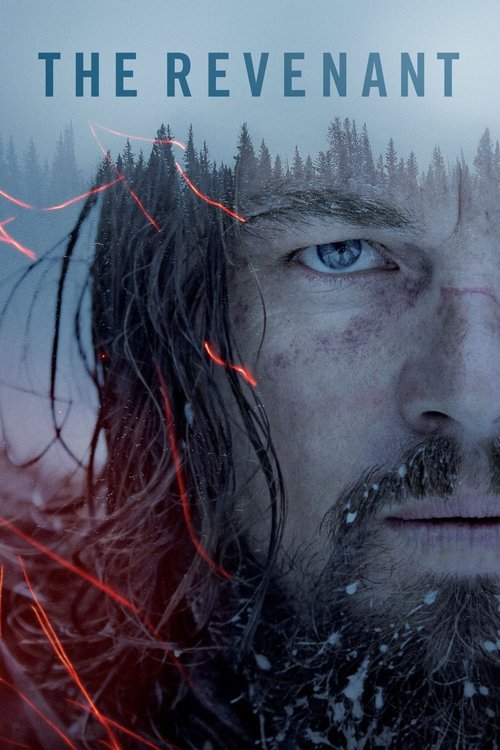
The Revenant
The Man Who Would Not Stay Dead
Directed by Alejandro G. Iñárritu
Hugh Glass is mauled by a bear and left for dead. He crawls out of his grave and across hundreds of miles of frozen wilderness for one purpose: revenge. But Iñárritu's film is not about revenge. It is about what keeps you moving when movement should be impossible. Something in Glass refuses to die.
The Revenant is a film about dying and refusing to stay dead — not through supernatural intervention but through will that exceeds what the body can contain. Hugh Glass is mauled so completely that his companions can see his breathing through the wounds in his back. They bury him alive. He claws out of the grave and begins crawling toward the man who killed his son. Iñárritu shoots the film as ordeal: natural light, practical effects, actors immersed in freezing rivers and eating actual raw bison liver. The physical suffering is not simulated. This matters because the film's argument requires that we feel the impossibility of what Glass accomplishes. He should die a dozen times. He keeps moving. The Pawnee woman who appears in his visions represents something indigenous traditions understand that Western culture has forgotten: death is not a binary. You can die and return. You can enter the land of the dead and walk back out. The revenant is one who returns — and Glass returns not as ghost but as living testament to whatever force refuses to let certain people die.
The Surface
In the 1820s, a fur trapping expedition in the Louisiana Territory is ambushed by Arikara warriors. Hugh Glass, the group's guide, is later mauled by a grizzly bear protecting her cubs. The wounds are so severe that death seems certain. John Fitzgerald, another trapper, is assigned to stay with Glass until he dies, but instead kills Glass's son and leaves Glass in a shallow grave, still breathing.
What follows is Glass's crawl across hundreds of miles of frozen wilderness — wounded, starving, alone — pursuing Fitzgerald with a single purpose. The journey takes months. Glass survives by eating raw meat, cauterizing his own wounds, sleeping inside a dead horse. The physical extremity is relentless.
DiCaprio won his first Oscar for the role, and the performance is one of the most physically demanding in film history. But Iñárritu is after more than survival spectacle. The film's visions, its visual language, its spiritual geography all point toward something larger: an exploration of what drives humans past the point where driving should be possible.
The Bear as Initiator
The bear attack is not just violence — it is the initiatory ordeal that shamanic traditions require. The initiate must die to be reborn. The old self must be destroyed so the new self can emerge. Glass does not merely survive the bear; he is remade by it.
The attack scene is one of the most visceral in cinema: prolonged, detailed, impossible to look away from. The bear bites, claws, throws, breaks. Glass fights back but is overwhelmed. When it ends, he is no longer the man he was. He has crossed a threshold that cannot be uncrossed.
In many indigenous traditions, the bear is specifically the animal of death and rebirth. Bears hibernate — enter a death-like state and return in spring. Bears represent the passage between worlds. That Glass's initiator is a bear, not a wolf or another predator, places the film within this specific symbolic tradition.
After the attack, Glass's journey has a different quality. He is not merely surviving — he is operating in a zone where survival should be impossible. The bear has given him something: not a blessing but a removal of limits. He has already died. Death holds no more terror.
The Visions
Throughout his journey, Glass sees his dead Pawnee wife. She appears in dreams, in fever states, in moments between waking and sleeping. She speaks to him in Pawnee. She stands in impossible places — inside ruined churches, floating above him as he crawls.
These visions are not hallucinations in the clinical sense. They are what shamanic traditions call 'spirits' — presences from other realms that guide, warn, and accompany the traveler. Glass's wife is not memory. She is active presence, participating in his journey, drawing him forward.
The ruined church that appears repeatedly is particularly significant. Christianity arrived with the colonizers and destroyed the indigenous world that Glass's wife represents. But in his visions, she stands inside the church, reclaiming it, or perhaps showing that the sacred persists regardless of the structure.
Iñárritu keeps these visions ambiguous. They could be near-death hallucinations. They could be genuine spirit contact. The film does not resolve this because the resolution does not matter. What matters is that something sustains Glass beyond what his body can sustain. Call it will. Call it spirit. Call it love. It keeps him moving.
Fitzgerald: The Shadow He Pursues
John Fitzgerald represents what Glass must confront: the survival instinct without conscience, the calculation that cuts losses and moves on. Fitzgerald is not evil in a mustache-twirling way. He is pragmatic. Glass was going to die anyway. The son was a complication. Resources were limited. Fitzgerald did what made sense.
But sense is not everything. Glass's refusal to accept Fitzgerald's logic — his insistence on justice even at the cost of his own life — represents something that transcends pragmatic calculation. There are things you do not do, even when doing them would be practical.
The pursuit becomes its own question: what does Glass actually want? Revenge? Justice? Or simply to prove that Fitzgerald's logic was wrong, that some things are worth dying for, that the universe does not operate purely by efficiency?
The final confrontation does not provide clean satisfaction. Glass defeats Fitzgerald but does not kill him — he pushes him downstream to the Arikara, who execute him. Glass's hands remain clean of the final blow. But this is not mercy. It is completion: the universe dealing with Fitzgerald through other means. Glass's job was to deliver him.
The Landscape as Character
Lubezki's cinematography — entirely natural light, sweeping long takes, images that feel like paintings of wilderness — makes the landscape a character as important as Glass or Fitzgerald. The cold, the mountains, the rivers: they are not backdrop. They are forces Glass must negotiate.
The wilderness in The Revenant is not neutral. It is beautiful and lethal, indifferent but somehow responsive. When Glass sleeps inside the horse carcass, the landscape provides shelter through death. When he falls off a cliff with his horse, the landscape nearly kills him but also creates a cave for recovery.
This is the indigenous understanding of nature: not resource to be exploited, not obstacle to be conquered, but power to be respected and negotiated with. Glass survives not by dominating the wilderness but by submitting to its logic, by becoming animal enough to function within it.
The film's slow pace, its willingness to dwell in silence and movement, creates the experience of the journey rather than summarizing it. We feel the cold, the exhaustion, the miles. This is not escapism. This is ordeal by cinema.
The Transmission
The Revenant transmits something that comfortable modern life has forgotten: the human capacity to endure far beyond what seems possible. Glass should die. He does not die. Something in him — call it spirit, call it will, call it the refusal to leave wrong unavenged — keeps him moving when movement should have stopped.
The film also transmits the cost of such endurance. Glass survives, but what kind of survival is it? By the end, he has lost his son, his wife (long before), his place in the trapping company, his physical wholeness. He has won his revenge but is alone on a riverbank, breathing but empty. The revenant has returned from death. What has he returned to?
Iñárritu's final shot — Glass staring directly into the camera — breaks the fourth wall to ask us the question the whole film has been building toward: What would keep you moving? What would you not stay dead for?
The breath that fogs the lens is Glass's but also ours. He has survived. Now what? The film ends without answering because the answer is not the film's to give. It is ours to live.
Questions this film answers
What is the deeper meaning of The Revenant?
The Revenant is a film about dying and refusing to stay dead — not through supernatural intervention but through will that exceeds what the body can contain. Hugh Glass is mauled so completely that his companions can see his breathing through the wounds in his back. They bury him alive. He claws out of the grave and begins crawling toward the man who killed his son. Iñárritu shoots the film as ordeal: natural light, practical effects, actors immersed in freezing rivers and eating actual raw bison liver. The physical suffering is not simulated. This matters because the film's argument requires that we feel the impossibility of what Glass accomplishes. He should die a dozen times. He keeps moving. The Pawnee woman who appears in his visions represents something indigenous traditions understand that Western culture has forgotten: death is not a binary. You can die and return. You can enter the land of the dead and walk back out. The revenant is one who returns — and Glass returns not as ghost but as living testament to whatever force refuses to let certain people die.
What is the hidden symbolism in The Revenant?
In the 1820s, a fur trapping expedition in the Louisiana Territory is ambushed by Arikara warriors. Hugh Glass, the group's guide, is later mauled by a grizzly bear protecting her cubs. The wounds are so severe that death seems certain. John Fitzgerald, another trapper, is assigned to stay with Glass until he dies, but instead kills Glass's son and leaves Glass in a shallow grave, still breathing.
What esoteric traditions appear in The Revenant?
The Revenant draws from Shamanism, Initiation traditions. Hugh Glass is mauled by a bear and left for dead. He crawls out of his grave and across hundreds of miles of frozen wilderness for one purpose: revenge. But Iñárritu's film is not about revenge. It is about what keeps you moving when movement should be impossible. Something in Glass refuses to die.
What does The Revenant teach about the bear as initiator?
The bear is the animal of death and rebirth. Glass has already died. Death holds no more terror. The bear attack is not just violence — it is the initiatory ordeal that shamanic traditions require. The initiate must die to be reborn. The old self must be destroyed so the new self can emerge. Glass does not merely survive the bear; he is remade by it.
What does The Revenant teach about fitzgerald: the shadow he pursues?
Glass's refusal represents something that transcends calculation: there are things you do not do, even when doing them would be practical. John Fitzgerald represents what Glass must confront: the survival instinct without conscience, the calculation that cuts losses and moves on. Fitzgerald is not evil in a mustache-twirling way. He is pragmatic. Glass was going to die anyway. The son was a complication. Resources were limited. Fitzgerald did what made sense.
Is The Revenant worth watching for spiritual seekers?
The Revenant (2015) directed by Alejandro G. Iñárritu is essential viewing for those interested in Shamanism, Death-Rebirth, Revenge. The Man Who Would Not Stay Dead. It rewards multiple viewings and contemplation.
Rewatch With New Eyes
Now that you've seen the architecture, experience it again. The same film becomes a different film when you know what to watch for.
This time, watch for:
- Follow the descent: what dies, what guides, what returns transformed
- Mark the threshold: the old self dies, the ordeal transforms, the new self returns
Links may include affiliate partnerships that support Media Revelations
The Descent Continues
Where this thread leads next.
Into the Wild 2007
Into the Wild Is an Initiation That Reached Its Threshold and Was Refused Passage
Read the revelation →