The Straight Story
A Lawnmower Is Sufficient for the Sacred
Directed by David Lynch
David Lynch's quietest film is also his most complete spiritual teaching: an old man chooses the hardest road to his dying brother because the hardest road is the only honest one.
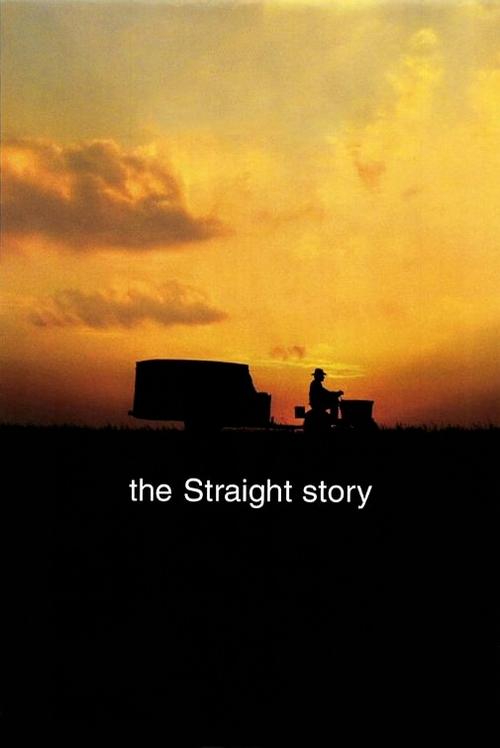
Alvin Straight is seventy-three, bad hips, failing eyes, too proud for a car. When he learns his estranged brother Lyle has had a stroke somewhere in Wisconsin, he hitches a trailer to a John Deere lawnmower and drives 240 miles at five miles per hour. Every other Lynch film ruptures the surface of ordinary life to reveal what writhes beneath. This one does the opposite: it holds ordinary life so still, so long, that its sacred dimension becomes impossible to ignore. The lawnmower is not a joke. It is the vehicle of a genuine initiation, and Alvin knows it.
Initiation: The Deliberate Ordeal
Initiatory traditions share a structural law: you cannot receive what you need if you arrive too quickly or too comfortably. The ordeal is not the obstacle to the transformation; the ordeal is the transformation. Alvin refuses his daughter's offer to drive. He refuses the bus. He attaches a small camping trailer to the back of his mower and enters the road at a pace that gives no option but presence.
The evidence lives in the campfire scene midway through the film. A young pregnant woman, a runaway, sits with him by the fire. She is afraid. Alvin picks up a single stick and snaps it easily. Then he picks up a bundle of sticks, all of them together, and cannot break it. He says nothing else. He does not explain. The teaching passes through gesture, and it is a teaching about the thing he has withheld from his brother for a decade: brothers are the bundle. Alvin has been traveling toward the lesson he is also simultaneously enacting. The miles are not separating him from insight; they are producing it. By the time he arrives, he has already changed. The road did the work the road was designed to do.
In Spring, Summer, Fall, Winter... and Spring, the monk straps stones to his body and drags them up the mountain as deliberate penance. Alvin's mower runs at the same logic. Suffering chosen, not endured.
Alchemy: Gold That Arrives Through Slowness
Alchemical work has three stages. Nigredo is the blackening, the confrontation with what has rotted. Albedo is the whitening, the stripping down, the exposure of what remains. Rubedo is the reddening, the integration, the living gold that emerges when nothing false is left.
The film's visual register is all harvest amber. Iowa cornfields in late season. The trailer's chrome catching the low sun. Sunsets that Lynch holds for what feels like geological time. This is the albedo light, not the darkness the director is associated with. Alvin has already passed through his nigredo: the estrangement from Lyle, the WWII story he tells two fellow veterans over beer, the accidental shooting that haunted him for fifty years. He carries the blackening in his body. The road is the albedo, the long slow stripping. What you watch across those 240 miles is a man being made simple enough to face his brother.
The ending is the rubedo. Two old men on a porch. Lyle asks: "Did you make it all that way on that lawnmower?" Alvin says yes. Then silence, and Lyle looks up at the sky. Nothing is resolved in the conventional sense, and everything is completed. The integration does not require words. It requires presence, which is what the mower, at five miles per hour, guaranteed.
Wild Strawberries runs the same arc in a car: an old man reviews his life on a journey and faces what he withheld. Eraserhead belongs to the same director who filmed this, which tells you how wide Lynch's range actually is.
Questions this film answers
What is the deeper meaning of The Straight Story?
Alvin Straight is seventy-three, bad hips, failing eyes, too proud for a car. When he learns his estranged brother Lyle has had a stroke somewhere in Wisconsin, he hitches a trailer to a John Deere lawnmower and drives 240 miles at five miles per hour. Every other Lynch film ruptures the surface of ordinary life to reveal what writhes beneath. This one does the opposite: it holds ordinary life so still, so long, that its sacred dimension becomes impossible to ignore. The lawnmower is not a joke. It is the vehicle of a genuine initiation, and Alvin knows it.
What is the hidden symbolism in The Straight Story?
Initiatory traditions share a structural law: you cannot receive what you need if you arrive too quickly or too comfortably. The ordeal is not the obstacle to the transformation; the ordeal is the transformation. Alvin refuses his daughter's offer to drive. He refuses the bus. He attaches a small camping trailer to the back of his mower and enters the road at a pace that gives no option but presence.
What esoteric traditions appear in The Straight Story?
The Straight Story draws from Initiation, Alchemy traditions. David Lynch's quietest film is also his most complete spiritual teaching: an old man chooses the hardest road to his dying brother because the hardest road is the only honest one.
Is The Straight Story worth watching for spiritual seekers?
The Straight Story (1999) directed by David Lynch is essential viewing for those interested in Initiation, Alchemy. A Lawnmower Is Sufficient for the Sacred. It rewards multiple viewings and contemplation.
Rewatch With New Eyes
Now that you've seen the architecture, experience it again. The same film becomes a different film when you know what to watch for.
This time, watch for:
- Mark the threshold: the old self dies, the ordeal transforms, the new self returns
- Track the stages: blackening, whitening, reddening — death before rebirth
Links may include affiliate partnerships that support Media Revelations