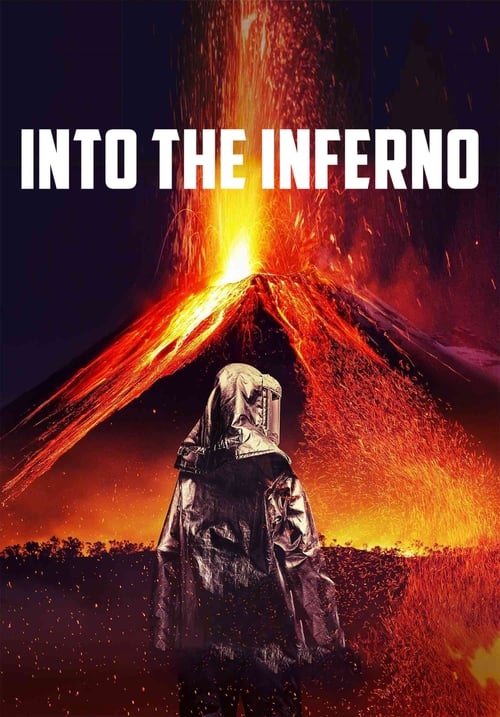
Into the Inferno
Into the Inferno Is About the Volcano the Living Use to Talk to the Dead
Directed by Werner Herzog
Werner Herzog stands at the rim of a lava lake and admits, in his own voice, that the mountain does not care whether we exist. Then he spends the rest of the film with people who have built their entire cosmos on the assumption that it does.
The volcano documentary is the wrong frame. Herzog is not filming geology. He is filming the oldest religious instinct there is: the conviction that under the crust of the world there is a will, and that the will can be addressed. His co-director, volcanologist Clive Oppenheimer, supplies the measurements. Herzog supplies the confession that measurement is not why either of them keeps returning to the edge. What the film actually documents is a set of cultures on Vanuatu, in Ethiopia, in North Korea, in Indonesia, who have all independently arrived at the same reading of a burning hole in the ground. It is where the dead live. It is where power comes from. It is the mouth of something that eats and speaks. Herzog does not correct them. He suspects they are describing the situation more accurately than the instruments are.
Shamanic Reading: The Lava Lake as the Lower World Made Visible
Every shamanic cosmology divides reality into an upper, middle, and lower world, and the shaman is the one who can descend to the lower world and come back to report. Usually the lower world is reached in trance, through drumming, through darkness. On Ambrym and Tanna in Vanuatu, it is reached by walking uphill. The film shows villagers who understand the boiling caldera as the dwelling of ancestors and the source of the chief's authority, and Herzog lets them explain that a man named John Frum lives in the volcano and will one day emerge with cargo and abundance. The Western viewer is invited to smile. Herzog refuses the invitation. He frames the cargo believer with exactly the gravity he gives the scientists, because the villager and the scientist are doing the same thing: standing at the threshold of the underworld, trying to name what comes out of it. The shaman's function is to keep the community in relationship with the powers below so the powers do not simply consume it. The film's most unsettling suggestion is that a live volcano is one of the few places on earth where that relationship is not a metaphor. The ground really can open. The offering really can be required.
Gnostic Reading: The Indifferent Fire Beneath the Made World
Gnosticism holds that the material world is the work of a lower power, and that behind the visible order there is a fire that does not love us. Herzog has believed a version of this his whole career, and here he finds its literal image. He calls the churning magma "a fire that wants to burst forth," and he means it theologically. The lava lake is the demiurgic engine running under the pastoral surface: the sheep, the gardens, the children, all of it a thin film over a churning indifference that predates and will outlast every human meaning laid on top of it. Yet the film does not land in despair. The Gnostic knows the world is fallen and still looks for the spark. Herzog finds it in the people who kneel at the crater and insist on speaking to the fire anyway. That insistence, doomed and magnificent, is the pneumatic spark refusing to accept that the burning god beneath the world has the final word.
Questions this film answers
What is the deeper meaning of Into the Inferno?
The volcano documentary is the wrong frame. Herzog is not filming geology. He is filming the oldest religious instinct there is: the conviction that under the crust of the world there is a will, and that the will can be addressed. His co-director, volcanologist Clive Oppenheimer, supplies the measurements. Herzog supplies the confession that measurement is not why either of them keeps returning to the edge. What the film actually documents is a set of cultures on Vanuatu, in Ethiopia, in North Korea, in Indonesia, who have all independently arrived at the same reading of a burning hole in the ground. It is where the dead live. It is where power comes from. It is the mouth of something that eats and speaks. Herzog does not correct them. He suspects they are describing the situation more accurately than the instruments are.
What is the hidden symbolism in Into the Inferno?
Every shamanic cosmology divides reality into an upper, middle, and lower world, and the shaman is the one who can descend to the lower world and come back to report. Usually the lower world is reached in trance, through drumming, through darkness. On Ambrym and Tanna in Vanuatu, it is reached by walking uphill. The film shows villagers who understand the boiling caldera as the dwelling of ancestors and the source of the chief's authority, and Herzog lets them explain that a man named John Frum lives in the volcano and will one day emerge with cargo and abundance. The Western viewer is invited to smile. Herzog refuses the invitation. He frames the cargo believer with exactly the gravity he gives the scientists, because the villager and the scientist are doing the same thing: standing at the threshold of the underworld, trying to name what comes out of it. The shaman's function is to keep the community in relationship with the powers below so the powers do not simply consume it. The film's most unsettling suggestion is that a live volcano is one of the few places on earth where that relationship is not a metaphor. The ground really can open. The offering really can be required.
What esoteric traditions appear in Into the Inferno?
Into the Inferno draws from Shamanism, Gnosticism traditions. Werner Herzog stands at the rim of a lava lake and admits, in his own voice, that the mountain does not care whether we exist. Then he spends the rest of the film with people who have built their entire cosmos on the assumption that it does.
Is Into the Inferno worth watching for spiritual seekers?
Into the Inferno (2016) directed by Werner Herzog is essential viewing for those interested in Shamanism, Gnosticism. Into the Inferno Is About the Volcano the Living Use to Talk to the Dead. It rewards multiple viewings and contemplation.
Rewatch With New Eyes
Now that you've seen the architecture, experience it again. The same film becomes a different film when you know what to watch for.
This time, watch for:
- Follow the descent: what dies, what guides, what returns transformed
- Watch for the false world vs. the real — who is asleep, who awakens
Links may include affiliate partnerships that support Media Revelations
The Descent Continues
Where this thread leads next.
Grizzly Man 2005
Grizzly Man Is the Story of a Man Who Tried to Cross Into the Animal World and Was Devoured at the Border
Read the revelation →