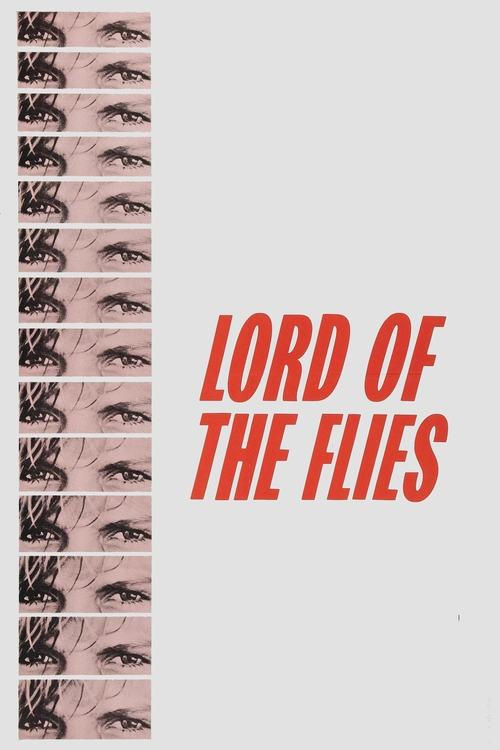
Lord of the Flies
The Alchemical Vessel Where the Lower Vital Wins
Directed by Peter Brook
Golding strips away every external structure — parents, school, church, state — and isolates pre-pubescent males in a closed vessel to watch what emerges when conditioning falls away. This isn't civilization versus savagery. It's descent into the lower vital without guidance. Simon sees the beast as 'only us' and is torn apart for his gnosis. The naval officer arrives and nothing is rescued.
The island is a closed alchemical vessel. Golding — a WWII naval officer who saw combat — wrote this as a direct response to the Rousseauian noble savage myth, making a metaphysical claim: civilization is a thin membrane over something darker, and that darkness lives in every human regardless of breeding or education. The boys don't find their true nature. They find what's underneath the social veneer when no one is watching. Simon alone achieves gnosis, recognizes the beast as projection, and is ritually murdered for it — the Christ pattern, the Osiris pattern, the Dionysian sparagmos.
The Surface
The standard reading: civilized British schoolboys revert to primitive savagery when removed from society's constraints. Strip away the rules and humans become animals. Lord of the Flies as pessimistic anthropology — proof that evil lurks beneath the veneer.
This reading stops at allegory. Golding wrote this as a direct response to The Coral Island by R.M. Ballantyne, which had British boys nobly civilizing a tropical paradise. Golding had seen what humans actually do when the constraints lift. He was making a metaphysical claim, not a political one.
The island is a closed alchemical vessel. Golding strips away every external structure and isolates a group of pre-pubescent males to observe what emerges from the substrate when conditioning falls away. This is what the Diamond Approach would call the unmasking of the personality structure — except Golding shows the descent into the lower vital rather than the ascent into Essence. The boys don't find their true nature. They find what feeds when no one watches.
The Four Archetypal Positions
Ralph is the rational ego, the executive function. He's elected leader because he's handsome and holds the conch — appearance and symbol, not substance. He represents the conventional self that wants order, fairness, rescue. He's not evil but he's also not awake. When the dark forces rise, he has no inner resources. He's purely structural, and structure without depth collapses.
Piggy is the discriminating intellect divorced from the body. The glasses are everything — the lens of reason, and also fire-starters. Knowledge as Promethean force. But Piggy is asthmatic, fat, weak, mocked. Pure intellect without embodiment cannot survive contact with the chthonic. He gets crushed by a boulder, the conch shattering with him. The mind cannot defeat the underworld through analysis alone.
Jack is the lower vital, the will-to-power — what Taoist tradition calls po (the corporeal soul) unrestrained by hun (the ethereal soul). He's not a cartoon villain. He's what every human contains when shame, supervision, and abstraction are removed. The face paint is the key ritual moment: 'The mask was a thing of its own, behind which Jack hid, liberated from shame and self-consciousness.' Golding is describing possession in the precise sense the traditions use that word. Jack becomes a vehicle for an impersonal force that was always there, waiting.
Simon and the Sparagmos
Simon is the actual mystic, and he's the character almost everyone misreads. He's epileptic — the sacred disease in shamanic traditions. He wanders alone into the jungle to sit in silence. He has visions. He's the only one who encounters the 'beast' directly and understands what it is.
His confrontation with the Lord of the Flies — the pig's head on a stake, swarming with flies — is one of the most precise depictions of inner encounter with the shadow in twentieth century literature. The head speaks: 'Fancy thinking the Beast was something you could hunt and kill! You knew, didn't you? I'm part of you.' This is non-dual recognition delivered through horror imagery.
Simon sees that the beast is the boys themselves, that there is no external enemy. For this gnosis he is murdered. He descends from the mountain with the truth — literally a mountaintop revelation — and is torn apart in the dance. This is the Christ pattern, the Osiris pattern, the Dionysian sparagmos. The mystic's role is to see and to be killed for seeing. The group cannot tolerate the one who names what it refuses to face.
The Lord of the Flies as Beelzebub
The title itself is the deepest layer. Beelzebub — 'Lord of the Flies' — is one of the oldest names for the adversarial principle, originally a Philistine deity (Ba'al-zebub) reframed in Hebrew tradition as a demon. Flies are associated with decay, with the breakdown of form, with what feeds on death. Golding is naming the force precisely.
The pig's head on the stake is a sacrificial offering to a real metaphysical entity, and once that offering is made, the entity speaks. The hunt rituals, the chant ('Kill the pig. Cut her throat. Spill her blood.'), the killing of a nursing sow in a scene Golding writes with explicit sexual violence imagery — this is black magic enacted by children who don't know they're doing it. The form precedes the understanding. They invoke something by performing the ritual.
The boys create their own initiatory structure: hunts, chants, face-paint, blood rituals. This isn't regression to savagery. It's spontaneous religious formation gone wrong. The psyche needs initiation and will invent it. But invented initiation without transmitted wisdom lacks the crucial element: it doesn't know what the killing is for. It doesn't know when to stop.
The Glasses as Promethean Fire
Piggy's glasses are the Promethean element — stolen fire, the technology that separates humans from animals. The boys use them to make fire, then fight over them, then break them, then use the broken half to start the fire that burns the whole island down. This is the entire arc of human technological development compressed into a children's adventure.
The conch operates differently — consensus reality, the social contract, the agreement that this object confers the right to speak. It works only as long as everyone agrees it works. The moment Jack refuses to honor it, its power evaporates. Consensus reality is exactly that fragile.
Both objects are destroyed. The conch shatters when Piggy dies — the rational voice loses all protection when consensus reality breaks completely. Roger doesn't aim at Piggy. He releases the boulder. Gravity does the rest. The lower vital doesn't hate the intellect. It simply removes the obstruction.
The Officer Who Changes Nothing
The ending is not rescue. The naval officer appears — crisp uniform, authority restored. Ralph weeps. The other boys stand ashamed. Order returns instantly because a bigger boy with bigger authority finally arrived.
But look at what the officer represents: a warship. He's fighting the same war that killed the parachutist. The dead man on the mountain — the 'beast' the boys feared — fell from the adult world's war above. The civilization that 'rescues' these boys is conducting the same violence at industrial scale.
Golding's final move breaks the frame. You realize the island wasn't an aberration. It was a microcosm. There is no rescue because the rescuers are doing exactly what the boys did, just with technology and uniforms. The beast wasn't on the island. The beast runs the world. The boys just practiced.
Questions this film answers
What is the deeper meaning of Lord of the Flies?
The island is a closed alchemical vessel. Golding — a WWII naval officer who saw combat — wrote this as a direct response to the Rousseauian noble savage myth, making a metaphysical claim: civilization is a thin membrane over something darker, and that darkness lives in every human regardless of breeding or education. The boys don't find their true nature. They find what's underneath the social veneer when no one is watching. Simon alone achieves gnosis, recognizes the beast as projection, and is ritually murdered for it — the Christ pattern, the Osiris pattern, the Dionysian sparagmos.
What is the hidden symbolism in Lord of the Flies?
The standard reading: civilized British schoolboys revert to primitive savagery when removed from society's constraints. Strip away the rules and humans become animals. Lord of the Flies as pessimistic anthropology — proof that evil lurks beneath the veneer.
What esoteric traditions appear in Lord of the Flies?
Lord of the Flies draws from Jungian, Initiation, Gnosticism, Alchemy traditions. Golding strips away every external structure — parents, school, church, state — and isolates pre-pubescent males in a closed vessel to watch what emerges when conditioning falls away. This isn't civilization versus savagery. It's descent into the lower vital without guidance. Simon sees the beast as 'only us' and is torn apart for his gnosis. The naval officer arrives and nothing is rescued.
What does Lord of the Flies teach about the four archetypal positions?
The mask doesn't hide Jack. It liberates him. Golding is describing possession in the precise sense the traditions use that word. Ralph is the rational ego, the executive function. He's elected leader because he's handsome and holds the conch — appearance and symbol, not substance. He represents the conventional self that wants order, fairness, rescue. He's not evil but he's also not awake. When the dark forces rise, he has no inner resources. He's purely structural, and structure without depth collapses.
What does Lord of the Flies teach about simon and the sparagmos?
The mystic's role is to see and to be killed for seeing. The group cannot tolerate the one who names what it refuses to face. Simon is the actual mystic, and he's the character almost everyone misreads. He's epileptic — the sacred disease in shamanic traditions. He wanders alone into the jungle to sit in silence. He has visions. He's the only one who encounters the 'beast' directly and understands what it is.
What does Lord of the Flies teach about the officer who changes nothing?
The island wasn't an aberration. It was a microcosm. The beast runs the world. The boys just practiced. The ending is not rescue. The naval officer appears — crisp uniform, authority restored. Ralph weeps. The other boys stand ashamed. Order returns instantly because a bigger boy with bigger authority finally arrived.
Is Lord of the Flies worth watching for spiritual seekers?
Lord of the Flies (1963) directed by Peter Brook is essential viewing for those interested in Shadow, Failed Initiation, Beelzebub. The Alchemical Vessel Where the Lower Vital Wins. It rewards multiple viewings and contemplation.
Rewatch With New Eyes
Now that you've seen the architecture, experience it again. The same film becomes a different film when you know what to watch for.
This time, watch for:
- Meet the shadow: what is rejected, projected, and finally integrated
- Mark the threshold: the old self dies, the ordeal transforms, the new self returns
- Watch for the false world vs. the real — who is asleep, who awakens
Links may include affiliate partnerships that support Media Revelations
The Descent Continues
Where this thread leads next.
The Shining 1980
The Overlook as Living Memory Field
Read the revelation →