Prisoners
The Father Who Becomes What He Was Praying Against
Directed by Denis Villeneuve
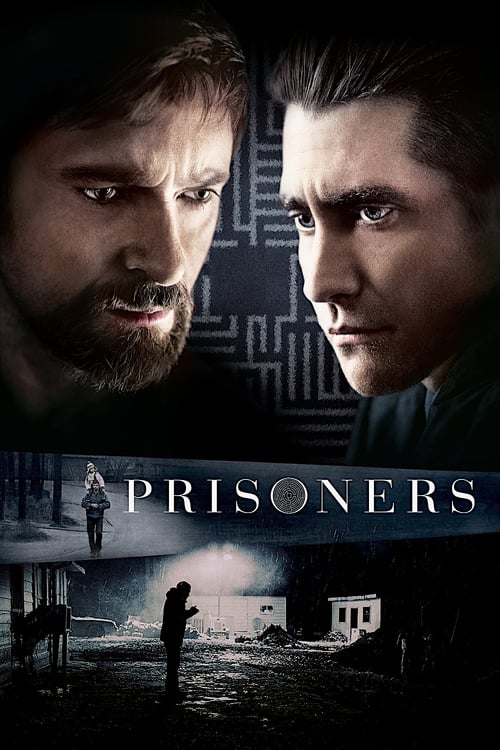
Villeneuve made the most theologically severe American thriller of the 2010s. Keller Dover prays before meals. He stockpiles food in his basement. He survives every contingency he has imagined. He has not imagined the one that arrives. When it arrives, he becomes — slowly, scene by scene — the kind of man his prayers were meant to protect his family from. The film does not absolve him. It documents how grief that has no permitted container builds the container out of someone else's body.
Prisoners is the most uncomfortable film about American Christian masculinity ever made by a Quebecois director, and the discomfort is the function. Villeneuve uses a missing-child procedural as the surface and conducts, underneath it, a sustained inquiry into what happens to a soul that has been formed by the prayer 'deliver us from evil' when evil arrives anyway and the prayer is shown to have not worked. Keller Dover does not lose his faith. Keller Dover keeps his faith while doing the actions that his faith forbids, because keeping the faith and doing the actions becomes the only available structure for not entirely dissolving. He becomes the captor. He becomes the torturer. He recites the Lord's Prayer while doing it. The film does not let the viewer separate the two. The man at the end of the film is the man at the beginning — only what was theoretically in him has been fully actualized. The film is a Shadow study in the most rigorous Jungian sense: the disowned material becoming behavior because the conditions that previously suppressed it have collapsed.
The Surface
Two girls go missing on Thanksgiving. The lead suspect — a developmentally disabled young man, Alex Jones, who was seen in the RV near the disappearance — is released for lack of evidence. The girls' father, Keller Dover, abducts Alex, chains him in a derelict family bathroom, and beats him for days trying to extract information. The detective on the case, Loki, pursues a parallel investigation that uncovers a much larger pattern — a long-running serial abduction scheme run by an elderly couple as a campaign against God for taking their own son. The girls are found. Alex was kidnapped years ago by the same couple and raised in captivity. Keller falls into the captor's secret pit. The film ends with Loki almost hearing the whistle from the pit. The fate of Keller is left to the audience.
On release, the film was praised as a tight thriller with strong performances. Villeneuve's direction was admired. The script's complexity — the interlocking deceptions, the way each character's choice constrains every other — was admired. The film did good business.
Underneath, the film is conducting a sustained operation on the question of what one believes when the worst occurs. Aaron Guzikowski's screenplay is unusually disciplined about not letting any character become the easy moral reference point. Loki is competent but emotionally damaged. Keller is sympathetic and monstrous in the same gesture. Holly Jones, the killer, has a coherent theology that the film refuses to dismiss. The film does not give the viewer anyone to hide behind.
The Lord's Prayer Recited Over a Beating
Keller is introduced reciting the Lord's Prayer while teaching his son to hunt. The first images of him are devotional and disciplinary. He is the prepared American father — the man whose basement contains stockpiled food, the man who has thought about contingencies, the man whose religion is also his security framework. When the daughter disappears, the framework fails immediately. Nothing in his preparation contained the actual disaster.
His response is to construct a new framework using the only materials available — his Christianity, his masculinity, his sense of paternal responsibility. He decides he will torture Alex Jones because someone must, and he is the only one who will. He prays before doing it. He prays during it. He recites the prayer his father taught him while bleeding a young man whose disability he treats as performance.
This is the Shadow Jung warned about with the most precision. The disowned material does not vanish because it has been disowned. It waits. When the conditions that allowed its suppression collapse, it surfaces with the full energy of what was suppressed for years. Keller's capacity for sustained cruelty was not absent. It was held under the discipline of normal life. The disappearance removes the discipline. The capacity does what it was built to do.
Villeneuve films the torture scenes with sustained discomfort. The handheld camera. The yellow light. The sound design that includes Keller's labored breathing. We are not given permission to look away or to morally simplify. The man torturing the disabled prisoner is also the man whose daughter is missing and whose grief is real. The film holds both simultaneously. Most viewers would prefer it choose. The film does not choose.
Holly Jones and the Anti-Theology
The reveal that Holly Jones — kindly old woman, aunt of the suspect — is the actual abductor is the film's structural climax. Her motive, calmly stated in the basement near the end, is the most theologically pointed exposition in the film. She and her late husband lost their son to cancer. They decided, in response, to wage 'a war on God' by abducting children and breaking the faith of their parents. The abductions are not for sexual gratification. They are theological retaliation. Each broken parent is a sermon against the God who let their boy die.
Villeneuve does not give Holly a sympathetic gloss. She is a competent serial murderer who has destroyed dozens of families. He also does not let her be unintelligible. Her grief was real. Her theology, in its inverted way, is consistent. She is the dark mirror of Keller. Both of them have built a structure on top of grief that the grief itself does not actually require. Keller's structure is Christian. Holly's is anti-Christian. Both involve cages, basements, and prolonged captivity.
This is the Gnostic recognition: the false god is not always external. It can be the god a parent constructs out of a loss they could not metabolize. Holly's late husband was a priest before he became an abductor. He thought he was serving God. After the son died he became its enemy. The structure was the same in both phases. Only the polarity inverted. The Gnostic teaching has always been clear that the most dangerous theology is the one that has constructed itself in response to actual wound.
The film places Keller and Holly in literal vertical adjacency at the climax. Holly above, in her car, watching the surviving girl. Keller below, in the pit, suffocating. The geography is theological. The Demiurge above. The captive soul below. The film leaves them in that position. It does not resolve which one wins.
Loki as the Insufficient Detective
Loki is the procedural element the film uses to keep the plot moving while the deeper inquiry continues underneath. He has tattoos that suggest a hard past. He has never failed to close a case. He has tics that suggest the cost. He drinks alone in Chinese restaurants on Thanksgiving because he has no other place to be.
Villeneuve gives him exactly the competence the situation requires and exactly the affect the situation cannot tolerate. Loki finds the answer. He finds it too late to prevent what Keller has already done. He cannot prevent the priest's death, cannot prevent Alex's continued suffering, cannot prevent Keller's captivity. The detective works. The work does not save anyone in time.
His final scene — driving the surviving Joy to the hospital, then returning to the Jones house to find the lid of the pit — is the film's quietest agony. He hears something. He turns. The film cuts to black on the whistle. He has, after enormous effort, possibly heard the man whose daughter he saved. Whether he saves Keller is not given to us. The detective work has exhausted what it can do.
This is Villeneuve's most consistent theme across his English-language work: the protagonist does what they can with the tools available, the tools are not sufficient to the cosmos they are operating in, and the gap between what was needed and what was delivered is the actual subject. Sicario does this. Arrival does this. Even Dune does this. Prisoners does it most starkly because the protagonists' methods include literal torture and the film does not pretend the torture was justified by the outcomes.
The Transmission
Prisoners transmits a permanent suspicion of one's own conviction that they would never do that. The genius of the film is its refusal to give the viewer a clean position outside Keller. We are shown how he gets to the bathroom with Alex chained inside. We are shown each step. We are not allowed to feel that we would have stopped at any particular step because the film does not show a step that obviously should have been the stopping point. Each escalation seems, in the moment, the only possible response to the prior moment's failure.
What the film leaves the viewer with is the recognition that grief and faith, combined, can construct a moral architecture in which previously unthinkable behavior becomes the apparent service of love. This is not a problem unique to Christian fathers in Pennsylvania. It is a structural feature of how the unconscious operates when the surface narrative no longer accommodates the actual pain. The Shadow finds a justification. The justification, once found, becomes the form of the action.
The film ends with the whistle and the cut to black because the resolution is the viewer's responsibility. Did Loki dig him out. Did Keller die in the pit. Did the years of torture get added to the years of grief. The film refuses to relieve us of the questions. We are to sit with them. The sitting is the work. Few films demand this kind of work from their audience. Prisoners demands it without apology.
Questions this film answers
What is the deeper meaning of Prisoners?
Prisoners is the most uncomfortable film about American Christian masculinity ever made by a Quebecois director, and the discomfort is the function. Villeneuve uses a missing-child procedural as the surface and conducts, underneath it, a sustained inquiry into what happens to a soul that has been formed by the prayer 'deliver us from evil' when evil arrives anyway and the prayer is shown to have not worked. Keller Dover does not lose his faith. Keller Dover keeps his faith while doing the actions that his faith forbids, because keeping the faith and doing the actions becomes the only available structure for not entirely dissolving. He becomes the captor. He becomes the torturer. He recites the Lord's Prayer while doing it. The film does not let the viewer separate the two. The man at the end of the film is the man at the beginning — only what was theoretically in him has been fully actualized. The film is a Shadow study in the most rigorous Jungian sense: the disowned material becoming behavior because the conditions that previously suppressed it have collapsed.
What is the hidden symbolism in Prisoners?
Two girls go missing on Thanksgiving. The lead suspect — a developmentally disabled young man, Alex Jones, who was seen in the RV near the disappearance — is released for lack of evidence. The girls' father, Keller Dover, abducts Alex, chains him in a derelict family bathroom, and beats him for days trying to extract information. The detective on the case, Loki, pursues a parallel investigation that uncovers a much larger pattern — a long-running serial abduction scheme run by an elderly couple as a campaign against God for taking their own son. The girls are found. Alex was kidnapped years ago by the same couple and raised in captivity. Keller falls into the captor's secret pit. The film ends with Loki almost hearing the whistle from the pit. The fate of Keller is left to the audience.
What esoteric traditions appear in Prisoners?
Prisoners draws from Jungian, Gnosticism traditions. Villeneuve made the most theologically severe American thriller of the 2010s. Keller Dover prays before meals. He stockpiles food in his basement. He survives every contingency he has imagined. He has not imagined the one that arrives. When it arrives, he becomes — slowly, scene by scene — the kind of man his prayers were meant to protect his family from. The film does not absolve him. It documents how grief that has no permitted container builds the container out of someone else's body.
What does Prisoners teach about holly jones and the anti-theology?
Holly's grief was real. Her theology, in its inverted way, is consistent. She is the dark mirror of Keller. The reveal that Holly Jones — kindly old woman, aunt of the suspect — is the actual abductor is the film's structural climax. Her motive, calmly stated in the basement near the end, is the most theologically pointed exposition in the film. She and her late husband lost their son to cancer. They decided, in response, to wage 'a war on God' by abducting children and breaking the faith of their parents. The abductions are not for sexual gratification. They are theological retaliation. Each broken parent is a sermon against the God who let their boy die.
Is Prisoners worth watching for spiritual seekers?
Prisoners (2013) directed by Denis Villeneuve is essential viewing for those interested in Shadow, Initiation, Villeneuve. The Father Who Becomes What He Was Praying Against. It rewards multiple viewings and contemplation.
Rewatch With New Eyes
Now that you've seen the architecture, experience it again. The same film becomes a different film when you know what to watch for.
This time, watch for:
- Meet the shadow: what is rejected, projected, and finally integrated
- Watch for the false world vs. the real — who is asleep, who awakens
Links may include affiliate partnerships that support Media Revelations
The Descent Continues
Where this thread leads next.
Se7en 1995
The Sermon Delivered by the Wrong Preacher
Read the revelation →