The Conformist
The Conformist Is a Man Who Joins Fascism to Prove He Is Normal, and Kills to Bury What He Saw
Directed by Bernardo Bertolucci
Bertolucci built the most beautiful film ever made about the ugliest impulse: the desperate need to be like everyone else. The politics are the symptom. The wound is a boy in a chauffeur's car.
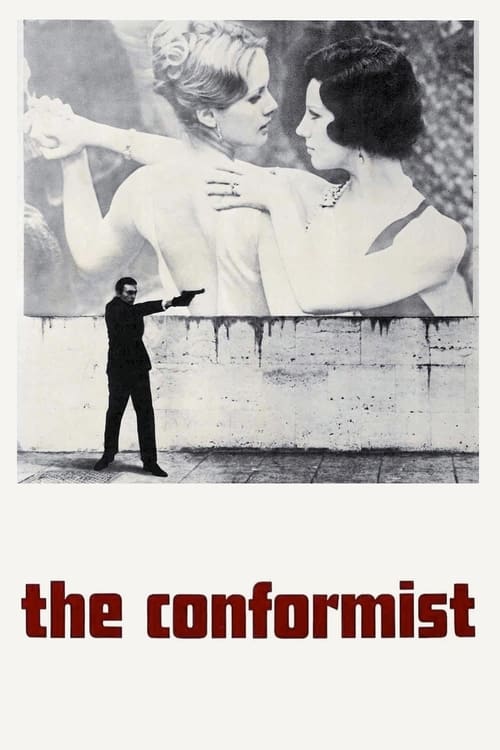
Marcello Clerici becomes a Fascist agent, marries a conventional woman he does not love, and accepts an assignment to help murder his old professor, an anti-Fascist exile in Paris. Bertolucci frames all of it as a flight from a single buried memory: as a boy, Marcello was seduced by a chauffeur named Lino, and believed he shot him dead. Everything Marcello builds afterward, the marriage, the party membership, the eagerness to conform, is architecture erected over that scene to prove he is normal, masculine, and clean. This is not a film about a man who happens to be a Fascist. It is a film about why anyone becomes one: the terror of one's own difference, converted into obedience so total that murder feels like belonging.
Jungian Reading: The Shadow Projected Onto the Whole World
Jung taught that what a man cannot accept in himself he casts outward, then attacks in others. Marcello's shadow is his own desire, his own difference, the boy who wanted the chauffeur. He cannot hold it, so he projects it, and Fascism gives him a machinery for hunting the disowned self in the form of enemies. The professor he is sent to kill was his teacher, the man who once opened his mind, the very figure of individuation Marcello fled. To murder the professor is to murder the possibility of becoming himself.
Bertolucci codes this in the famous Plato's cave lecture: Marcello, in the professor's dim study, recites the allegory of the prisoners who mistake shadows for reality. Marcello is the prisoner who prefers the shadows, who would rather kill the one trying to turn him toward the light than face what the light reveals. Anna, the professor's wife, is the anima Marcello is drawn to and betrays, the soul-figure he lets die in the snow while he watches, frozen, unable to act because acting would mean choosing himself.
Initiatory Reading: The False Initiation of Conformity
Real initiation makes an individual. The Conformist depicts the counter-rite: initiation into sameness, the ritual erasure of the self. Marcello submits to every institution that promises to normalize him, the Church through a confession where he lists his sins to be absolved of his nature, the State through party loyalty, marriage through a wife he calls entirely mediocre and means it as relief. Each is an initiation in reverse, a threshold crossed away from selfhood.
The assassination in the forest is the black initiation's completion. Anna runs to Marcello's car and pounds on the glass, begging, and he does nothing. Watching her killed while he sits paralyzed is the moment the conformist self is fully sealed. Then the war ends, Fascism falls, and the final scene delivers the reversal: Marcello, wandering Rome on the night Mussolini is deposed, encounters Lino, the chauffeur, alive. The murder that founded his whole life never happened. Every choice was built on a wound that was never even a real death. He turns on the crowd, denounces his old comrades, and finally stares at a young man by a fire, the desire he spent a lifetime killing rising up one last time in a face lit gold.
Questions this film answers
What is the deeper meaning of The Conformist?
Marcello Clerici becomes a Fascist agent, marries a conventional woman he does not love, and accepts an assignment to help murder his old professor, an anti-Fascist exile in Paris. Bertolucci frames all of it as a flight from a single buried memory: as a boy, Marcello was seduced by a chauffeur named Lino, and believed he shot him dead. Everything Marcello builds afterward, the marriage, the party membership, the eagerness to conform, is architecture erected over that scene to prove he is normal, masculine, and clean. This is not a film about a man who happens to be a Fascist. It is a film about why anyone becomes one: the terror of one's own difference, converted into obedience so total that murder feels like belonging.
What is the hidden symbolism in The Conformist?
Jung taught that what a man cannot accept in himself he casts outward, then attacks in others. Marcello's shadow is his own desire, his own difference, the boy who wanted the chauffeur. He cannot hold it, so he projects it, and Fascism gives him a machinery for hunting the disowned self in the form of enemies. The professor he is sent to kill was his teacher, the man who once opened his mind, the very figure of individuation Marcello fled. To murder the professor is to murder the possibility of becoming himself.
What esoteric traditions appear in The Conformist?
The Conformist draws from Jungian, Initiation traditions. Bertolucci built the most beautiful film ever made about the ugliest impulse: the desperate need to be like everyone else. The politics are the symptom. The wound is a boy in a chauffeur's car.
Is The Conformist worth watching for spiritual seekers?
The Conformist (1971) directed by Bernardo Bertolucci is essential viewing for those interested in Jungian, Initiation. The Conformist Is a Man Who Joins Fascism to Prove He Is Normal, and Kills to Bury What He Saw. It rewards multiple viewings and contemplation.
Rewatch With New Eyes
Now that you've seen the architecture, experience it again. The same film becomes a different film when you know what to watch for.
This time, watch for:
- Meet the shadow: what is rejected, projected, and finally integrated
- Mark the threshold: the old self dies, the ordeal transforms, the new self returns
Links may include affiliate partnerships that support Media Revelations
The Descent Continues
Where this thread leads next.
Amarcord 1973
Amarcord Is Fellini Diagnosing Fascism as a Town That Never Grew Up
Read the revelation →