Castle in the Sky
The Civilization That Forgot Its Roots Must Fall
Directed by Hayao Miyazaki
Miyazaki filmed the destruction of the technocratic empire by gravity itself. Laputa is every civilization that built power without root — it floats because it abandoned the earth, and it falls because the earth is what the tree-roots remember. Pazu and Sheeta's destruction spell is not vengeance. It is the willingness to let an entire structure of inherited power collapse to save the living thing inside it.
Castle in the Sky is the first complete statement of Miyazaki's lifelong argument about civilization. Laputa is the floating empire of an ancient people who built such mastery over physics and energy that they could lift cities into the sky. They became gods. Then they came down — not in defeat, but in recognition. They saw that life requires soil. The civilization that floated above the earth had become incapable of being alive. Most of them returned to the ground. The remnant left the city to drift unmanned, defended by robots, until the heirs of two opposing lineages — Sheeta, who carries the royal crystal, and Muska, who wants to wield the city as a weapon — meet in the sky to decide what becomes of the inheritance. Miyazaki is not making a fairy tale about a boy and girl. He is filming the choice that every civilization eventually faces: continue extracting power from a structure that has forgotten the ground, or let the structure fall so the living can remain.
The Surface
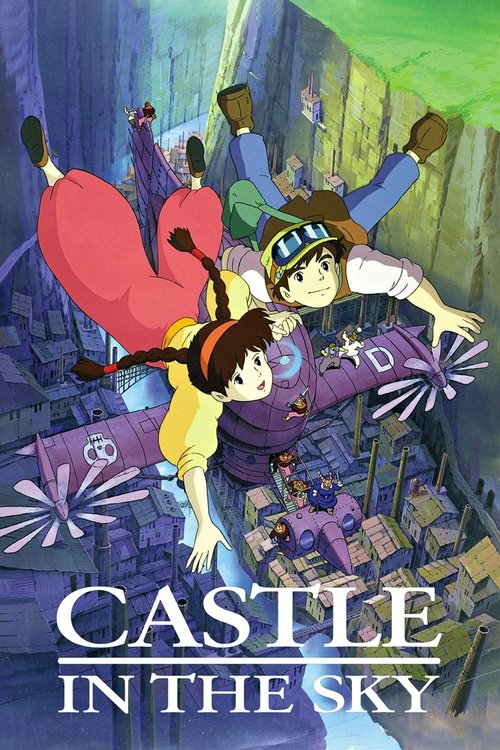
An orphan named Pazu, working in a mining town, catches a girl falling from the sky. Her name is Sheeta. She carries a glowing crystal pendant. Sky pirates led by the spectacular Dola pursue her. Government agents led by the disturbingly polite Muska also pursue her. The pendant is the key to Laputa, a floating city of legend that contains the technologies of a vanished hyper-advanced civilization. Sheeta is the last surviving heir to Laputa's royal line. Muska is also an heir, from a sidelined branch, and intends to use the city's weapons to subjugate the world. Pazu and Sheeta reach the city, discover its melancholy, refuse Muska's offer to rule beside him, and speak together the destruction spell that disintegrates the floating structure while preserving the central tree and its roots, which ascend into orbit.
It is Miyazaki's first Studio Ghibli film. The studio was founded to produce it. The aesthetic — the steampunk technology, the lush landscapes, the antagonist whose courtesy is more frightening than any villainy — established the visual and ethical grammar Ghibli would refine for the next four decades.
Most readings handle it as adventure-fantasy. The Buddhist and animist subtext that Miyazaki treats as foundational is present in every frame for those who can read it.
Laputa as Alchemical Inversion
The alchemical work moves through three stages: nigredo (blackening, descent into matter), albedo (whitening, purification, separation), and rubedo (reddening, integration of opposites into the philosopher's stone). The standard interpretation treats this as ascent — matter is refined into spirit, body is refined into light. Miyazaki inverts the schema and discovers that the inversion was always the more honest reading.
The Laputan civilization performed the standard ascent. They lifted their city into the sky. They separated entirely from matter. They achieved albedo as architecture — the white levitating perfection above the clouds. And they discovered that the perfection was a kind of death. The city in the sky is beautiful, and the city in the sky is empty. The flowers that grow there are tended by a single robot. The pools are silent. The throne is dust. Perfection that has departed from soil has departed from life.
The Laputans who chose to descend understood the actual alchemical motion. The Stone is not refined spirit. The Stone is the union of refined consciousness with the matter it was attempting to escape. The Laputans who returned to the earth were the ones who completed the work. The ones who stayed in the sky became myth, became weapon, became the inheritance that Muska wanted to claim.
The destruction spell that Pazu and Sheeta speak together — 'Balse' in the original — is the alchemical solve. The structure that has stopped being capable of life must be dissolved. The roots of the tree that grew up through the city remain, ascending. What survives is what was always alive. What disintegrates is what had become only architecture.
Muska and the Inheritance of Power
Muska is the most precisely drawn villain in early Ghibli. He does not snarl. He does not threaten. He speaks softly, dresses carefully, addresses Sheeta with bureaucratic correctness. His evil is not personal cruelty. It is the institutional fantasy that the inherited technologies of power can be used in the present without becoming what those technologies originally were.
He is the Archon in glasses. He believes the floating fortress and its weapons of mass destruction are simply tools waiting for a competent administrator. He believes himself to be that administrator. He cannot see — because the institutional mind he embodies cannot see — that the technology and the civilization that produced it are inseparable. To use Laputa's weapons is to become Laputan. And the Laputans, the ones who stayed, are gone. The civilization that thought itself eternal lasted exactly as long as the soil-connection it severed.
Muska's blindness is exactly the blindness of every modern technocrat. He believes power is neutral. He believes the institution he is restoring is just an instrument. He cannot perceive that the instrument has its own metabolism, and that the metabolism requires what he is not capable of providing: a relationship with the living world. He attempts to use Laputa. Laputa eats him.
The film's ethical center is not the destruction of Muska. It is the recognition that Muska's claim — 'this power is rightfully mine' — would have damned him even if Sheeta had given him the crystal. Some inheritances are not portable. The civilization that produced the floating fortress cannot be restarted by an heir. It can only be allowed to finish disintegrating.
The Tree and the Root
At the center of Laputa is a tree. The tree's roots have grown through the entire floating structure, holding it together. The roots are also feeding the gardens, the pools, the few remaining flowers. The whole civilization, before its destruction, has become a parasite on a single living being.
This is Miyazaki's recurring image. The kodama in Princess Mononoke. The radish spirit in Spirited Away. The forest of Totoro. Wherever civilization is functioning at all, it is because something alive at the root is still holding the structure up. Civilization itself produces nothing. Civilization metabolizes what the living world makes available. When the living world withdraws, civilization disintegrates within a generation.
The destruction spell that Pazu and Sheeta speak is calibrated. It disintegrates the artificial structure of Laputa — the throne, the weapons, the corridors — but spares the tree. The roots release their grip on the city. The city falls. The tree ascends, slowly, into the sky, carrying the central crystal and the small remaining garden into orbit.
This is the shamanic core of Miyazaki's worldview. The land has consciousness. The land has memory. The land tolerates civilization within limits and withdraws when those limits are crossed. The tree at Laputa's heart is not a metaphor for resilience. It is a depiction of the actual relationship: every human structure is dependent on something living it does not control, and the something living retains the option to walk away.
The Transmission
Castle in the Sky transmits a recognition that Miyazaki would spend his career restating: civilization is not the natural state of human beings. Civilization is a fragile arrangement that requires constant negotiation with the living systems beneath it. When civilization forgets the negotiation — when it begins to believe in its own self-sufficiency, in its own permanence, in its own right to extract — it has already begun the process of its own dissolution.
The film is a children's adventure on the surface. It is also one of the clearest statements ever animated about the metaphysics of empire. The empires that have existed have all been Laputa. They float for a while. They believe they are eternal. They produce administrators who believe they are restoring the natural order. And then they fall, and what remains is the living root that was holding everything up the whole time.
What Pazu and Sheeta do at the end is what every viewer who has understood this is being asked to consider. They are heirs to enormous power. They refuse the inheritance. They speak the word that lets the structure collapse. They are not destroying anything that was alive. They are releasing what had stopped being alive so that what was alive can survive.
The recommendation is not anti-technology. It is anti-amnesia. Use the floating city as long as it remembers the tree. Stop using it the moment it asks you to forget. Miyazaki spent the rest of his career making variations of this argument because the argument is the most important argument any twentieth-century artist could have been making. The audience that received it as adventure-fantasy was the audience the argument was actually for.
Questions this film answers
What is the deeper meaning of Castle in the Sky?
Castle in the Sky is the first complete statement of Miyazaki's lifelong argument about civilization. Laputa is the floating empire of an ancient people who built such mastery over physics and energy that they could lift cities into the sky. They became gods. Then they came down — not in defeat, but in recognition. They saw that life requires soil. The civilization that floated above the earth had become incapable of being alive. Most of them returned to the ground. The remnant left the city to drift unmanned, defended by robots, until the heirs of two opposing lineages — Sheeta, who carries the royal crystal, and Muska, who wants to wield the city as a weapon — meet in the sky to decide what becomes of the inheritance. Miyazaki is not making a fairy tale about a boy and girl. He is filming the choice that every civilization eventually faces: continue extracting power from a structure that has forgotten the ground, or let the structure fall so the living can remain.
What is the hidden symbolism in Castle in the Sky?
An orphan named Pazu, working in a mining town, catches a girl falling from the sky. Her name is Sheeta. She carries a glowing crystal pendant. Sky pirates led by the spectacular Dola pursue her. Government agents led by the disturbingly polite Muska also pursue her. The pendant is the key to Laputa, a floating city of legend that contains the technologies of a vanished hyper-advanced civilization. Sheeta is the last surviving heir to Laputa's royal line. Muska is also an heir, from a sidelined branch, and intends to use the city's weapons to subjugate the world. Pazu and Sheeta reach the city, discover its melancholy, refuse Muska's offer to rule beside him, and speak together the destruction spell that disintegrates the floating structure while preserving the central tree and its roots, which ascend into orbit.
What esoteric traditions appear in Castle in the Sky?
Castle in the Sky draws from Alchemy, Shamanism, Gnosticism traditions. Miyazaki filmed the destruction of the technocratic empire by gravity itself. Laputa is every civilization that built power without root — it floats because it abandoned the earth, and it falls because the earth is what the tree-roots remember. Pazu and Sheeta's destruction spell is not vengeance. It is the willingness to let an entire structure of inherited power collapse to save the living thing inside it.
What does Castle in the Sky teach about laputa as alchemical inversion?
Perfection that has departed from soil has departed from life. The Stone is the union of refined consciousness with the matter it was trying to escape. The alchemical work moves through three stages: nigredo (blackening, descent into matter), albedo (whitening, purification, separation), and rubedo (reddening, integration of opposites into the philosopher's stone). The standard interpretation treats this as ascent — matter is refined into spirit, body is refined into light. Miyazaki inverts the schema and discovers that the inversion was always the more honest reading.
Is Castle in the Sky worth watching for spiritual seekers?
Castle in the Sky (1986) directed by Hayao Miyazaki is essential viewing for those interested in Alchemy, Initiation, Miyazaki. The Civilization That Forgot Its Roots Must Fall. It rewards multiple viewings and contemplation.
Rewatch With New Eyes
Now that you've seen the architecture, experience it again. The same film becomes a different film when you know what to watch for.
This time, watch for:
- Track the stages: blackening, whitening, reddening — death before rebirth
- Follow the descent: what dies, what guides, what returns transformed
- Watch for the false world vs. the real — who is asleep, who awakens
Links may include affiliate partnerships that support Media Revelations
The Descent Continues
Where this thread leads next.
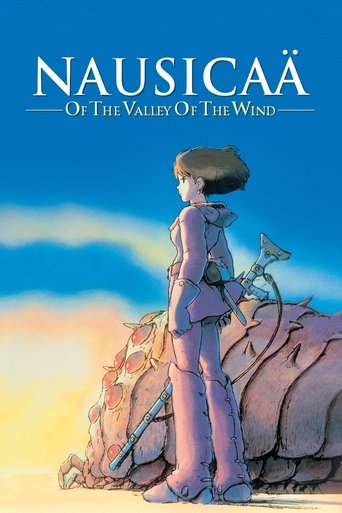
Nausicaä of the Valley of the Wind 1984
The Shaman Who Speaks to What We Poisoned
Read the revelation →